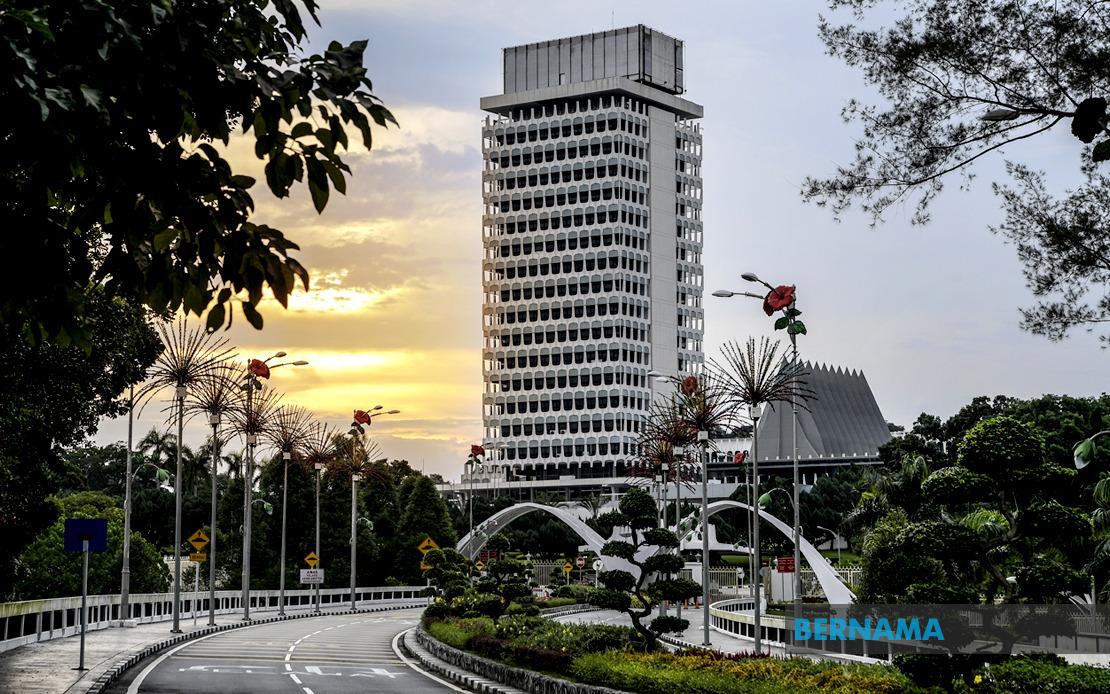
Parliament will reconvene today with a substantive agenda spanning financial protection, retirement security and sports development as lawmakers prepare to scrutinise government efforts across multiple fronts. The Dewan Rakyat's Question Time session will examine how effectively current regulations shield Malaysian consumers from insurance abuse while simultaneously addressing the mounting concerns about whether ordinary workers will have adequate savings to sustain themselves beyond retirement age.
A focal point of parliamentary questioning concerns the vulnerability of health insurance holders, particularly those facing catastrophic diagnoses. Tan Kok Wai from the Port Klang constituency will press the Finance Minister on concrete measures to prevent insurers from arbitrarily cancelling policies or denying legitimate claims for critical illness and cancer treatment. This line of inquiry touches on a persistent consumer complaint: the asymmetry between what policyholders believe they have purchased and what insurers ultimately pay out. The legislator will specifically seek assurances that government has tightened mechanisms for dispute resolution and amplified transparency requirements that would make insurance terms and conditions genuinely comprehensible to ordinary customers rather than layered in technical language that obscures liability and coverage limits.
Retirement adequacy constitutes another urgent concern for Parliament today. Datuk Seri Aminuddin Harun will challenge ministers to articulate a credible strategy for ensuring Malaysians accumulate sufficient Employees Provident Fund balances to survive their later years. The context here is unmistakable: living costs have accelerated while wage growth has lagged, compressing the savings capacity of middle and lower-income households precisely when they should be building retirement reserves. Adding urgency to this discussion is the demographic reality that Malaysia's population structure is shifting rapidly toward an ageing profile by 2030, which will place unprecedented pressure on both government social programmes and individual savings to sustain retirees. The question implicitly asks whether current policy frameworks adequately account for the structural mismatch between contribution periods, investment returns and projected longevity.
The parliamentary agenda also extends to sports development, with Zakri Hassan requesting detail on how the Youth and Sports Ministry is identifying and cultivating volleyball talent both indoors and on beaches. While this question may appear narrower in scope, it reflects broader questions about how government systematically develops athletic potential at grassroots level rather than relying on ad-hoc discovery of promising individuals. Volleyball occupies a particular niche in Malaysian sport: neither commanding the resources and visibility of football nor the entrenched institutional support of badminton, yet capable of competing at regional levels with proper talent pipeline management.
Rural digital connectivity remains on Parliament's radar as well. Hassan Saad will interrogate the effectiveness of National Information Dissemination Centres in materially improving conditions for rural entrepreneurs. The underlying friction here involves the gap between policy intentions and ground reality: despite rollout of NADI facilities, small business operators in outlying districts continue facing barriers stemming from inadequate internet infrastructure, limited digital literacy and constrained market access. The legislator's questioning suggests frustration that facility provision alone cannot overcome the ecosystem challenges that prevent rural entrepreneurs from fully participating in digital commerce.
Government initiatives to combat subsidy leakage will also face parliamentary scrutiny today. Ministers will answer for the effectiveness of the Mobile eCOSS application, launched in May 2025, which was designed to curtail fraud and diversion in the distribution of subsidised cooking oil. The government introduced this tracking mechanism after recognising that significant quantities of subsidised packets were being diverted to commercial operations or exported rather than reaching intended household consumers. The application represents an attempt to marry technology with anti-corruption efforts, though questions remain about whether digital solutions can overcome determined circumvention efforts.
Microfinance and MSME support schemes will similarly receive parliamentary examination. Questions about whether existing financing programmes actually enable small businesses to scale and improve productivity suggest underlying doubt about whether credit access alone—absent complementary improvements in business training, market linkages and technology adoption—can substantially transform small enterprise performance. This debate reflects a broader tension in Malaysian development policy: whether formal credit expansion can substitute for or complement deeper institutional and capability-building interventions.
Following Question Time, Parliament will receive a briefing from the Health Select Committee on its report examining reform of Malaysia's organ donation and transplant system. This addresses a persistent public health challenge: Malaysia's donation rate remains substantially below optimal levels, partly reflecting gaps in consent frameworks, public awareness and institutional coordination between donation identification, family communication and transplant centre logistics. Committee findings may propose structural reforms or regulatory adjustments intended to increase donation participation while protecting donor families and recipient access equity.
The sitting will advance the committee-stage debate on the Competition (Amendment) Bill 2026, with winding-up speeches scheduled today. This legislative work reflects Parliament's intention to strengthen competition law frameworks, potentially expanding enforcement authority or clarifying how regulators address anticompetitive conduct in digital markets and other sectors. The parliament will subsequently move to second reading of the Competition Commission (Amendment) Bill 2026, which would modify how the competition regulator itself operates. These bills form part of a broader parliamentary session that began recently and will continue for sixteen days before concluding on July 16, maintaining a sustained focus on substantive policy work rather than ceremonial business.

