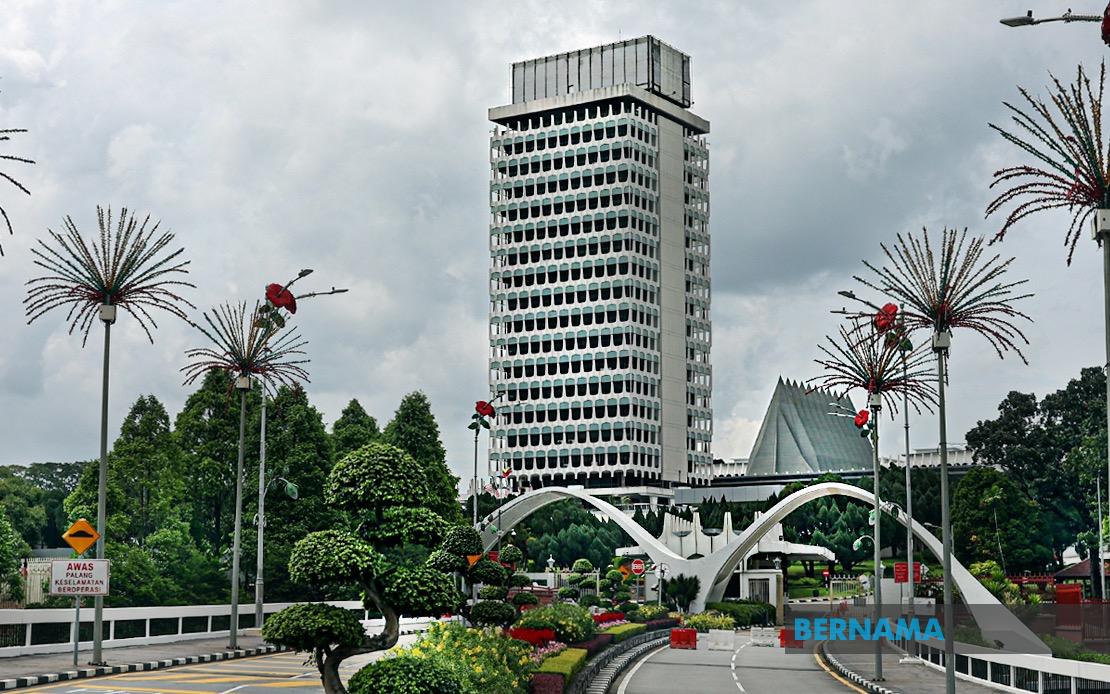
Parliament will today grapple with the escalating fallout from West Asian tensions on Malaysia's crucial tourism revenue stream, as lawmakers probe whether the government has adequately responded to shifting visitor patterns from traditionally high-spending markets. The two-week session convening through mid-July reveals deepening concerns among elected representatives that the prolonged conflict, coupled with travel uncertainties in the region, has dampened arrival numbers from Middle Eastern, European and West Asian tourists—segments that historically contributed significantly to Malaysia's RM17 billion annual tourism earnings.
Dr Ahmad Fakhruddin Fakhrurazi from PN-Kuala Kedah has submitted parliamentary questions demanding specifics on how external geopolitical shocks translate into reduced bookings at Malaysian resorts and hotels. More critically, he seeks clarification on the government's contingency framework to stabilise and expand the tourism sector during a period when competitors like Thailand, Indonesia and Vietnam actively court the same visitor demographics. The inquiry reflects anxiety within the tourism industry about its ability to maintain double-digit growth trajectories when regional stability cannot be assured, particularly for affluent travellers from Gulf Cooperation Council nations who traditionally spend more per capita than domestic visitors.
The questioning coincides with Malaysia's broader strategic pivot towards tourism diversification, where the government has invested heavily in positioning domestic and intra-regional travellers as alternative pillars. However, loss of high-margin international segments—such as Gulf Arab tourists who frequent Kuala Lumpur's luxury shopping precincts and beachfront resorts—creates a revenue gap that mass tourism alone cannot fully replace. The parliamentary debate will likely expose whether federal and state tourism boards have readjusted marketing spend, reoriented promotional campaigns, or negotiated special packages to tempt back hesitant foreign visitors.
Simultaneously, Langkawi emerges as a focal point for security vulnerabilities, with Datuk Mohd Suhaimi Abdullah (PN-Langkawi) demanding assurances that federal security forces possess adequate manpower and equipment to combat migrant smuggling and illicit goods trafficking through territorial waters. Langkawi's geographical positioning north of Kuala Kedah and proximate to Thai maritime boundaries creates a natural smuggling corridor; the island's tourism infrastructure and proximity to international shipping lanes compound the challenge. The question about deploying Unmanned Aerial Vehicles (UAVs) signals frustration at the perceived capability gap—suggesting that conventional coastal patrols and customs operations have proven insufficient to intercept organised smuggling networks exploiting maritime chokepoints.
The migrant smuggling dimension carries acute relevance for Malaysia, given Indonesia and Thailand's sustained pressure on Kuala Lumpur to strengthen interdiction efforts. Langkawi's dual identity—as a upmarket free-trade zone and tourist destination—masks the grim reality that human trafficking syndicates exploit its porous waters to move vulnerable migrants northward toward Thailand or funnel them into undocumented labour pools within Malaysia's own economy. Inquiries about asset readiness and personnel strength suggest parliamentary disquiet that the Home Ministry has not adequately resourced coastal security in proportion to the documented scale of maritime crimes.
On a separate front, the Environmental Sustainability Ministry faces pressure to demonstrate concrete outcomes from Ecological Fiscal Transfer programmes and community initiatives designed to curb human-elephant conflicts in Peninsular Malaysia's forested regions. Manndzri Nasib (BN-Tenggara) will probe the effectiveness of these conservation expenditures, particularly the Electric Fencing for Elephants (SPEG) initiative, which has emerged as a promising tool to contain wild elephants within protected zones and reduce crop-raiding incidents that destabilise rural communities. The question implies scepticism about whether existing fiscal allocations are yielding measurable reductions in elephant-related fatalities and property damage, or whether coordination failures among federal forestry, wildlife and local government agencies have hampered rollout.
The human-elephant conflict represents a microcosm of Malaysia's broader environmental governance challenges: balancing conservation imperatives with livelihood protection for rural populations dependent on agriculture. Expansion of SPEG technology requires not merely capital investment but sustained training, maintenance protocols, and coordination with Perak, Terengganu and Pahang authorities whose jurisdictions contain critical elephant corridors. Parliamentary scrutiny of this issue reflects growing recognition that piecemeal conservation efforts, absent genuine inter-agency synergy, dissipate public resources without resolving underlying tensions between habitat preservation and economic development.
Housing affordability surfaces as another critical parliamentary focus, with Datuk Willie anak Mongin (GPS-Puncak Borneo) requesting state-by-state inventories of unsold affordable housing units stratified by price bracket. His inquiry about homeownership rates among Malaysians under 35 unveils a demographic crisis: successive budget cohorts of young professionals and families have encountered sustained property market inflation that outpaces wage growth, rendering homeownership an increasingly distant prospect. The question targets a fundamental policy failure—affordable housing schemes launched with fanfare have generated inventory that languishes unsold, suggesting either mismatch between stated affordability ceilings and genuine purchasing capacity, or misalignment of unit locations with employment centres and urban amenities that younger buyers prioritise.
This parliamentary sitting will also advance two significant legislative proposals. The Sexual Offences against Children (Amendment) Bill 2026 signals reinforced commitment to child protection architecture, while the Employment Insurance System (Amendment) Bill 2025 seeks to broaden social safety nets for Malaysia's workforce. Both measures reflect parliamentary consensus that existing legal frameworks require calibration to address evolving social risks and ensure adequate worker protections during economic transitions.
The sixteen-day session extending through July 16 provides an extended platform for systematic parliamentary interrogation of government performance across tourism resilience, border security, environmental stewardship, affordable housing and social insurance. The breadth of topics indicates that Malaysia's elected representatives recognise the interconnected nature of contemporary challenges: geopolitical instability undermines tourism revenues; porous borders enable human trafficking; inadequate conservation coordination perpetuates environmental crises; and housing market dysfunction corrodes intergenerational equity and economic mobility. Success across these fronts will require not merely budgetary reallocations but fundamental reorientation of how federal ministries coordinate strategy and measure policy outcomes against tangible improvements in citizen welfare.

