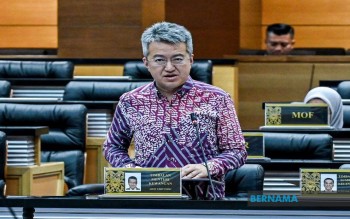
Parliament's lower house has ratified two significant pieces of legislation aimed at reshaping Malaysia's approach to intergenerational wealth preservation and official statistics collection. The National Trust Fund (KWAN) Bill 2026 and the Statistics Bill 2026 were both passed on July 16 during the parliamentary sitting that commenced on June 22 and concluded after 16 days of deliberations. Together, these measures represent a comprehensive modernisation of the legal and institutional frameworks governing Malaysia's long-term financial reserves and national data infrastructure, with implications that extend beyond administrative efficiency to encompass broader questions of fiscal transparency and evidence-based policymaking.
The KWAN legislation, introduced by Deputy Finance Minister Liew Chin Tong, seeks to fortify the legal architecture underpinning Malaysia's sovereign wealth accumulation. Despite nearly four decades of operation, the fund has accumulated RM22.43 billion by the end of 2024, a figure that reflects both the extended timeline required for substantial intergenerational savings and the limitations of Malaysia's current contribution mechanisms. Petronas has remained the fund's sole voluntary contributor, providing RM13.5 billion of its total assets—a concentration of funding sources that underscores the fund's dependence on a single corporate entity rather than systematic, government-mandated contributions. The legislation establishes a minimum contribution rate of 0.1 per cent, deliberately framed as a parliamentary obligation that cannot be circumvented through executive decree. This structural safeguard proves particularly significant for Southeast Asia, where governments frequently face pressure to redirect long-term savings toward immediate spending demands. By anchoring the contribution mechanism in parliamentary statute rather than administrative discretion, the bill attempts to insulate intergenerational savings from short-term fiscal temptations across changing political cycles.
Under the new framework, withdrawals from KWAN remain constrained to three designated purposes: education, healthcare, and climate change mitigation and adaptation. This purposeful limitation reflects global best practices seen in sovereign wealth funds from Norway to Singapore, where restricted withdrawal criteria protect fund longevity against mission creep. For Malaysia specifically, the education and healthcare focus aligns with the long-standing developmental priorities articulated in successive five-year plans, while the climate change provision acknowledges the nation's vulnerability to environmental degradation and rising sea levels—concerns of paramount importance to an archipelagic country increasingly threatened by monsoon flooding and coastal erosion. The requirement that any modification to contribution rates must return to the Dewan Rakyat for formal amendment represents a democratic check designed to prevent unilateral executive reduction of funding commitments, a concern particularly relevant given Malaysia's history of fiscal pressures and competing budgetary demands.
Parallel to these financial governance improvements, the Statistics Bill 2026 represents an overdue modernisation of Malaysia's data collection apparatus. The legislation replaces the Statistics Act 1965, which has remained substantially unchanged for 61 years despite radical transformations in data science, computational capacity, privacy concerns, and international statistical standards. The new framework establishes a National Statistics Council to serve as the principal advisory body, tasked with endorsing statistical standards, assessing procedural adequacy, and providing authoritative guidance on statistical methodology. This institutional innovation addresses a longstanding gap in Malaysian governance: the absence of a high-level coordination mechanism to harmonise statistical production across fragmented government agencies and ensure consistency with international protocols.
The updated legislation has been deliberately aligned with international best practices promulgated by the United Nations, the United Nations Statistical Commission, and the United Nations Economic Commission for Europe. This alignment carries practical significance for Malaysian policymakers, researchers, and international investors who increasingly rely on standardised, comparable data to assess national performance and allocate resources. By adopting UNSC and UNECE guidelines, Malaysia positions its official statistics alongside those of advanced economies, facilitating genuine benchmarking rather than reliance on estimates or alternative datasets. The bill explicitly strengthens data confidentiality protections in accordance with the United Nations Fundamental Principles of Official Statistics, addressing growing public concerns about data privacy while maintaining the statistical integrity necessary for evidence-based governance.
During the parliamentary session, lawmakers also approved transfer of RM14.5 billion in remaining proceeds from Malaysian Government Investment Issues for the January-May 2026 period into the Development Fund. This allocation follows established mechanisms whereby proceeds from Malaysian Government Securities, Malaysian Government Investment Issues, Treasury Bills, and external borrowings flow into the Development Fund to finance infrastructure, human capital, and capacity-building initiatives. The transfer underscores the interconnected nature of Malaysia's fiscal architecture, wherein surplus revenues from financial issuance are systematically redirected toward developmental expenditures rather than consumed through recurrent spending. For Malaysian taxpayers and investors, this approach signals commitment to sustaining infrastructure investment during periods of fiscal consolidation.
Parliamentary discussions also surfaced concerning the Retirement Fund's controversial investment in eFishery, the Indonesian aquaculture startup that collapsed following management fraud and financial statement manipulation. The incident highlights governance vulnerabilities within Malaysia's sovereign wealth and pension funds, demonstrating that even professionally managed institutional investors face substantial risks when deploying capital internationally without sufficient due diligence protections. For Southeast Asian pension funds and sovereign wealth investors more broadly, the eFishery episode serves as cautionary reminder that emerging market opportunities, however attractive on paper, demand rigorous investigation of management integrity and operational transparency before capital commitment.
The parliamentary session also revisited outstanding liabilities associated with 1Malaysia Development Bhd, the scandal-tainted development fund that has imposed extraordinary fiscal burdens on the Malaysian government. To date, the government has settled RM42.5 billion in 1MDB's debts and obligations, with RM20.1 billion remaining outstanding absent further asset recoveries. This continuing fiscal shadow, nearly a decade after 1MDB's spectacular collapse, illustrates the long-tail costs of governance failures and institutional corruption. The persistent obligation constrains fiscal flexibility, limiting resources available for new developmental initiatives or intergenerational savings. Parliamentary attention to this unresolved liability reflects the institution's growing emphasis on fiscal transparency and accountability—a belated but necessary reckoning with the consequences of permitting complex financial structures to develop beyond effective oversight.
Collectively, the KWAN and Statistics legislation passed during this parliamentary session demonstrate renewed institutional focus on governance modernisation and systematic long-term planning. For Malaysian citizens and investors, these measures signal movement toward more transparent, standardised, and internationally aligned approaches to both wealth preservation and data-driven policymaking. However, implementation success will depend on effective resourcing of the National Statistics Council, genuine multi-agency cooperation on statistical standards, and sustained political commitment to respecting KWAN's withdrawal restrictions even during fiscal crises. These bills represent legislative intention; the challenge ahead lies in translating parliamentary mandate into institutional practice.

