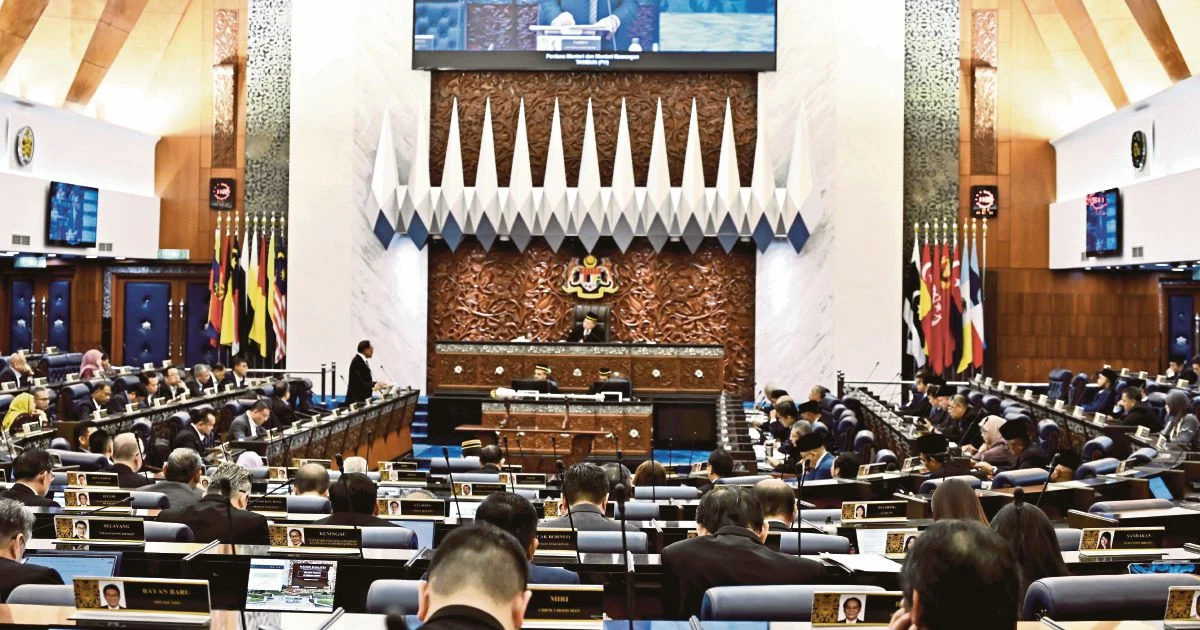
Proceedings in the Dewan Rakyat descended into acrimony within the first hour of today's session when a procedural disagreement about the opposition leader's standing balloons into a broader confrontation between coalition partners and their critics. The incident underscores the precarious equilibrium that has defined Malaysia's political landscape since the 2023 general election, with underlying tensions between PAS and fellow government alliance member Bersatu threatening to destabilise parliamentary decorum.
The flashpoint emerged when government and opposition lawmakers clashed over the recognition and role of the opposition leader—a seemingly procedural matter that revealed deeper grievances simmering beneath the surface of the ruling coalition. Takiyuddin Hassan, a senior PAS parliamentarian, found himself at the centre of the dispute after a government MP levelled accusations that PAS has engaged in bullying tactics against Bersatu, Malaysia's smaller coalition partner. The allegation struck at the heart of concerns about power imbalances within the four-party ruling pact comprising PAS, Bersatu, UMNO, and MCA.
The heated back-and-forth between Takiyuddin and his government colleague reflects mounting frustrations within the coalition structure. PAS, which emerged as the election's single largest Islamic party with significant parliamentary representation, wields considerable influence over policy direction and ministerial appointments. Bersatu, which previously led the Pakatan Harapan government before the coalition's fracture, has found itself relegated to a junior partner role despite controlling several parliamentary constituencies. This power asymmetry has become a source of tension, particularly as PAS pushes Islamic-centric policies that some coalition members view as threatening to moderate governance.
The parliamentary eruption offers rare public visibility into private grievances that have simmered for months. Multiple sources within government circles have indicated that Bersatu leadership has increasingly felt marginalised in high-level coalition decision-making and frustrated by what they perceive as PAS's assertiveness in pressing its religious and social agenda. These tensions are not merely personality conflicts between party leaders but reflect fundamental philosophical differences about the direction of governance, particularly regarding Islamic law, constitutional matters, and secular policy frameworks that distinguish the coalition partners.
Takiyuddin's aggressive parliamentary intervention suggests PAS is unwilling to tolerate what it interprets as challenges to its political standing or suggestions that it exercises inappropriate leverage. The rapid escalation of a technical parliamentary dispute into a substantive political argument demonstrates how fragile consensus mechanisms within the coalition remain. Even routine legislative procedures can become flashpoints when underlying trust is compromised and political narratives pit coalition members against one another.
The incident carries implications far beyond parliamentary theatre. Investors and international observers closely monitor Malaysia's political stability as a key economic indicator, and public displays of coalition fracture can undermine confidence in government continuity and policy consistency. The business community already faces uncertainty about regulatory direction given divergent priorities within the ruling alliance, and parliamentary discord reinforces perceptions that coherent long-term policymaking remains elusive.
For ordinary Malaysians, these coalition tensions translate into institutional dysfunction that complicates agenda-setting and legislative efficiency. With multiple power centres competing within government, critical national priorities—from economic competitiveness to education reform to healthcare modernisation—risk being subordinated to inter-party negotiations and compromise measures that satisfy political requirements rather than substantive national needs.
The timing of the clash is particularly significant given that parliamentary sessions provide opposition lawmakers with platforms to amplify coalition divisions. Opposition members can weaponise internal government disagreements to undermine public confidence in the ruling alliance's capacity to govern effectively. Takiyuddin's reaction, rather than diffusing concerns, inadvertently amplified the narrative that coalition partners harbour deep resentments toward one another.
This pattern has become familiar across Southeast Asia's coalition governments, where ideologically disparate parties scramble to form working majorities. Thailand, Indonesia, and the Philippines have all struggled with similar coalition instabilities that produce parliamentary theatrics, legislative gridlock, and policy incoherence. Malaysia's coalition, however, operates under additional constraints given religious and constitutional sensitivities that other democracies might compartmentalise more easily.
Moving forward, the ruling coalition faces mounting pressure to establish clearer power-sharing mechanisms and conflict resolution procedures. Without institutional mechanisms to arbitrate disputes between coalition partners and transparent agreements about policy boundaries, parliamentary sessions risk becoming regular arenas for public recriminations. Senior coalition leadership must address legitimate grievances about power distribution and policy direction through private negotiations rather than allowing tensions to explode during legislative proceedings.
The exchange between Takiyuddin and the government MP serves as a reminder that Malaysia's governing arrangement remains contingent and vulnerable to deterioration. Political survival increasingly depends not on substantive policy agreement but on negative incentives—fear of returning to opposition status outweighs principled policy disagreements. This foundation proves insufficient for cohesive, purposeful governance over extended periods. Unless coalition partners develop stronger institutional bonds and clearer dispute-resolution mechanisms, such heated parliamentary clashes will likely become routine occurrences, further eroding institutional credibility and public confidence in democratic governance.