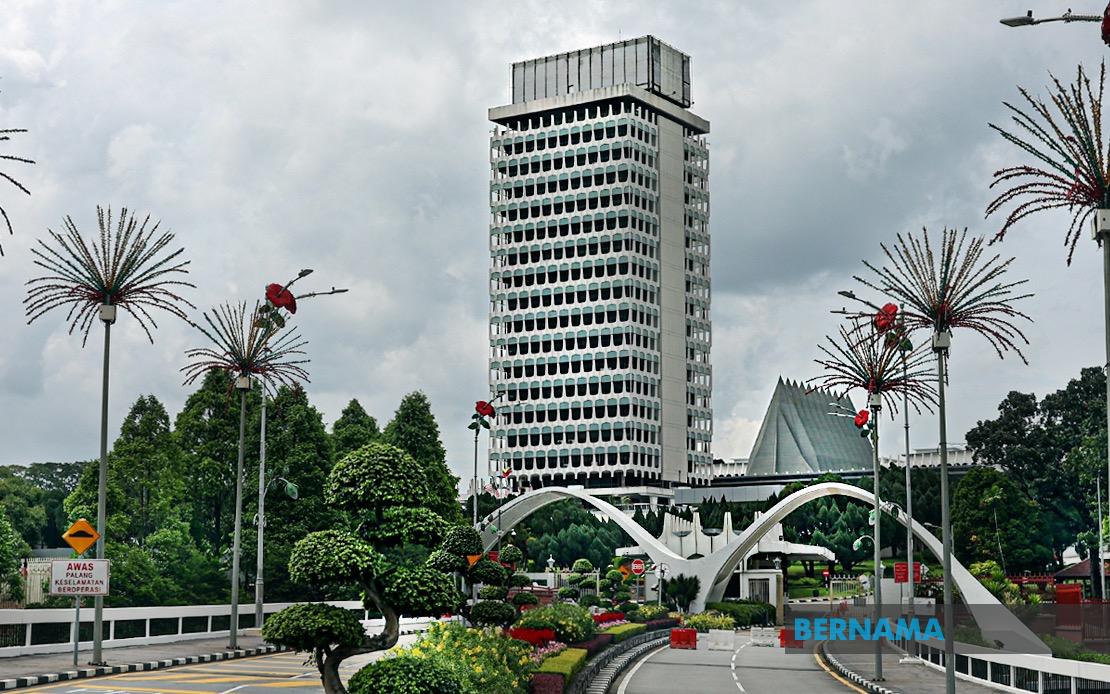
The Dewan Rakyat's second week of proceedings centred on fundamental questions about resource distribution across Malaysia, with Prime Minister Datuk Seri Anwar Ibrahim delivering a comprehensive explanation of how federal allocations are determined and disbursed to state governments. During Ministers' Question Time on Tuesday, Anwar dispelled suggestions that the federal government has systematically disadvantaged certain states by confirming that the vast majority of states actually receive funding packages that surpass the tax revenue they individually contribute to national coffers. This revelation carries significant implications for understanding Malaysia's fiscal federalism, particularly for states concerned about their economic standing relative to the federal government.
Anwar's statement directly addressed political concerns that have periodically surfaced, with opposition figures occasionally claiming that their respective states were being marginalised through budget allocation mechanisms. The Prime Minister's position emphasises that allocation decisions prioritise development requirements and population well-being rather than simple revenue-return formulas. This approach reflects a redistributive philosophy designed to address regional disparities and ensure that infrastructure and services reach all communities regardless of their direct tax contributions. For Malaysian readers, this principle underscores how federal financing operates as an instrument for balancing development across the nation rather than functioning as a strict commercial transaction where money flows back to its source.
A procedural matter also received attention during the week when Anwar stressed that state governments seeking additional funding for development projects must follow formal renegotiation processes. When states submit a Notice of Change regarding project parameters or scope, any corresponding requests for supplementary allocations or loans cannot be automatically approved but must undergo proper evaluation and approval mechanisms. This procedural requirement ensures fiscal discipline and prevents ad-hoc spending that could destabilise national budgets. The clarification reflects the government's commitment to maintaining structured financial governance while remaining responsive to evolving state needs.
The Prime Minister additionally reminded parliament that campaign announcements involving new projects or policies are prohibited during election periods, citing Section 24B of the Election Offences Act 1954. This legal constraint aims to prevent governments from using public funds as electoral tools and maintains fairness in the electoral process. The reminder proved timely given Malaysia's experience with election cycles and the potential for policy announcements to become entangled with partisan campaigns.
Parliament's legislative agenda produced several consequential outcomes during the week. The Sexual Offences Against Children (Amendment) Bill 2026 progressed toward passage, strengthening protections for vulnerable young people through enhanced legal frameworks. Simultaneously, amendments to the Employment Insurance System Bill 2025 were advanced, reflecting ongoing efforts to modernise Malaysia's social safety net and employment protections. These measures address pressing concerns about child welfare and worker security that resonate with Malaysian families and labour advocates.
The Cybercrime Bill 2026 represents perhaps the most substantial legislative achievement, introducing comprehensive provisions addressing digital-era offences that pose growing threats to Malaysian society. Critically, the bill establishes specific offences related to digital forgery, commonly referred to as deepfakes, alongside penalties for disseminating manipulated intimate images through computer systems. Given the proliferation of deepfake technology and non-consensual intimate image sharing across social media platforms, this legislation provides necessary legal tools to combat emerging forms of digital harm that disproportionately affect women and public figures. The bill's passage signals government recognition that traditional criminal frameworks require updating to address sophisticated technological abuse.
Minister in the Prime Minister's Department Datuk Seri Azalina Othman Said advanced discussions on contract law modernisation, announcing that a comprehensive study has been completed and shared with parliamentarians. The government is developing new contract legislation designed to recognise third-party rights and update frameworks governing commercial agencies, with particular attention to artificial intelligence integration. This modernisation effort acknowledges that Malaysia's commercial legal architecture must evolve alongside technological change to remain relevant for businesses operating in an AI-enabled environment. The final report, incorporating policy recommendations and comparative analysis, provides the foundation for legislative action that could position Malaysia as a jurisdiction with contemporary contract law provisions.
Economic stability and price control emerged as priorities this week, with Economy Minister Akmal Nasrullah Mohd Nasir detailing daily monitoring systems for essential goods and commodity prices. Coordination with Petronas and industry stakeholders ensures that energy supply remains stable and consumer needs along with economic sector requirements are protected. For Malaysian households feeling inflationary pressures, the government's stated commitment to supply-chain efficiency and price stability addresses genuine concerns about cost of living that affect purchasing power and household budgets across income levels.
Education initiatives received attention through the MADANI Book Voucher programme 2026, which Deputy Education Minister Wong Kah Woh indicated will reach more than 2.2 million students under the Ministry of Education's purview, backed by an allocation of RM221.6 million. The e-voucher system, valued at RM100 per student with redemption running from the previous Wednesday through October 31, represents a direct investment in student access to reading materials and learning resources. This programme demonstrates targeted spending on education that aligns with government efforts to enhance literacy and learning outcomes among young Malaysians.
Communications Minister Datuk Fahmi Fadzil outlined progress on the Online Safety Act 2025, indicating that regulatory frameworks are being finalised with an additional instrument addressing private messaging features. This development recognises that digital platforms' obligations to manage harmful content must be clearly articulated to prevent abuse while preserving legitimate communication. The Malaysian Communications and Multimedia Commission's exploration of agentic AI technology for complaint management reflects sophisticated approaches to digital regulation that can improve responsiveness without proportionately expanding bureaucratic workload.
The government's encouragement of social media platforms to deploy AI technology for detecting and removing guideline-violating content addresses the practical challenge that human moderation alone cannot adequately manage the volume of content flowing through major platforms daily. This public-private collaboration model seeks to empower platforms to police themselves more effectively while government maintains oversight frameworks. For Malaysian users, improved content moderation promises safer digital environments less vulnerable to misinformation, hate speech, and exploitative material.
The current parliamentary sitting extends through July 16, with the second week's proceedings demonstrating sustained focus on modernising legal frameworks, addressing digital-era challenges, and clarifying fiscal distribution mechanisms. These developments affect how Malaysians relate to government services, digital safety, educational access, and economic security in coming years. The breadth of legislative activity indicates parliament's engagement with contemporary governance challenges ranging from technological disruption to traditional resource allocation questions.

