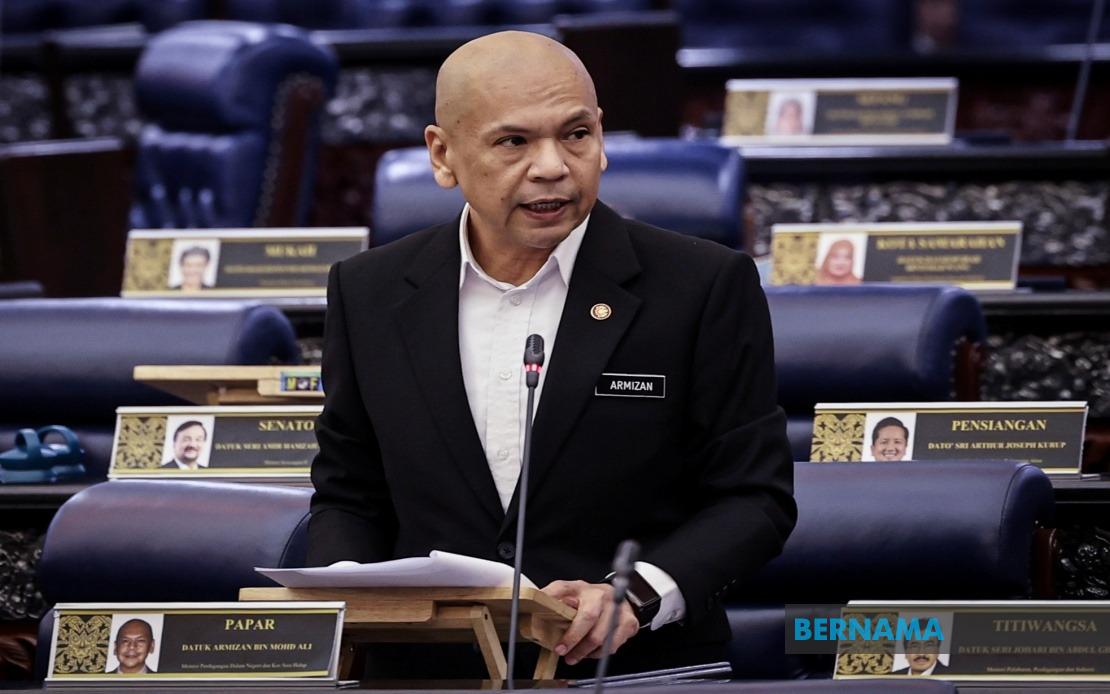
Members of Parliament have unanimously stressed the need for any investigation stemming from the Royal Commission of Inquiry report on Lembaga Tabung Haji to be conducted with full transparency and independence, prioritising the protection of depositors' rights and broader national interests. The calls came during a special parliamentary sitting dedicated to examining the widely-publicised RCI report, which became a focal point for public discourse following its public release on July 29.
Minister of Domestic Trade and Cost of Living Datuk Armizan Mohd Ali articulated widespread concern that the TH situation had devolved into a protracted dispute filled with competing accusations among various stakeholders. He drew attention to the proliferation of claims and counter-claims of slander and defamation that have muddied public understanding of the underlying issues. In such a charged atmosphere, distinguishing between victims and perpetrators of slander has become nearly impossible, leaving many Malaysians uncertain about the actual facts of the case.
Armizan emphasised that professional investigation at the enforcement agency level was essential to cut through the confusion and restore clarity. Rather than allowing the narrative to remain entangled in personal disputes and reputational battles, he argued that objective fact-finding based on evidence and legal standards would serve the national interest more effectively. This approach, he suggested, would enable the public to understand the situation on its merits rather than through the lens of partisan disagreement.
Beyond immediate investigative action, Armizan highlighted the importance of thoroughly evaluating the 25 improvement recommendations contained within the RCI report. This comprehensive approach to implementation, he contended, would support TH's broader recovery trajectory and strengthen its governance framework for the future. He also acknowledged TH's own recovery efforts, which have brought the organisation back to financial health despite the governance issues identified in the report.
Minister of Women, Family and Community Development Datuk Seri Nancy Shukri contributed to the parliamentary discussion by endorsing the existing structure that places haj affairs management under the Minister in the Prime Minister's Department (Religious Affairs), while keeping financial and investment matters within the Finance Ministry's purview. She characterised this division as a rational specialisation of responsibilities, allowing each ministry to exercise expertise appropriate to its domain whilst eliminating duplicative oversight.
A particularly contentious issue addressed during the sitting concerned political appointments to the board of directors. Nancy rejected the notion that political background automatically disqualifies candidates, instead proposing a merit-based framework. She argued that the relevant question is not whether appointees have political connections, but whether they demonstrate the integrity, qualifications, experience and capability necessary for their roles. An individual with a political background who possesses genuine expertise and demonstrates competence deserves recognition for their contributions.
Nancy cautioned, however, against allowing political labels or positions to substitute for rigorous fit-and-proper criteria. She advocated for clearly defined appointment standards, transparent selection methodologies, and explicit expertise requirements that would ensure board members are chosen primarily on merit and suitability. This approach would ostensibly depoliticise the recruitment process whilst maintaining accountability to professional standards.
The special parliamentary sitting itself represented an important moment for democratic accountability, as it provided legislators with a formal opportunity to examine and debate the RCI's extensive findings. The report's public release on July 29 followed a government decision to ensure transparency, marking a deliberate shift towards public scrutiny of TH's institutional failures. This openness contrasts with historical patterns where such sensitive matters might have been handled with greater discretion.
The RCI's investigation identified significant management and operational weaknesses spanning the 2014 to 2020 period, a critical window during which poor governance decisions appear to have accumulated. The report's 25 recommendations represent a comprehensive roadmap for institutional reform. Notably, as of July 30, TH had already implemented approximately 75 percent of these recommendations, suggesting some momentum toward addressing the commission's concerns, though the pace and quality of implementation remain subjects worthy of continued scrutiny.
For Malaysian depositors and the public broadly, the parliamentary response signals that accountability mechanisms are being engaged. The emphasis on transparent investigation and merit-based governance reform reflects growing expectations that religious and financial institutions serving the Muslim community must operate with the highest standards of probity. The TH case has become emblematic of broader concerns about institutional governance in Malaysia, making the response to the RCI findings a test of the government's commitment to integrity and public trust.
The outcome of these investigations and reform efforts will likely shape public confidence in TH's future trajectory and broader institutional confidence in how Malaysia manages both religious affairs and financial oversight. As these processes unfold, the parliamentary discussion indicates that legislators remain attuned to public concern and committed to ensuring that investigations proceed fairly and that systemic improvements address root causes rather than merely addressing symptoms.

