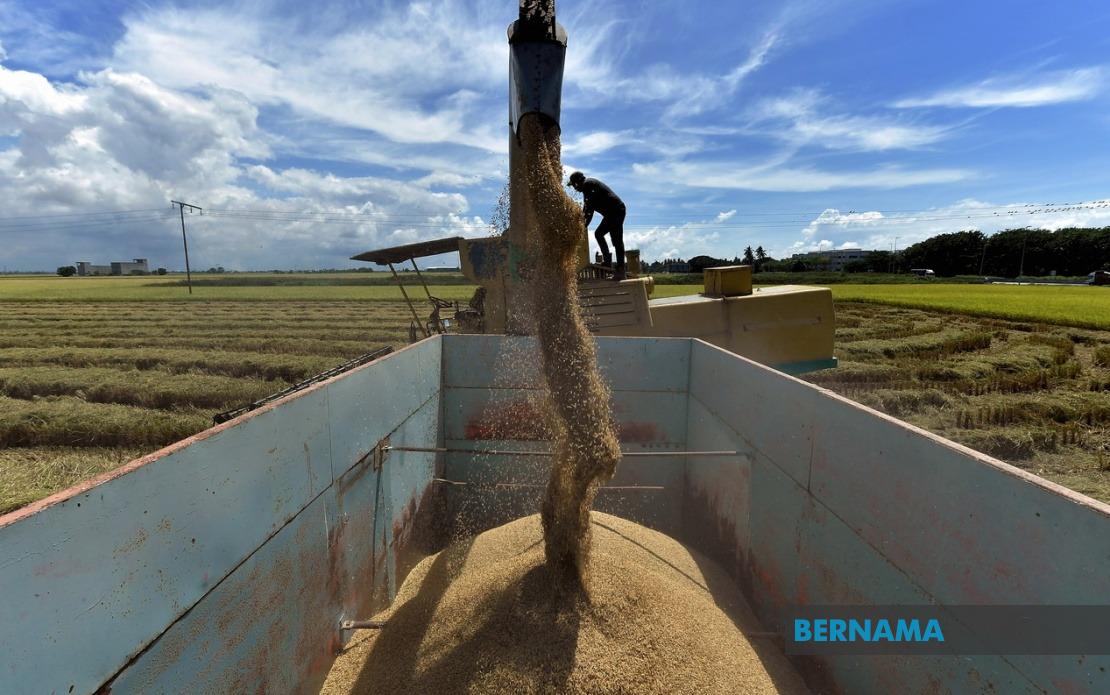
The Dewan Rakyat has endorsed the Control of Padi and Rice (Amendment) Bill 2026, marking a significant legislative move to fortify Malaysia's agricultural sector and food supply chain against exploitation. The chamber approved the measure through a majority voice vote following extensive debate from lawmakers across government and opposition benches, signalling broad parliamentary consensus on the need to modernise enforcement mechanisms within the rice industry.
The centrepiece of the amendments involves substantially raising financial penalties for violations across the padi and rice sector. Individual offenders now face fines reaching RM250,000, whilst companies and corporate entities confront potential penalties of up to RM1 million under the revised Section 22 of the principal Act. These increases represent the first comprehensive review of penalty structures since Act 522 was originally enacted three decades ago in 1994, a gap that Deputy Minister of Agriculture and Food Security Datuk Chan Foong Hin characterised as entirely inadequate given market realities.
The rationale underpinning the penalty escalation draws from enforcement realities on the ground. Official data compiled by agricultural authorities reveal that seizures attributable to rice smuggling operations and the unlawful diversion of domestic white rice stocks represent significant monetary values annually. Yet the previous penalty framework, designed when the industry operated under vastly different commercial and technological conditions, failed to impose punishments proportionate to the substantial profits accumulated by offenders through illicit operations. The multi-billion-ringgit scale of the padi and rice sector meant that historical fines amounted to merely minor business expenses for sophisticated operators engaging in large-scale contraventions.
Deputy Minister Chan articulated the government's position clearly: contemporary penalties must reflect the gravity of offences and genuinely deter misconduct rather than serving as negligible operating costs. The amendments function fundamentally as a recalibration ensuring that legal consequences meaningfully address the financial incentives driving illegal behaviour. This approach targets not just isolated wrongdoing but the systemic economic logic that encourages smuggling networks and market manipulation schemes that undermine domestic producers.
Parliamentary discussion revealed substantial concern regarding the vulnerability of padi farmers to predatory market practices. The amendments address this dimension by establishing enhanced regulatory safeguards protecting farmer livelihoods from manipulation by better-capitalised commercial actors. By raising the cost of non-compliance through steeper penalties, the legislation theoretically creates more level competitive conditions favouring legitimate agricultural production and distribution networks over illicit alternatives.
Datuk Idris Ahmad, representing the Bagan Serai constituency, highlighted implementation challenges requiring supplementary measures beyond enhanced penalties alone. He advocated for the development of explicit prosecution guidelines to strengthen the supply chain's legal protections, alongside specialised training programmes equipping prosecutors with the expertise necessary to pursue appropriate sentencing outcomes in courts. This perspective recognises that legislative penalties possess limited deterrent value without corresponding prosecutorial capacity and judicial understanding of industry-specific violations.
Opposition member Tan Hong Pin advanced a more critical assessment, urging the ministry to reconsider the proposed penalty architecture itself. He additionally recommended establishing an independent committee tasked with periodic evaluation of Padiberas Nasional Berhad's performance addressing cartel behaviour comprehensively. This suggestion implies concerns that structural governance issues within the sector's principal trading entity may require concurrent reform to complement purely punitive legislative measures.
Digital technology emerged as a central theme within parliamentary remarks, with multiple lawmakers emphasizing supply-chain transparency mechanisms. Azli Yusof advocated for comprehensive digital traceability systems spanning the entire padi and rice supply chain, enabling monitoring from production through consumer point-of-sale. Such systems would theoretically eliminate leakages and supply disruptions by creating transparent records of product movement and handling. This reflects growing recognition that modern regulatory challenges in agricultural commodities demand technological solutions alongside traditional enforcement.
Manndzri Nasib extended this technological vision by proposing individual QR code identification for every rice bag. Such product-level tracking would empower both consumers and enforcement authorities to monitor real-time stock movement throughout distribution networks, facilitating rapid detection of mislabelling, hoarding, and diversion from intended channels. This granular approach transforms enforcement from post-facto investigation to contemporaneous supply-chain visibility, potentially addressing root causes of market manipulation rather than merely penalising detected violations.
The parliamentary approval reflects acknowledgement that Malaysia's agricultural food security—increasingly critical as regional supply disruptions become more frequent—depends upon regulatory frameworks matching contemporary industry sophistication and scale. The amendments position enforcement tools within parameters reflecting current economic realities while simultaneously addressing technological gaps that existing oversight mechanisms fail to adequately cover. Implementation success will ultimately depend upon coordinated execution across ministry enforcement divisions, prosecutorial services, and judicial institutions, alongside potential technological infrastructure investment to realise the transparency mechanisms lawmakers identified during debate.

