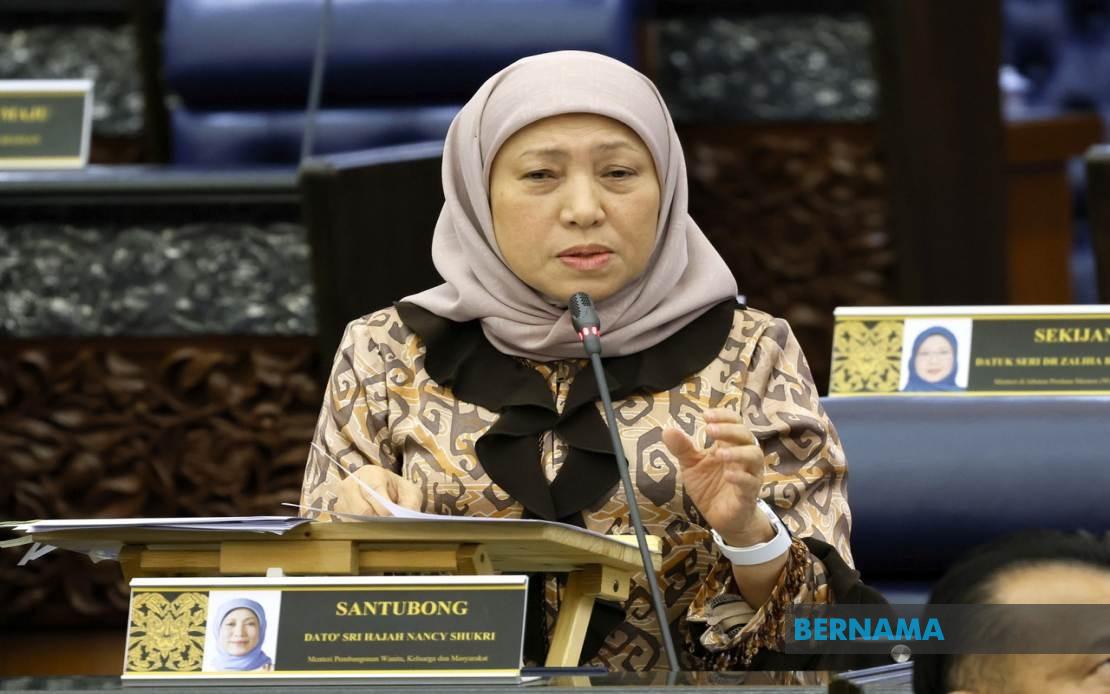
Parliament has taken a significant step toward professionalising Malaysia's social work sector by passing the Social Work Profession Bill 2026, legislation that establishes formal regulatory mechanisms for a field that has long operated without standardised professional oversight. The measure received majority approval from the Dewan Rakyat on July 14 following substantive debate involving 23 lawmakers across party lines, marking what observers describe as a milestone conclusion to approximately a decade of advocacy efforts to secure legislative recognition for the profession.
The Bill creates the Malaysian Social Work Profession Council as the central regulatory body responsible for overseeing practitioners and developing professional standards. Minister of the Women, Family and Community Development Ministry Datuk Seri Nancy Shukri, who wound up parliamentary deliberations, emphasised that the government intends to roll out implementation gradually, first establishing the Council's institutional capacity before extending regulatory requirements more broadly. This phased approach acknowledges the operational complexity of integrating public sector social workers into a unified national framework, a transition that will require careful coordination across multiple government agencies and ministries.
The legislation's immediate scope encompasses private sector social workers, including those employed by non-governmental organisations, community-based organisations, and corporate entities, as well as independent practitioners. All such professionals will be required to register with the Council upon commencement of the act. Conversely, government social workers face differential treatment at this initial stage—they need only register if they engage in social work activities outside their official employment responsibilities. This distinction reflects the current reality that public sector social workers already operate under existing supervision systems, standardised operating procedures, codes of ethics, and training requirements established through government machinery, though Nancy acknowledged these mechanisms lack the unified professional framework that private practitioners will now have.
The minister articulated the government's longer-term vision as one encompassing comprehensive, integrated regulation of all social workers across both public and private domains. She characterised the registration exemption for government employees as a temporary measure necessitated by the complexity of implementing mandatory professional certification across multiple government bodies simultaneously. However, this graduated approach has attracted parliamentary scrutiny, with lawmakers raising concerns about whether creating a two-tiered system inadvertently compromises service standards for vulnerable populations served by government agencies. Howard Lee of Ipoh Timor argued that citizens receiving social services should encounter identical professional standards regardless of whether those services derive from government, NGO, or private providers, particularly given that public social workers frequently handle high-risk cases involving child protection, persons with disabilities, elderly care, and family assistance.
The Council will develop regulations, guidelines, and competency frameworks that establish professional qualifications while creating a complaints mechanism for addressing breaches of conduct. The body will also formulate guidance concerning social worker safety and welfare, matters that have gained prominence as practitioners report increased exposure to workplace hazards. Among future considerations earmarked for the Council is a national social worker reciprocity arrangement, potentially facilitating inter-regional mobility within ASEAN and enhancing Southeast Asian cooperation in addressing transboundary social challenges including trafficking and migrant welfare concerns.
Clarifications embedded within Nancy's parliamentary address address several operational concerns raised in advance of the Bill's passage. Volunteers and informal caregivers fall outside the act's scope, which regulates only professionals meeting defined competency standards. Minimum wage provisions affecting social workers remain subject to existing labour legislation rather than Council determination. Operational funding for the Council will come through annual government allocations, ensuring the body's independence from practitioner fees while distributing costs across the public interest.
Dr. Halimah Ali of Kapar raised a complementary set of concerns during parliamentary exchanges, recommending that government provide targeted financial support to facilitate successful implementation. Her suggestions encompassed special grants to NGOs, scholarships incentivising entry into social work, and placement incentives encouraging professionals to establish practice in underserved rural regions. This intervention highlights awareness that regulatory recognition alone will not necessarily address structural challenges including geographic maldistribution of services, inadequate remuneration, and limited career progression opportunities that have historically constrained social work's attractiveness as a profession.
Lim Lip Eng from Kepong voiced support for elevating social work's professional standing but coupled approval with expectations that the Council function as an independent, transparent body operating with fair enforcement mechanisms and proportionate disciplinary frameworks. His remarks suggest concern that professional councils, if captured by narrow interests or operated without accountability mechanisms, risk compromising their legitimacy. Datuk Siti Aminah Aching of Beaufort, meanwhile, emphasised the legislation's potential to generate professional human capital through competitive career structures distributed throughout Malaysia, including East Malaysian states where geographic constraints have historically limited professional advancement opportunities.
For Malaysia's social welfare ecosystem, the Bill's passage signifies recognition that professionalisation can improve service quality while protecting practitioners' working conditions. The NGO sector, which has historically absorbed much of Malaysia's social work labour force with minimal regulatory oversight, now operates within a framework establishing explicit professional standards. This development carries implications for how Malaysian organisations coordinate with ASEAN counterparts on regional social challenges. The reciprocity mechanism contemplated for future Council development could facilitate cross-border practitioner mobility within Southeast Asia, enhancing the region's capacity to address transnational issues including human trafficking, migrant welfare, and disaster response requiring coordinated social welfare intervention.
The legislation's passage reflects broader recognition across Malaysia's political spectrum that social work requires professional consolidation. However, the persistent exemption of public sector workers from immediate registration requirements reveals tensions inherent in creating unified professional standards across fragmented government systems. Implementation will reveal whether this graduated approach effectively catalyses comprehensive reform or creates enduring inequities in service standards. The Council's first years will prove pivotal in determining whether regulatory mechanisms enhance professionalism or become bureaucratic obstacles to practice. Malaysian practitioners and vulnerable populations depending on social services will watch closely as the Council establishes operational norms that will shape the profession's trajectory for years to come.

