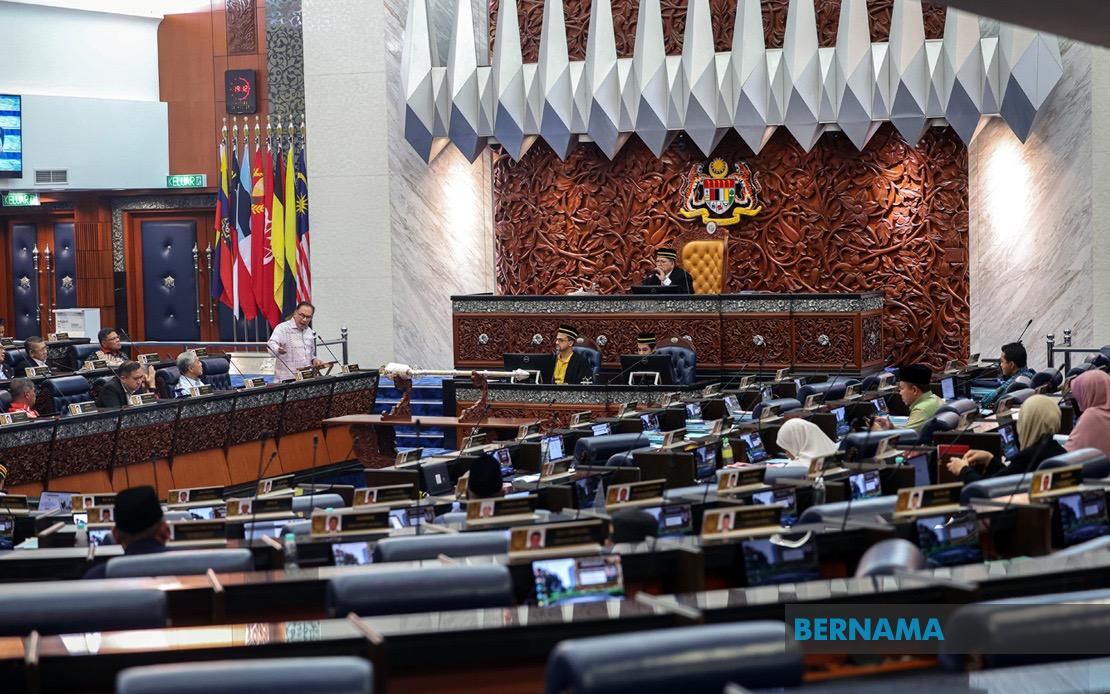
Parliament has given its approval to redirect RM14.5 billion in remaining proceeds from Malaysian Government Investment Issues (MGII) into the nation's Development Fund, marking a significant step in managing the government's debt portfolio and financing development initiatives. The voice vote in the Dewan Rakyat followed parliamentary debate on the technical resolution, signalling broad legislative support for the government's capital management strategy as it navigates fiscal commitments across the economy.
The decision reflects the government's structured approach to debt management, where the RM14.5 billion represents net proceeds after accounting for refinancing requirements. Deputy Finance Minister Liew Chin Tong explained that of the RM40 billion gross MGII issuance between January and May this year, RM25.5 billion was dedicated to refinancing maturing securities, leaving RM14.5 billion available for reallocation toward development expenditure. This refinancing necessity underscores the ongoing complexity of managing Malaysia's debt obligations across multiple security types and maturity dates.
The broader context involves a total MGII programme estimated at RM95 billion, reflecting the government's comprehensive borrowing strategy for 2026. Of this substantial amount, RM55 billion addresses the refinancing of existing MGII securities nearing maturity, while RM2 billion contributes toward redeeming Malaysian Islamic Treasury Bills (MITB), which are short-term Islamic financing instruments aligned with shariah principles. The remaining RM38 billion carries particular significance for Malaysian economic planning, as this portion is designated to partially finance the 2026 fiscal deficit—a critical measure for maintaining government operations and services delivery despite revenue constraints.
Under Malaysia's existing legal framework, a clear distinction governs the government's borrowing capacity. The authorities are restricted to borrowing funds exclusively for development expenditure (DE), including infrastructure, education, and capital projects; operating expenditure (OE) covering civil service salaries, subsidies, and routine administration must rely entirely on government revenue and tax collections. This constitutional constraint has profound implications for budget management, as it forces difficult choices between immediate consumption and long-term investment, influencing how the government prioritises spending across sectors.
Liew provided assurance regarding the government's fiscal trajectory, noting that authorities have systematically reduced new borrowing amounts year after year over recent periods. This trajectory suggests policy commitment to fiscal consolidation, though the continued reliance on substantial MGII issuances indicates that deficit reduction remains gradual. The government's measured approach reflects the challenge of balancing development needs against the imperative to stabilise debt levels and maintain investor confidence in Malaysian securities.
A notable concern raised during parliamentary proceedings involved potential "crowding out" effects within Malaysia's domestic financial market. This phenomenon occurs when large government security issuances consume significant portions of available investment capital, potentially crowding out private sector borrowing and limiting credit availability to businesses and consumers. Deputy Finance Minister Liew addressed this concern by highlighting that government securities and MGII issuances provide crucial investment channels for major institutional players such as the Employees Provident Fund (EPF) and the Retirement Fund Incorporated (KWAP), enabling these entities to generate returns while supporting domestic economic development.
The financing structure of the Development Fund itself encompasses multiple revenue streams beyond MGII proceeds. Transfers originate from the Consolidated Revenue Account, the Consolidated Loan Account, loan repayments from earlier development projects, and various receipts directly tied to development activities. This diversified funding approach reduces dependence on any single borrowing instrument and spreads financial risk across the government's balance sheet, though it also demonstrates the interconnectedness of Malaysia's public finances.
The MGII proceeds transfer carries implications for Malaysian investors and savers, particularly those with exposure through pension and retirement funds. By channelling proceeds into development initiatives, the government effectively converts borrowed capital into productive assets—roads, ports, technological infrastructure, and human capital investments—that theoretically enhance long-term economic returns and currency stability. Without such domestic investment pathways, Liew cautioned, Malaysia risks capital flight and potential currency weakness as institutional investors seek opportunities elsewhere in regional markets.
Parliament's approval also encompasses a forward-looking component, with Deputy Finance Minister Liew indicating that government intends to present another motion during the next parliamentary sitting addressing MGII issuances scheduled for June through December 2026. This sequential approach allows flexibility in capital management while maintaining legislative oversight of major borrowing decisions, demonstrating parliamentary engagement with fiscal governance even as it grants the executive substantial discretionary authority.
For Malaysian stakeholders, including businesses, investors, and taxpayers, the approval signals continuity in government development financing while highlighting the persistent fiscal challenges confronting the nation. The decision underscores that despite stated borrowing reduction objectives, the government continues to rely substantially on debt instruments to bridge the gap between revenue and combined expenditure commitments. As infrastructure demands mount and demographic pressures intensify across Southeast Asia, Malaysia's development funding choices will increasingly shape both near-term economic conditions and long-term competitiveness within the region's rapidly evolving landscape.

