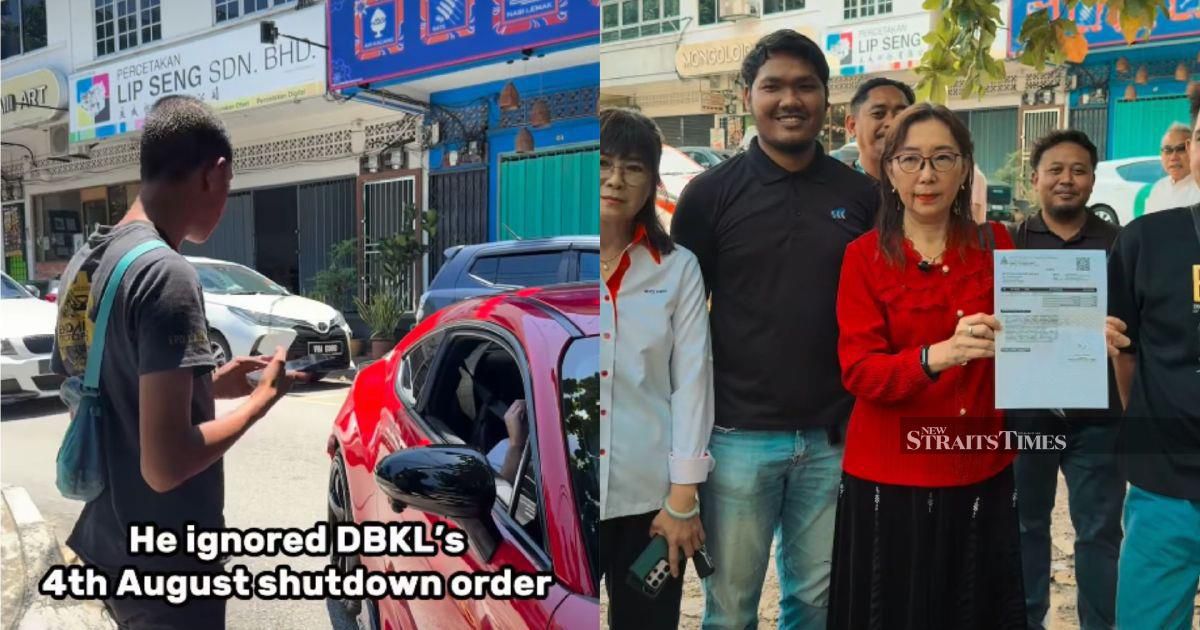
An enforcement operation in Kuala Lumpur's residential Taman OUG neighbourhood has resulted in the arrest of a man accused of operating as an unlicensed parking collector along Jalan Hujan. The apprehension followed an altercation during which the suspect allegedly attacked an officer attempting to enforce compliance with local regulations. The incident underscores ongoing challenges authorities face in combating informal parking collection schemes that have become prevalent in various Malaysian urban areas.
The suspect had been the subject of repeated enforcement attention, with authorities issuing multiple notices directing him to cease the illegal activity. His refusal to comply with these written warnings escalated the situation and prompted direct enforcement intervention. The confrontation that ensued during this enforcement action resulted in the physical altercation that led to his arrest. This pattern of persistent non-compliance despite official warnings is characteristic of many such cases, where individuals continue their activities betting that consistent enforcement may not materialise.
Taman OUG, a densely populated residential area in central Kuala Lumpur, has long grappled with parking pressures typical of established urban neighbourhoods where housing density exceeds available legal parking spaces. These conditions create an environment where informal parking collection schemes flourish, as residents desperate for convenient parking options may be willing to pay unofficial fees to individuals who claim to secure spots for them. The phenomenon has become so commonplace in Malaysian cities that residents often expect such collectors to be present, creating a de facto market for these illicit services.
The role of parking touts in Malaysia's urban landscape represents a complex intersection of infrastructure inadequacy and informal economy expansion. While authorities universally classify these activities as illegal, the practitioners argue they fill a genuine market gap left by insufficient formal parking provision. This argument, though not legally defensible, resonates with a segment of the public that views the services as pragmatic solutions to real parking scarcity. The economic desperation that drives individuals into such work also complicates enforcement approaches, as prosecutions do not address the underlying conditions enabling such schemes to persist.
The alleged assault on the enforcement officer carries particular significance in the context of public safety and official authority. Attacks on personnel attempting to enforce regulations represent a serious challenge to governance and rule of law. Jurisdictions throughout the region have reported escalating incidents where enforcement officers face verbal abuse and physical aggression during routine operations. This trend has prompted calls for enhanced officer protection measures and more severe penalties for those who assault public officials in the discharge of their duties.
From an enforcement perspective, the Taman OUG incident reflects the resource-intensive nature of addressing parking collection schemes in residential areas. Unlike single-location operations that might be eliminated through sustained surveillance, collectors operating across multiple streets and times require coordinated efforts and persistent attention. Many Malaysian local authorities struggle with budgetary constraints that limit their capacity to maintain continuous enforcement presence, making compliance difficult to achieve and sustain. The repeated issuance of notices before escalating to arrest represents the standard enforcement approach, though critics argue such procedures allow violators extended opportunities to continue their activities.
The viral nature of this particular incident—as referenced in the original reporting—suggests that public interest in parking enforcement has heightened, possibly reflecting growing frustration with these schemes among residents and responsible vehicle owners. Social media amplification of such cases can create pressure on enforcement agencies to demonstrate active intervention and may influence public perception of authorities' commitment to maintaining order in residential neighbourhoods. However, viral coverage alone rarely translates into sustained enforcement or systemic solutions to underlying infrastructure problems.
The broader implications for Malaysian urban management are significant. Parking collection schemes exist because formal parking supply falls short of demand in established residential areas, and solving this through enforcement alone proves ineffective. Progressive cities internationally have addressed comparable challenges through comprehensive approaches combining improved public transportation, regulated parking zones with affordable rates, and enforcement against truly dangerous practices. Malaysia's cities, particularly Kuala Lumpur and other major urban centres, would benefit from similar integrated strategies rather than relying solely on reactive enforcement against individuals operating in the gaps created by inadequate planning.
Looking forward, this arrest may prompt the suspect's community and authorities alike to consider whether enforcement cycles can be broken through cooperation rather than confrontation. Rehabilitation and reintegration of individuals previously engaged in parking collection into legitimate employment or microenterprise schemes represent alternative approaches some jurisdictions have attempted. Without addressing root causes—inadequate parking infrastructure and economic desperation—comparable incidents will likely recur as new individuals move into the role vacated by those prosecuted or arrested. The challenge for Malaysian authorities lies in balancing necessary enforcement with the development of sustainable solutions that eliminate the conditions making such activities economically viable for the vulnerable populations that typically engage in them.

