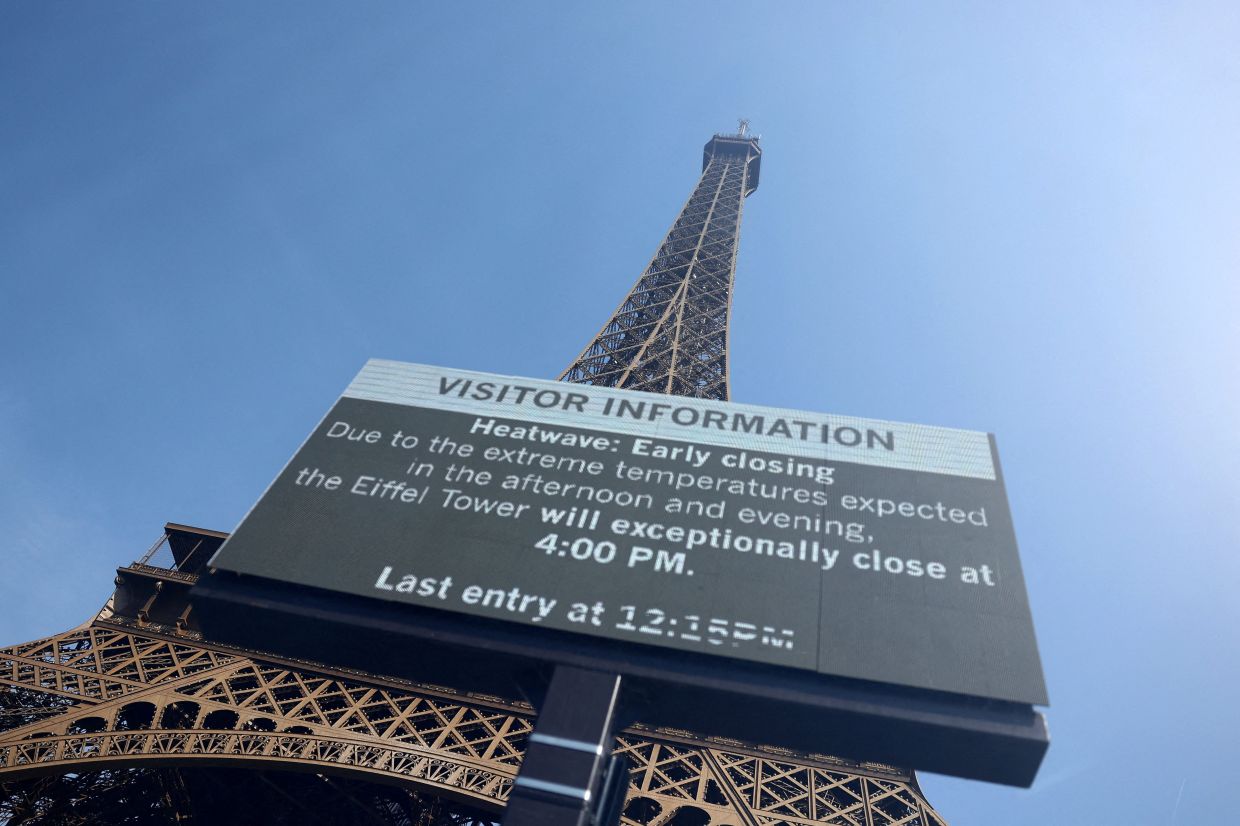
France experienced its most intense heat event in recorded history this week, with June 23 marking the hottest day since temperature measurements began in 1947. The extreme conditions have had cascading effects across the tourism sector, forcing major cultural institutions to curtail operations and abandon their usual summer schedules. The Eiffel Tower, which ordinarily welcomes seven million visitors annually and remains open well past midnight during peak season, shut its doors at 4pm on June 23 with management indicating that abbreviated hours would likely persist. Similarly, the Louvre—the world's most-visited museum drawing approximately nine million visitors each year—announced restrictions, stating the sprawling palace complex was fundamentally "not sufficiently adapted to climate change" to accommodate normal visitor flows during such extreme conditions.
The disruptions have created significant hardship for international tourists who have invested considerable time and resources planning European holidays around visits to these world-renowned sites. Maite Blazques, a 35-year-old nurse from Madrid, had spent months financially preparing to introduce her six-year-old son to the magic of Paris, only to find her meticulously planned itinerary rendered impossible by meteorological circumstances beyond anyone's control. She watched helplessly as her holiday accommodation remained the same, but the authentic Paris experience she had envisioned—scaling the Eiffel Tower's iron lattice structure, navigating the historic Marais district's medieval streets, and gliding along the Seine on a traditional river barge—evaporated entirely. The forced reordering of her entire trip underscores how climate extremes are beginning to compromise the viability of long-held travel traditions.
American visitor Tamara Dancer discovered how quickly such disruptions can ripple through itineraries when her pre-booked guided tour was summarily cancelled on Tuesday afternoon, representing a painful abbreviation of her vacation experience. Across the city, other tourists attempted to maintain their sightseeing momentum through sheer determination and improvisation, equipping themselves with makeshift cooling measures—parasols, wide-brimmed hats, and portable fans—to contend with pavements so hot they radiated shimmering waves of heat back into the oppressive air. John Beeler, a 45-year-old American engineer, lamented that "visiting Paris in this heat is awful," describing a visceral experience of discomfort penetrating every dimension of city life—scorching streets, overheated subway cars, and stuffy rental accommodations all conspiring to create an unbearable environment.
The physical challenge of navigating Paris under such conditions fundamentally undermines the primary way most visitors experience the city. Drake Winners, a 66-year-old British retiree, articulated a melancholy truth that many travelers have discovered: "You discover Paris by walking, but in this heat, it's impossible." The pedestrian-centric exploration that defines the Parisian tourist experience—spontaneous detours into neighbourhood bistros, lingering at street-side cafés, discovering hidden courtyards—becomes impossible when ambient temperatures threaten heat-related illness. Consequently, many visitors have retreated into climate-controlled alternatives, seeking refuge in museums and ecclesiastical spaces where the thick stone walls and architectural design provide natural cooling.
The Louvre, despite its operational constraints, has continued to function as an important refuge for heat-stressed visitors, though management's acknowledgement of inadequate climate adaptation reveals deeper vulnerabilities in cultural infrastructure. The 324-metre iconic tower and the vast palace complex—constructed and refined across centuries by successive French monarchs and presidents—were designed for different climatic realities entirely. The Louvre's candid assessment that its infrastructure cannot adequately serve visitors during heat extremes is particularly significant given that the institution has already weathered numerous problems throughout the past year, ranging from a brazen US$100 million jewellery theft to water infiltration and ongoing maintenance failures.
The geographic scope of the crisis extends well beyond Paris itself, with more than half of mainland France remaining under the national weather service's most severe alert classification. The warning system's highest designation indicates conditions posing genuine threats to public safety and institutional functionality across broad territories. Even celebrated destinations located outside the capital region have joined the precautionary response—Mont Saint-Michel, the spectacular tidal island monastery in Normandy that represents one of France's most visited attractions beyond Paris, has explicitly cautioned potential visitors to "put off your visit during the red alert," effectively recommending the postponement of journeys that many tourists had scheduled months in advance.
For Malaysia and Southeast Asia, this scenario offers important perspectives on emerging climate pressures affecting global travel infrastructure. European destinations have long been flagship aspirational travel goals for affluent Malaysian tourists, and such disruptions foreshadow potential complications for the region's own tourism sectors as climate volatility increases. The cooling and comfort systems that enable pleasant visitor experiences across Southeast Asia's tropical heritage sites, resort destinations, and urban attractions may face similar strains as temperature extremes become more frequent and intense. Thailand's temple tourism, Bali's beach resorts, and Singapore's museums and attractions all depend on maintaining comfortable conditions that extreme heat could jeopardize, potentially forcing similar precautionary closures and visitor restrictions.
The economic implications extend beyond disappointed individuals to encompass substantial revenue losses for tourism-dependent economies. Paris and France's broader tourism industry generate enormous income streams that heat-forced closures directly undermine, suggesting that climate adaptation and resilience must become financial priorities rather than peripheral concerns. For Southeast Asian nations working to expand tourism economies, the Paris experience demonstrates that climate vulnerability represents not merely an environmental concern but an increasingly material business risk. Infrastructure investments must account for escalating heat extremes, and operational contingencies must be built into business planning.
Moreover, the individual human toll reflects a new reality in which weather patterns may progressively exclude certain populations from accessing cultural and natural heritage sites they have spent years planning to visit. The injustice faced by Maite Blazques—a working professional who had saved carefully to create meaningful family memories—suggests that climate disruption compounds existing inequalities, primarily affecting those with fewer resources to adjust travel dates, extend trips, or access premium accommodations with reliable air conditioning. As extreme weather events become normalized rather than exceptional, tourism systems will require fundamental reimagining to remain functional and equitable.

