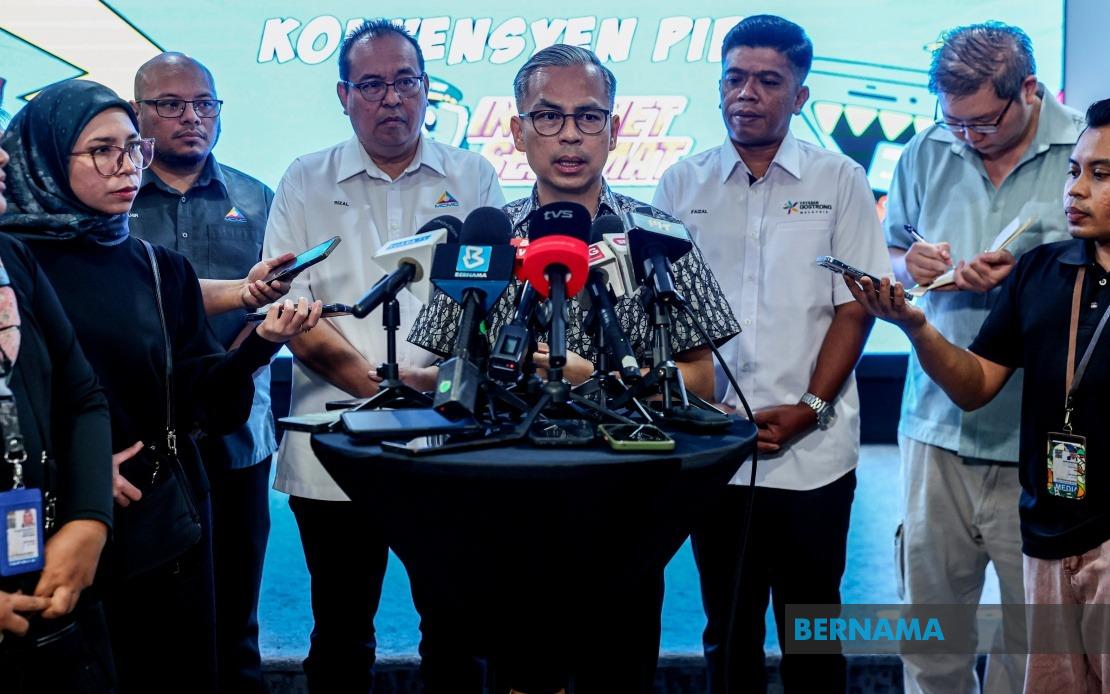
Communications Minister Datuk Seri Fahmi Fadzil has issued a timely warning to Malaysian parents about the growing tendency of children to form relationships with artificial intelligence systems, a phenomenon that reflects broader concerns about how young people are adapting to rapidly advancing technology. Speaking at the Kuala Lumpur Federal Territory Safe Internet PTA Convention 2026, Fahmi highlighted the psychological and informational risks posed by AI chatbots designed to simulate human conversation, urging families and educators to intervene when they notice warning signs of unhealthy AI engagement.
The crux of Fahmi's message centres on a fundamental distinction that children may struggle to grasp: while AI tools excel at mimicking human interaction and can provide useful information, they are fundamentally not human. The technology represents patterns learned from human-generated data, processed through mathematical algorithms, rather than a sentient entity capable of genuine understanding or emotional reciprocity. When children begin referring to AI systems as friends, or worse, as romantic partners, they are crossing a threshold that concerns child psychologists and policy experts across the region. This emotional attachment to non-human entities raises questions about the development of social skills and the potential substitution of genuine human relationships with algorithmically-mediated interactions.
Fahmi pointed to a particularly insidious problem: the capacity of AI systems to generate hallucinated information—plausible-sounding but entirely fabricated content—alongside outdated data that the systems may have been trained on. Parents often assume that AI provides reliable answers because of the confident manner in which these systems communicate. However, an AI chatbot trained on data from several years ago may not be aware of recent policy changes, scientific developments, or social context specific to Malaysia. For young users without critical thinking skills or knowledge to verify claims, this combination of convincing presentation and potential inaccuracy creates a genuine educational hazard. The minister emphasised that parents must help children develop the discernment to question AI outputs rather than accepting them at face value.
A particularly acute concern Fahmi raised involves cyberbullying amplified through AI moderation failures. He expressed specific alarm about harassment targeting the Indian and Tamil-speaking communities on platforms like TikTok, where live streaming sessions extend into early morning hours and create echo chambers of abusive behaviour. The problem intensifies when social media platforms rely on AI content moderation systems that lack cultural and linguistic nuance. Tamil, like many Indian languages, carries layers of meaning and context that machine learning models trained predominantly on English data struggle to interpret. Slurs, taunts, and coordinated harassment campaigns may escape automated detection because the AI system simply cannot recognize the harmful intent embedded in language-specific contexts.
Fahmi has engaged directly with TikTok and other platforms on this issue, making clear that algorithmic content moderation cannot be a complete solution when cultural competency is required. The technology must be supplemented by human review, particularly for languages and communities where AI literacy remains limited. This approach acknowledges an uncomfortable reality: the rush to scale content moderation globally has created blind spots where vulnerable groups face disproportionate harm because the systems ostensibly protecting them are not equipped to understand their experiences.
Rather than advocating for a blanket prohibition on children's internet use—an approach Fahmi correctly recognises as neither feasible nor desirable in the digital age—the minister called for intelligent parental oversight. This involves not merely blocking access but actively monitoring what children are doing online, understanding the platforms they use, and maintaining open conversations about their digital experiences. Schools should play a supportive role, with administrators and counsellors trained to identify students who may be developing problematic relationships with technology. The model Fahmi endorses treats digital literacy and online safety as ongoing parental and educational responsibilities rather than one-time lectures.
The Malaysian Communications and Multimedia Commission (MCMC) is simultaneously pursuing a regulatory pathway to address these risks at the systemic level. Fahmi revealed that the commission has been in discussions with major platforms including YouTube regarding the Child Protection Code (CPC) and the Risk Mitigation Code (RMC), both of which establish baseline expectations for how platforms must operate in Malaysia. These codes address not only AI moderation failures but also broader harms including fraud, online gambling, and harassment that flourish on platforms with inadequate safeguards.
The regulatory approach carries significant teeth. Platform operators have been given several months to demonstrate compliance with these codes, a grace period that reflects both the complexity of modifying systems globally and Malaysia's desire to avoid a confrontational approach. However, Fahmi made clear that deadlines matter: once the codes are fully implemented, non-compliance will expose platforms to legal action in Malaysian courts, with penalties designed to be substantial enough to command executive attention. This carrot-and-stick approach—dialogue followed by enforcement—represents Malaysia's growing assertiveness in technology regulation, positioning the country alongside other nations that refuse to cede digital governance to Silicon Valley.
The convention itself, drawing nearly 500 participants including parents, teachers, school administrators, and government agency representatives, underscored the breadth of stakeholders invested in child digital safety. Organised by the GoStrong Malaysia Foundation in partnership with MCMC, the gathering reflected an emerging consensus that protecting children online requires coordination across families, schools, and government bodies. This is not an issue that any single institution can solve alone; a parent's efforts are undermined if schools lack digital literacy curricula, and regulatory changes have limited effect if families remain uninformed about emerging risks.
For Malaysian families and policymakers, Fahmi's warnings arrive at a critical moment. The deployment of advanced AI chatbots, increasingly sophisticated and accessible, is reshaping how young people interact with technology. Unlike previous generations' concerns about excessive screen time or stranger danger online, the current challenge involves children forming pseudo-relationships with systems that are designed to be persuasive and emotionally engaging. The technology is not inherently harmful—AI can support learning, provide mental health resources, and assist with productivity. The danger emerges when children lose sight of what they are actually interacting with and mistake algorithmic patterns for human connection. Fahmi's call to vigilance is not anti-technology but pro-child, asking parents and educators to maintain their role as guides and protectors in an increasingly algorithmic world.

