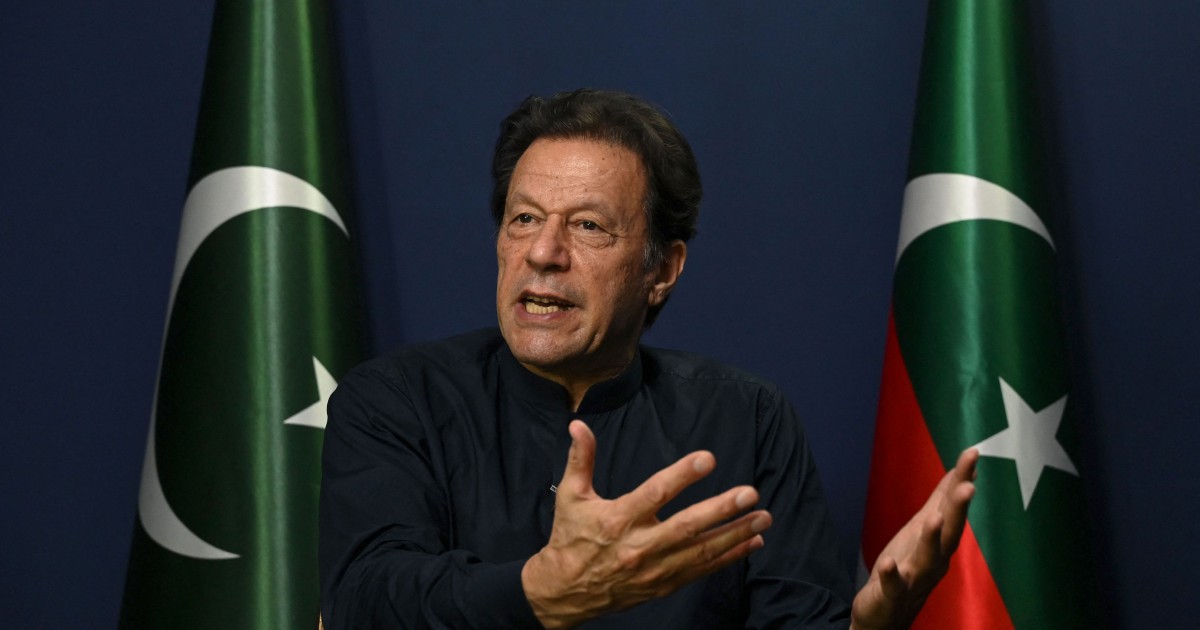
Pakistan's highest judicial authority has intervened in a politically sensitive detention case, ordering the immediate transfer of former Prime Minister Imran Khan from jail to hospital. The Supreme Court's decision on Tuesday represents a significant shift in the handling of Khan's incarceration and directly addresses mounting concerns about his physical wellbeing during his time in custody. The ruling came after repeated appeals from his Pakistan Tehreek-e-Insaf party and family members, who have been vocal about the deterioration of Khan's health conditions while imprisoned.
The development carries substantial implications for Pakistan's complex political landscape, where Khan has emerged as a major opposition figure and maintains significant support among his electoral base. Since his removal from office in April 2022, Khan has faced multiple legal challenges and arrests, with his detention becoming a flashpoint for tensions between the civilian government and his party. The Supreme Court's decision to order his hospital transfer signals judicial recognition that health safeguards must be prioritised, even in high-profile politically contentious cases.
Khan's health situation has reportedly deteriorated during his incarceration, prompting his party to lodge formal complaints and seek court intervention through multiple petitions. Medical assessments conducted outside the prison system have raised alarms about his condition, though authorities have denied assertions that he has been mistreated. The former cricketer-turned-politician's physical state has become a rallying point for his supporters, who view his detention as politically motivated rather than justified by genuine criminal allegations. The Supreme Court's order appears to acknowledge that fundamental humanitarian standards must be maintained regardless of the charges an individual faces.
The Pakistan Tehreek-e-Insaf party, which Khan founded and continues to dominate, has made the recovery of his health a central demand in ongoing negotiations and public statements. The party has characterised Khan's imprisonment as part of a broader pattern of judicial harassment, arguing that his detention violates constitutional protections and fair trial guarantees. By ordering the hospital transfer, the Supreme Court has partially validated these concerns, even if implicitly, by recognising that Khan's current living conditions may pose genuine risks to his wellbeing. This distinction matters significantly in the context of Pakistani politics, where perceptions of judicial impartiality directly affect public confidence in the legal system.
The broader context of Khan's legal troubles illuminates the fractious nature of Pakistani politics in recent years. Since his ouster from the premiership following a parliamentary no-confidence vote, Khan has faced numerous corruption charges, sedition allegations, and other legal proceedings that his party and supporters contend are politically motivated. The multiple cases against him span issues ranging from financial impropriety to unlawful public statements, creating a complex web of legal challenges that have kept him in and out of custody. International observers and human rights organisations have raised questions about whether the cases meet international standards for due process and fairness.
The hospital transfer decision also reflects growing public pressure on Pakistan's judicial system to demonstrate independence and fairness in high-profile cases. Civil society organisations and international bodies have highlighted concerns about the treatment of political detainees in Pakistan, with Khan's case receiving particular scrutiny due to his prominence and the scale of his political movement. The Supreme Court's intervention signals that even within the constraints of existing political tensions, certain minimum humanitarian standards remain non-negotiable. This judgment may set precedents for how the judiciary handles other politically sensitive detention cases moving forward.
For Malaysia and other Southeast Asian nations observing Pakistan's political trajectory, Khan's case offers lessons about the fragility of democratic institutions when political conflicts spill into the judicial domain. Pakistan's repeated cycles of military intervention, constitutional amendments, and politically motivated prosecutions have created an environment where the judiciary's credibility becomes questioned. The hospital transfer order demonstrates that courts can still assert independence on humanitarian grounds, even when larger political questions remain contested and unresolved between competing power centres.
The immediate practical implications of the hospital transfer remain to be determined, including where Khan will be treated, which medical professionals will oversee his care, and what security arrangements will accompany his movement. These logistical details will likely become subjects of negotiation between the government, Khan's party, and relevant medical authorities. The terms of the hospital stay—whether it constitutes continued detention with modified conditions or represents a preliminary step toward release—will significantly affect how both Khan's supporters and the government interpret the Supreme Court's ruling.
Longer-term consequences of this decision extend to Pakistan's broader governance trajectory. If the Supreme Court's intervention on Khan's behalf leads to improved health outcomes and fair treatment, it may bolster public confidence that constitutional institutions can provide meaningful protections. Conversely, if the hospital transfer proves superficial or if Khan faces new charges following recovery, it could deepen cynicism about the judiciary's independence. Khan's case has become emblematic of Pakistan's ongoing struggle to maintain democratic norms while managing intense political polarisation, making the details of his treatment significant beyond the individual circumstances involved.

