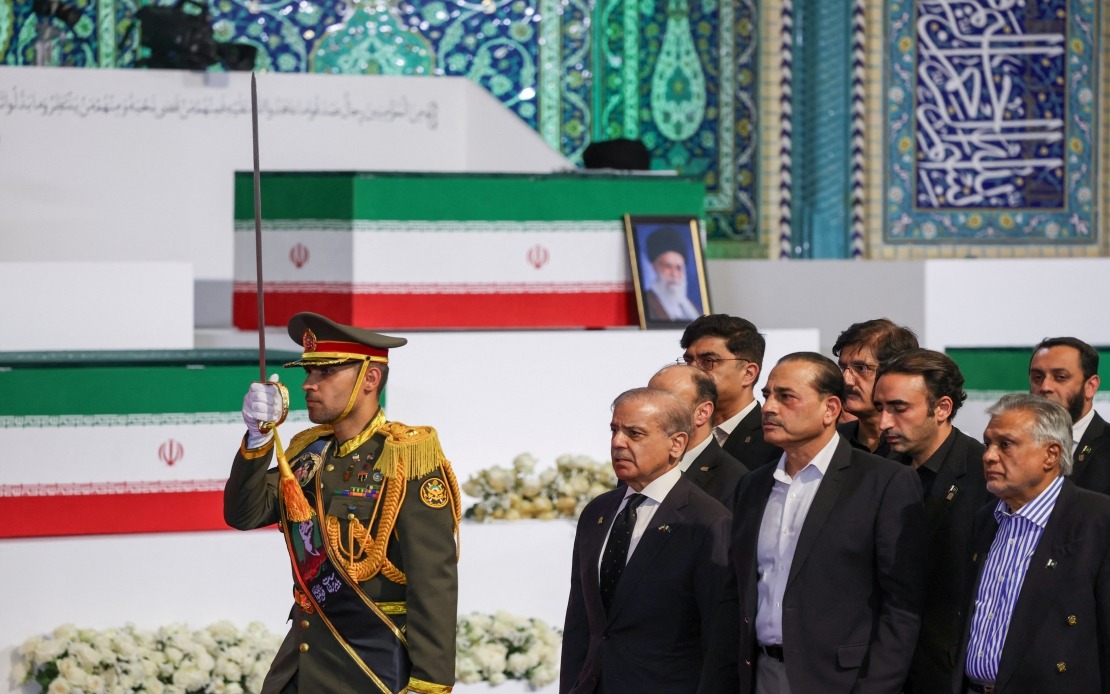
Pakistan's decision to dispatch one of the world's most senior delegations to the funeral of Iran's Supreme Leader Ayatollah Ali Khamenei underscores the significant strategic importance Islamabad places on its relationship with Tehran, even as the region grapples with the extraordinary circumstances surrounding the leader's death. The Iranian Ambassador to Pakistan, Reza Amiri Moghadam, publicly acknowledged Pakistan's gesture as exceptional, noting that the delegation represented not only the highest possible level of official participation but also surpassed in size the delegations sent by any other nation to attend the ceremony held in Tehran on Friday. This diplomatic display carries profound implications for Pakistan's regional standing and its carefully calibrated approach to managing relationships across South Asia and the Middle East.
The assassination of Khamenei, along with several family members, in a February 28 attack on his compound in Tehran attributed to the United States and Israel, represented a seismic event in Middle Eastern geopolitics. The funeral ceremony drew dignitaries from approximately one hundred countries across six continents, reflecting Iran's continuing influence despite years of international isolation and sanctions. The attendees included Malaysia, Bangladesh, Saudi Arabia, Türkiye, Qatar, Oman, Egypt, Russia, Iraq, China, and India, creating an unusually broad coalition of nations united in paying final respects to a figure who shaped Iranian policy and regional affairs for over three decades.
Pakistan Prime Minister Muhammad Shehbaz Sharif headed the delegation, a choice that signalled the gravity with which Islamabad viewed the occasion. His team included figures commanding enormous institutional authority within Pakistan's government and security apparatus. Deputy Prime Minister and Foreign Minister Ishaq Dar brought responsibility for the nation's external relations and economic policy. Field Marshal Syed Asim Munir, in his capacity as Chief of Army Staff, represented the military establishment that remains central to Pakistan's strategic calculations. The inclusion of Bilawal Bhutto Zardari, chairman of the Pakistan People's Party and a key political figure, alongside National Assembly Speaker Sardar Ayaz Sadiq, Interior Minister Mohsin Naqvi, and Information Minister Attaullah Tarar demonstrated that Pakistan's leadership crossed party lines and institutional boundaries to present a unified front on this matter.
The composition of Pakistan's delegation reflected a deliberate strategy to showcase national unity and institutional depth. By including the army chief, the government demonstrated that the visit carried military and strategic dimensions beyond routine diplomatic courtesy. The presence of prominent politicians from the ruling coalition and opposition parties indicated that Iran policy transcends domestic political divisions in Pakistan. This approach contrasts sharply with how many nations approached the funeral, where leaders often sent representatives rather than leading delegations personally.
Ambassador Moghadam's effusive remarks about the delegation carried particular weight because they represent official Iranian sentiment toward a crucial neighbour. His statement that "the presence of such a distinguished, high-ranking and numerous delegation stands as a testament to the enduring friendship, mutual respect, and fraternal bonds between our two brotherly nations" suggests that Tehran views Pakistan's gesture as meaningful validation of the bilateral relationship. Iran's leadership has long viewed Pakistan as a strategic partner despite occasional tensions over border security, sectarian issues, and competing interests in Afghanistan. Pakistan's prominent presence at the funeral may signal Tehran's desire to strengthen these bonds during a period of regional uncertainty.
Prime Minister Shehbaz Sharif used his participation to pay homage to Khamenei's legacy and influence. He characterised the late Supreme Leader's "wisdom, leadership and profound influence on Iran and the wider region" as something that would endure in historical memory. These remarks position Khamenei's death not merely as Iran's internal loss but as a regional development with implications for nations like Pakistan that share borders, trade relationships, and strategic interests with Tehran. Shehbaz's words suggest that Pakistan views Iran's stability and effective leadership transition as issues affecting its own security environment.
Khamenei's tenure as Supreme Leader stretched from 1989 until his assassination at age 86, spanning thirty-five years that witnessed dramatic transformations in Iran and the broader Middle East. During his leadership, Iran navigated the aftermath of its 1979 revolution, the Iran-Iraq war, international sanctions regimes, and the Arab Spring upheavals. His long stewardship meant that multiple generations of regional leaders had learned to work with him and understand his decision-making patterns. For Pakistan, which maintains complex relationships with both Saudi Arabia and Iran, continuity in Iranian leadership carries practical importance for regional balance.
Public funeral ceremonies began Saturday, with arrangements for Khamenei's burial scheduled for July 9 in Mashhad, his birthplace. This timeline allowed international delegations to participate in major observances while also enabling Iran to conduct proper religious and state ceremonies according to Shia Islamic tradition. The choice of Mashhad for the burial location connects Khamenei's legacy to Iran's religious heartland, home to one of Shia Islam's most significant shrines.
For Malaysian readers and Southeast Asian observers, Pakistan's response to Khamenei's death offers insights into how major Muslim-majority nations navigate the complex intersection of religious solidarity, strategic interests, and regional rivalries. Malaysia itself was represented at the funeral, as were other ASEAN members and Muslim-majority nations, reflecting a broad consensus that Iran's leadership transition warranted respectful international participation. Pakistan's decision to lead with such a prominent delegation, however, demonstrates how geographic proximity and shared borders intensify the stakes involved in regional power transitions for neighbouring states.
The funeral gathering also highlighted Pakistan's balancing act within Islamic geopolitics. While maintaining strategic partnership with Saudi Arabia and the Gulf states, Pakistan must also manage its relationship with Iran, to which it is bound by religious affinity, shared history, and practical economic and security concerns. The large delegation sent by Islamabad signals that Pakistan refuses to view Iran's leadership transition as an opportunity to shift alignment, despite pressures from other quarters. This approach reflects Pakistan's assessment that long-term stability and multi-directional relationships serve its interests better than playing one regional power against another.
The diplomatic choreography surrounding Khamenei's funeral demonstrates how state funerals function as venues for international signalling and relationship reinforcement. Pakistan's decision to participate at the highest levels, sending military and civilian leaders together, communicated multiple messages simultaneously: respect for Iran's sovereignty, commitment to the bilateral relationship, and confidence in Iran's ability to manage a transition in its highest office. For Iran's new leadership, such gestures provide tangible evidence of international acceptance and the expectation of continued normal relations. For other regional observers, Pakistan's delegation composition serves as a barometer of how major Muslim-majority powers assess Iran's ongoing significance within the regional order.

