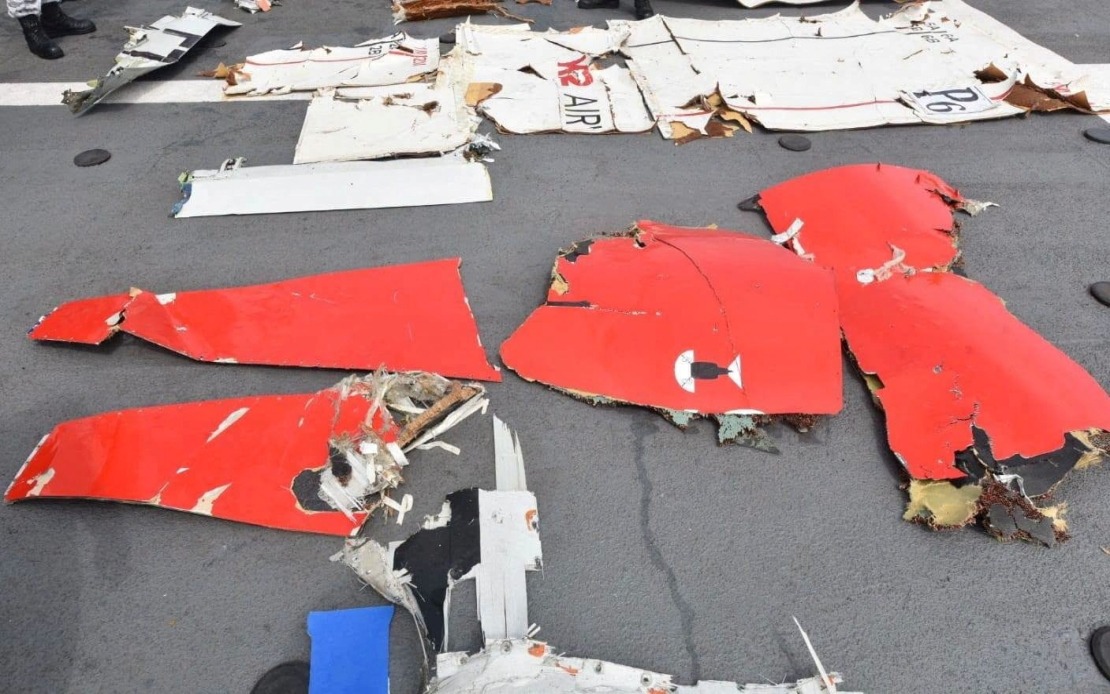
A intensive maritime search operation has led to the discovery of scattered wreckage from a Boeing 737 operated by K2 Airways, though authorities have yet to locate any trace of the aircraft's five crew members who vanished over the Arabian Sea. The Pakistani airport authority announced on Thursday that naval units successfully retrieved fragments of the fuselage off the coast near Amara, positioned to the west of Karachi, concluding a methodical 12-hour search effort that began after the aircraft lost contact with ground control late on Tuesday evening.
The cargo plane had been executing a routine international delivery route, having departed from Sharjah in the United Arab Emirates with its destination set as Karachi, when communications were abruptly terminated. According to official statements from the airport authority, the aircraft began losing altitude rapidly before disappearing entirely from air traffic control radar. Prior to the loss of signal, the flight crew had reported encountering navigation difficulties to controllers, providing the last substantive information available regarding the flight's operational status.
Conditions at sea have significantly hampered the ongoing recovery and search efforts. The Pakistani airport authority emphasised that the monsoon season, which has recently commenced in the Arabian Sea region, has generated exceptionally rough waters that complicate any maritime operations. These seasonal weather patterns create substantial challenges for divers, rescue vessels, and recovery teams attempting to locate additional wreckage or survivors in the debris field.
K2 Airways, the airline operating the aircraft, publicly identified the five crew members through a statement posted on its Facebook page and expressed unwavering commitment to assisting with the investigation. The airline stated that it was engaging in complete cooperation with the Pakistan Civil Aviation Authority and other relevant government agencies while simultaneously requesting continued prayers and support for the safety and wellbeing of its personnel. The composition of the crew included two pilots, two flight engineers, and a loadmaster, representing the standard complement for cargo operations of this type.
The aircraft itself possessed a substantial operational history prior to its service with K2 Airways. The Boeing 737 was originally placed into commercial service in 1999, where it initially operated as a passenger-carrying aircraft. Following industry-standard conversion procedures typical of aging commercial fleets, the aircraft was later refurbished and reconfigured for dedicated cargo operations, extending its productive lifespan within the aviation sector.
K2 Airways, which commenced its own commercial operations in 2018, has established itself as a private Pakistani carrier within the increasingly competitive South Asian air freight market. The airline's involvement in this incident represents a significant operational challenge for the still-young enterprise, which has been building its fleet and reputation over the past several years.
Prime Minister Shehbaz Sharif publicly acknowledged the tragedy on Wednesday, expressing his profound condolences to the bereaved families of the missing crew members. The prime ministerial statement represented the government's official acknowledgment of the severity of the incident and demonstrated high-level political attention to the crisis.
For Malaysian observers and regional aviation professionals, this incident underscores the persistent operational hazards associated with air cargo transportation, particularly across challenging geographic and meteorological conditions characteristic of South Asian maritime zones. The Arabian Sea, while frequently traversed by commercial aircraft serving the Gulf region and South Asia, presents inherent risks due to its monsoon-influenced weather patterns and vast expanse of open water.
The investigation process will likely involve collaboration between Pakistani aviation authorities and potentially international aviation safety bodies, given the international nature of the route and the involvement of Gulf-based operations. The recovery of wreckage components provides investigators with physical evidence that may eventually illuminate the circumstances surrounding the aircraft's loss, though the absence of crew members creates significant investigative limitations.
For the broader Asia-Pacific aviation community, including Malaysia's own substantial airline operations and air freight sector, this incident reinforces the importance of comprehensive aircraft maintenance protocols, crew training standards, and emergency response procedures. The rapid deterioration from navigation issues to complete loss of contact highlights how quickly aviation emergencies can escalate in challenging environments.
The search operation represents a substantial commitment of maritime resources by Pakistani naval forces, reflecting the importance placed on recovery efforts and potential rescue operations. As conditions permit and search efforts continue, investigators will focus on examining recovered components to determine whether mechanical failure, weather-related factors, or crew error contributed to the tragic outcome.
For families of the missing crew members and the aviation industry across South Asia and the broader region, this incident serves as a sobering reminder of the risks inherent in air transportation, particularly when operating under challenging environmental conditions with limited ground support infrastructure across vast maritime distances.

