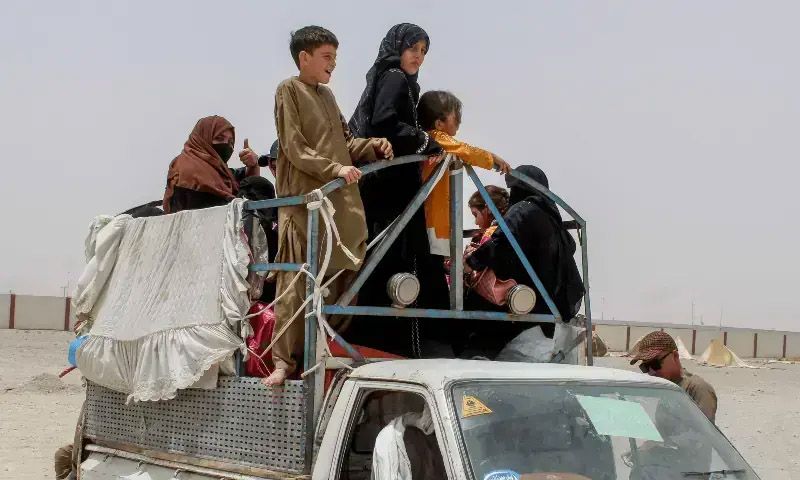
Pakistan's federal and provincial governments have completed the deportation of 2.59 million Afghan nationals who lacked valid documentation to remain in the country, marking an unprecedented enforcement campaign that has fundamentally reshaped the nation's immigration landscape. The operation, which began in 2023, represents one of the largest coordinated deportation efforts in South Asia's recent history and reflects Islamabad's determination to enforce stricter border controls and visa regulations amid mounting pressures from security concerns and resource constraints.
Punjab province has emerged as the epicentre of this enforcement drive, with state authorities operating 36 functional holding centres across the region to process undocumented Afghan residents. The Punjab home department's foreign national security cell has processed a staggering 138,342 Afghan nationals through these facilities, completing all necessary documentation before arranging their return to Afghanistan via the Torkham border crossing. The sheer scale of this provincial operation underscores the concentration of undocumented Afghan migrants within Punjab, Pakistan's most populous province and economic hub, where employment opportunities have historically attracted thousands of Afghan refugees seeking livelihoods beyond camps.
As of the time of reporting, the security apparatus continues its enforcement operations with approximately 53 Afghan nationals currently in custody across Punjab's detention network. These individuals are undergoing processing procedures that include identity verification, documentation completion, and logistical arrangements for their transit back to Afghanistan. The sustained presence of detainees indicates that the operation remains active rather than concluded, suggesting that authorities are maintaining operational capacity to intercept and process individuals who fail to comply with visa requirements.
Federal government policy on this matter is unambiguous: any foreign national, including Afghans, who cannot present valid visa documentation faces mandatory deportation. Home department officials have articulated this position firmly, emphasizing that illegal residence constitutes a violation of national immigration law regardless of the individual's circumstances or how long they have established roots within Pakistan. This zero-tolerance approach marks a significant shift from previous administrations that tolerated substantial populations of undocumented residents, particularly Afghan refugees who had accumulated in Pakistani cities since the Soviet invasion of Afghanistan in 1979.
The enforcement apparatus deployed for this campaign extends across both urban and residential areas throughout Punjab and other provinces. Home department representatives indicated that systematic surveys and examinations have been conducted in commercial markets and housing neighbourhoods to identify individuals without valid documentation. Once identified, these nationals are apprehended and transferred to holding centres where they remain detained pending deportation arrangements. The coordination between security forces and administrative officials suggests a centralized approach to enforcement rather than ad hoc operations by individual police units.
Processing within the holding centres involves several stages designed to regularize individuals' status before their return journey. Authorities conduct registration procedures to establish clear records of who is being deported, when, and through which border crossing. Accommodation is provided during the detention period, acknowledging basic humanitarian obligations toward individuals awaiting deportation. The Torkham border crossing, which connects Pakistan's Khyber Pakhtunkhwa province to Afghanistan's Nangarhar province, has become the primary transit point for this repatriation flow, handling the logistics of moving hundreds of thousands of individuals across the international boundary.
This deportation campaign carries significant implications for both nations. For Pakistan, the operation addresses longstanding concerns about resource allocation, security vetting of foreign populations, and the administrative burden of managing substantial undocumented populations. For Afghanistan, receiving such large numbers of returned nationals presents considerable humanitarian and economic challenges, particularly given the Taliban's governance difficulties and the country's collapsed economy. Many deported individuals face uncertain prospects upon return, lacking established communities or livelihoods in their home country after years or decades abroad.
The enforcement campaign also reflects broader regional tensions regarding migration and citizenship. Pakistan hosts one of the world's largest refugee populations, with official estimates suggesting over 1.7 million registered Afghan refugees alongside unknown numbers of undocumented residents. The recent crackdown suggests growing impatience with this arrangement, driven partly by domestic economic pressures and partly by concerns about security risks associated with unvetted populations. Political considerations may also factor into the timing and intensity of enforcement, as Pakistani governments seek to demonstrate control over borders and compliance with immigration law.
To sustain and accelerate these operations, authorities have appealed directly to Punjab's general population for cooperation. The home department spokesman encouraged residents to report individuals they suspect of illegal residence to emergency call 15, framing public participation as essential to comprehensive enforcement. This public mobilization strategy extends the reach of formal security apparatus by enlisting civilian informants, though it raises questions about potential abuse, false reporting, and the targeting of vulnerable populations based on ethnicity or appearance rather than documented violations.
The government has attempted to address public concerns about the reporting mechanism by promising that informant identities would remain confidential and protected. This guarantee seeks to encourage reporting without fear of retaliation, a consideration particularly relevant given the community ties and potential social tensions that can arise when neighbours report one another to authorities. The anonymity assurance reflects acknowledgment that public cooperation requires trust in the system and protection of those providing information.
Looking forward, the continuation of this deportation programme signals that Pakistan intends to maintain intensive enforcement rather than reaching a conclusion to these operations. With 53 individuals currently detained and the enforcement apparatus remaining fully operational, the federal and provincial governments appear committed to progressively reducing the undocumented Afghan population below present levels. The implications for Afghan-Pakistani relations and for hundreds of thousands of Afghans whose status remains uncertain will likely shape regional dynamics for years ahead, particularly as Taliban-controlled Afghanistan struggles to reintegrate large populations of returning nationals.

