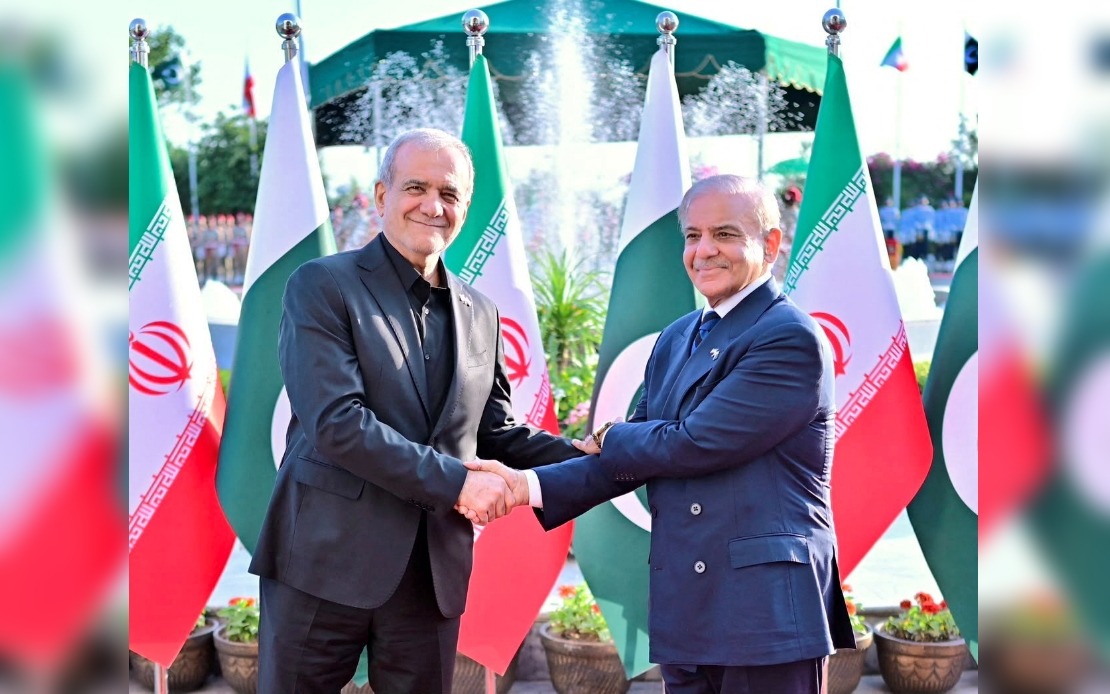
Pakistan's Prime Minister Shehbaz Sharif has become an unlikely champion of Iran's military capabilities, publicly endorsing Tehran's right to maintain its ballistic missile arsenal during high-level talks with visiting Iranian President Masoud Pezeshkian in Islamabad this week. The statement represents a significant political move from Islamabad, signalling deeper alignment with Tehran even as regional tensions simmer and international scrutiny of Iran's defence posture intensifies.
Sharif argued forcefully that Iran's missile programme should not face international restrictions, drawing a clear distinction between the weapons themselves and the recent diplomatic breakthrough brokered by Pakistan between Iran and the United States on June 17. According to the Pakistani premier, ballistic missiles were never discussed, negotiated, or even proposed as part of the understanding reached between the two historically antagonistic powers. This framing effectively insulates the Iranian defence capability from the terms of the emerging peace agreement, casting any future demands to limit such weapons as violations of the original accord.
The prime minister's defence also attacks what he characterises as a double standard in international arms policy. Sharif contended that permitting some nations to possess ballistic missiles whilst demanding that Iran forgo such capabilities represents an inequitable application of global security norms. This argument carries particular weight in the context of Middle Eastern geopolitics, where various regional actors maintain sophisticated weapons programmes without facing equivalent international pressure. For Southeast Asian observers, the statement underscores how middle powers like Pakistan leverage diplomatic positioning to enhance regional influence whilst maintaining principled stances on international law.
Iran's perspective on its defensive arsenal has been shaped by recent military developments in the region. Tehran views its missile capabilities as indispensable following coordinated strikes launched by Israel and the United States on February 28, which demonstrated the vulnerability of nations lacking credible retaliatory options. President Pezeshkian reiterated this position at the joint news conference, arguing that without such defensive weapons, Iran would face the fate of Gaza—subjected to overwhelming military force without restraint. This framing transforms the missile question from a proliferation issue into a matter of national survival.
Pakistan's mediation role in securing both a temporary ceasefire in April and the subsequent June understanding has elevated Islamabad's profile as a serious diplomatic actor capable of bridging seemingly irreconcilable positions. Shehbaz publicly acknowledged the contributions of Deputy Prime Minister Ishaq Dar and Field Marshal Syed Asim Munir, Pakistan's Chief of Army Staff, in facilitating these negotiations. The inclusion of military leadership in diplomatic breakthroughs reflects how Pakistan views regional stability as intrinsically linked to security concerns, a perspective that resonates throughout South and Southeast Asia where military establishments often shape foreign policy outcomes.
The visit itself carried ceremonial weight that underscored the strategic importance both nations place on their bilateral relationship. Pakistan provided an escort of six fighter jets from its air force as Pezeshkian's plane approached Islamabad, and the Iranian president received a formal 21-gun salute upon arrival, alongside welcomes from Prime Minister Sharif and President Asif Ali Zardari. These protocols signal to regional and international audiences that Pakistan views Iran as a valued partner worthy of the highest diplomatic honours, a message with implications for broader South Asian geopolitics.
Yet the emerging consensus between Pakistan and Iran comes against a backdrop of significant obstacles to sustained peace. Sharif acknowledged the existence of what he termed "spoilers"—actors intent on undermining the nascent US-Iran agreement. Israel has become the focal point of regional tensions, with its military operations in Lebanon and the occupied Palestinian territories serving as a destabilising force that threatens to unravel diplomatic progress. The Pakistani premier's characterisation of these actions as obstacles to peace directly challenges Israel's regional security narrative, positioning Islamabad alongside Iran in viewing Israeli actions as threats to broader regional stability.
Interestingly, even the United States—long opposed to Iran's missile development—appears to have shifted its position. President Donald Trump recently conceded that if other nations possess ballistic missiles, denying Iran similar capabilities would constitute unfair treatment. Speaking to journalists in Paris on June 17, Trump articulated a pragmatic position that prioritised achieving the broader understanding with Iran over securing restrictions on its weapons programme. This American flexibility has provided diplomatic cover for Pakistan to take a more explicitly pro-Iran stance without appearing to contradict Washington's positions.
For Malaysia and other Southeast Asian nations, Pakistan's actions offer lessons in how middle powers can effectively deploy diplomatic capital to enhance regional influence. Pakistan's success in facilitating both temporary ceasefires and more comprehensive understandings between hostile parties demonstrates the value of trusted intermediaries with credibility among multiple stakeholders. The country's willingness to publicly support positions that may not align with Western preferences, while maintaining relationships with the United States, illustrates the delicate balancing act expected of regional powers navigating great power competition.
The strategic geography of South Asia and the Middle East intersect through Pakistan in ways that make its diplomatic positioning consequential for broader regional security. As Pakistan deepens its embrace of Iran's security concerns, questions emerge about how this alignment might affect Pakistan's relationships with Gulf Arab states, particularly Saudi Arabia, which views Iranian military capabilities with considerable alarm. The sustainability of Pakistan's balancing act will depend on its ability to maintain productive relationships across these competing interests without appearing to fundamentally realign away from its traditional partnerships.
Moving forward, the durability of the US-Iran understanding will likely depend on whether international actors, particularly in the Middle East, can resist pressures to sabotage the agreement. Pakistan's vocal support for Iran's missile programme, articulated at the highest political levels, suggests that Islamabad is committed to defending the terms of the agreement as negotiated and to resisting external attempts to add additional conditions. This commitment carries risks, potentially alienating actors uncomfortable with Iran's regional military posture, but also rewards Pakistan with enhanced influence as a guarantor of regional peace processes.