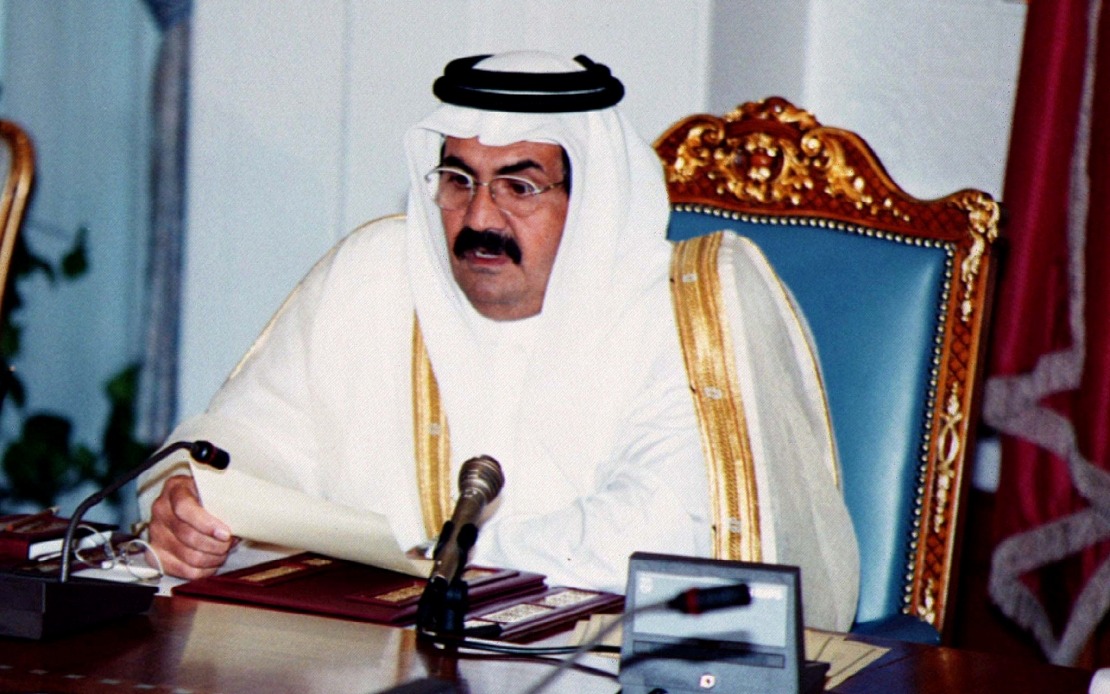
Pakistan's Prime Minister Shehbaz Sharif and Maldives President Mohamed Muizzu arrived in Qatar on Monday to convey condolences to Qatari Emir Sheikh Tamim Bin Hamad Al Thani and members of the ruling family following the death of former Emir Sheikh Hamad Bin Khalifa Al Thani. The 74-year-old passed away on Sunday, marking the end of a reign that fundamentally reshaped the Gulf state's position on the global stage.
Shehbaz Sharif's delegation underscores Pakistan's deep diplomatic ties with the wealthy Gulf nation, a relationship underpinned by substantial economic and security interests. The Prime Minister travelled with his brother Nawaz Sharif, who previously served as Pakistan's leader, alongside Deputy Prime Minister and Foreign Minister Senator Ishaq Dar and Information Minister Attaullah Tarar. This high-level representation signals the significance Pakistan places on honouring Sheikh Hamad's legacy and maintaining cordial relations with Qatar's current leadership.
For the Maldives, President Mohamed Muizzu's personal attendance reflects the archipelago's strategic calculations in the Indian Ocean region, where maintaining relationships with influential Gulf powers remains crucial to small island nations seeking economic support and security partnerships. The Maldives, dependent on tourism and trade, frequently pivots between regional powers in South Asia and the Middle East to ensure sustainable development and political stability.
Sheikh Hamad Bin Khalifa Al Thani's rule from 1995 to his abdication in 2013 represents one of the most transformative periods in Qatari history. During his tenure, he orchestrated Qatar's emergence as a global financial powerhouse, establishing the nation's sovereign wealth fund and leveraging natural gas reserves to fund ambitious domestic and international projects. His reign witnessed the construction of iconic infrastructure, the establishment of world-class educational institutions, and Qatar's hosting of major international events.
The international response to his passing has been notably fulsome, with world leaders across continents issuing tributes emphasising his role in advancing regional stability and economic development. Bangladesh Prime Minister Tarique Rahman, in his message to the current Emir Sheikh Tamim, specifically praised Sheikh Hamad's contributions to regional peace, economic development, education, and international cooperation. Such acknowledgments underscore the extent to which his influence transcended the Gulf region, affecting South Asian nations' strategic interests and development trajectories.
Pakistan and India have both declared Monday as a day of national mourning, a gesture typically reserved for figures of exceptional international significance or those with deep historical connections to these nations. This shows the esteem in which Sheikh Hamad was held across South Asia, where his initiatives in education, particularly through cultural and academic exchanges, had fostered goodwill and soft power.
President Mohamed Muizzu's remarks that Sheikh Hamad's legacy and accomplishments for Qatar and the broader Arab and Islamic world would endure for generations reflects a broader consensus among regional observers. The former Emir's vision extended beyond Qatar's borders, encompassing cultural initiatives, diplomatic engagement, and media influence through entities that became vehicles for projecting Qatari influence globally.
The significance of these condolence visits extends beyond ceremonial protocol. They represent an opportunity for Pakistan and the Maldives to reaffirm their relationships with Qatar's new leadership under Emir Sheikh Tamim, who has maintained his father's strategic direction while charting his own course. For Pakistani policymakers, engagement with Gulf states remains instrumental to managing economic challenges, securing remittance flows from the substantial Pakistani workforce in the region, and coordinating on security matters affecting South Asia.
Sheikh Hamad's transformation of Qatar from a regional player into a global actor with influence in finance, sports, media, and diplomacy serves as a case study in state-directed development that commands attention across the developing world, including Southeast Asia and South Asia. His willingness to host controversial international events and engage with diverse geopolitical actors demonstrated a pragmatic approach to statecraft that other regional leaders have studied closely.
The condolence missions also underscore the interconnectedness of contemporary international relations, where even the passing of a former leader generates significant diplomatic activity across continents. For Malaysian observers, the event illustrates how Gulf affairs remain integral to regional stability, given the substantial Malaysian diaspora in Qatar and shared economic interests in energy trade and investment flows.
As Qatar transitions under its current Emir's continued leadership, these delegations serve to establish continuity in relationships while offering a measured reflection on Sheikh Hamad's transformation of what was once a relatively obscure peninsula into a name recognisable worldwide. The diplomatic choreography surrounding his death demonstrates how nations calibrate their responses to major geopolitical events, balancing historical acknowledgment with contemporary strategic interests.

