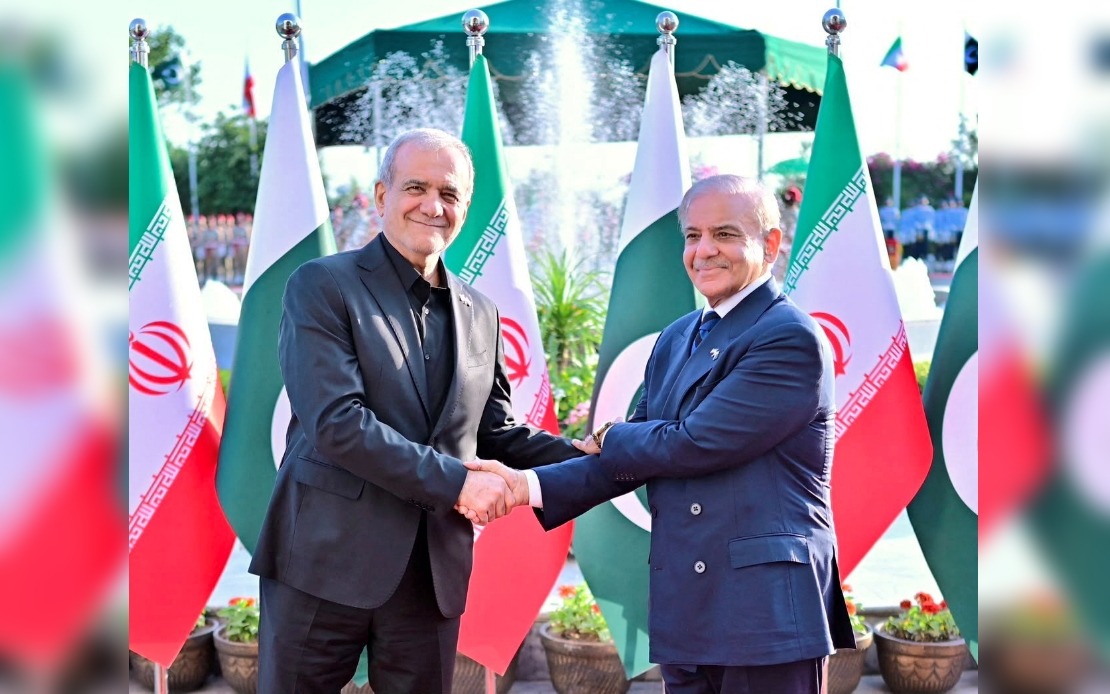
Pakistan and Iran have initiated fresh efforts to resurrect a critical freight corridor that once connected South Asia with Turkey and Europe, signalling renewed commitment to regional trade integration despite years of operational disruptions. The two nations held discussions in Islamabad on Wednesday focusing on reviving the Islamabad-Tehran-Istanbul (ITI) cargo service, with Pakistan's Railway Minister Muhammad Hanif Abbasi and Iran's Interior Minister Eskandar Momeni exploring the mechanics and timeline for restoration.
The ITI service represents a strategically significant transport artery for the region. When operational, the freight line would enable goods to move seamlessly from Pakistan through Iran and into Turkey, providing access to European markets while simultaneously opening pathways for Central Asian and Russian commerce to reach South Asian consumers. For Pakistan specifically, this corridor addresses longstanding geographic constraints that have historically limited the nation's ability to expand trade with northern neighbours and Western markets through overland routes.
According to statements from the Pakistani government, both delegations acknowledged that restoring the ITI corridor would fundamentally reshape trade dynamics across the three nations. Enhanced connectivity would reduce shipping times and costs compared to maritime alternatives, making Pakistani manufactured goods more competitive in European markets whilst simultaneously lowering import prices for Central Asian and Russian products reaching Pakistani consumers. The agreement also highlights the corridor's potential to integrate these nations more deeply with broader Eurasian economic structures.
The ITI service previously operated but suffered disruption, resuming operations in December 2021 after remaining dormant for a decade. However, this revival proved short-lived. By 2022, the service halted once more, this time due to a complex array of logistical and operational challenges that neither nation could unilaterally resolve. These difficulties ranged from infrastructure compatibility issues to bureaucratic coordination problems and security concerns, illustrating the multifaceted obstacles that plague cross-border freight operations in the region.
Pakistan has initiated substantial railway modernisation to support renewed corridor operations. The nation is currently upgrading its Main Line-3 (ML-3), a critical railway segment connecting Sindh and Balochistan provinces that serves as the primary rail link to Iran. This infrastructure project carries significant implications beyond immediate bilateral trade, as it positions Pakistan as a transit hub for transcontinental commerce. Construction is scheduled to begin during the current fiscal year, with completion targeted for December 2029, representing a multi-year commitment to enhancing transport capacity.
Iran has reciprocated with its own modernisation initiatives. The Iranian government announced plans to complete upgrading the Zahedan–Mirjaveh railway line within approximately one month, addressing infrastructure gaps on the Iranian side of the border. However, both nations recognised that successful corridor operations require seamless integration at crossing points. Iran specifically urged Pakistan to complete construction of a standard-gauge rail line running from Mirjaveh to Taftan in Balochistan, emphasising that incompatible rail gauges or incomplete segments could prove fatal to revival efforts.
The discussions between Abbasi and Momeni extended beyond immediate infrastructure concerns to encompass broader bilateral cooperation frameworks. Both officials reaffirmed commitment to enhancing cross-border connectivity, regional integration, and economic collaboration through railway channels. This signals understanding that successful corridor revival requires not merely individual infrastructure projects but sustained political commitment and coordinated policy frameworks from both governments.
For Malaysia and Southeast Asian nations, the Pakistan-Iran freight corridor holds indirect but meaningful implications. Successfully integrating South Asian and Middle Eastern markets through improved overland transport would reshape regional supply chains and trade patterns. Malaysian exporters could potentially access European and Central Asian markets more efficiently through Pakistani ports and rail networks. Additionally, the corridor's success would demonstrate viable alternatives to maritime routes that currently dominate Eurasian trade, potentially encouraging similar infrastructure investments across Southeast Asia.
The corridor's revival also reflects broader geopolitical recalibrations in Eurasia. Whilst Western sanctions pressure has complicated Iran's international commerce, initiatives like the ITI corridor represent alternative pathways for Iranian trade engagement with Central Asia and beyond. For Pakistan, the corridor offers economic diversification opportunities and reduced dependence on maritime routes vulnerable to disruption. Turkey's inclusion completes a tripartite arrangement that could eventually integrate further with European Union markets.
However, significant challenges remain. The 2022 suspension revealed that infrastructure upgrades alone cannot guarantee sustained operations without addressing underlying coordination mechanisms, regulatory harmonisation, and security frameworks. Both nations must establish durable institutional arrangements for managing cross-border cargo flow, resolving disputes, and maintaining consistent service levels. Previous failures suggest that political will alone proves insufficient without robust operational protocols and joint management structures.
The timeline for full corridor restoration appears measured but achievable. With Pakistan targeting ML-3 completion by December 2029 and Iran completing its sections within months, a phased restoration appears possible within the next two to three years. However, both nations must simultaneously address the final linking sections and establish operational protocols to prevent another hiatus.
This initiative demonstrates that despite regional tensions and global geopolitical fragmentation, pragmatic regional actors recognise mutual benefits from improved connectivity. The ITI corridor, once operational, would fundamentally alter trade patterns across South Asia, the Middle East, and Central Asia. For Malaysian observers, the corridor represents a template for how nations with divergent interests might cooperate on infrastructure to generate shared prosperity, an increasingly relevant consideration as Southeast Asian nations navigate complex geopolitical landscapes.

