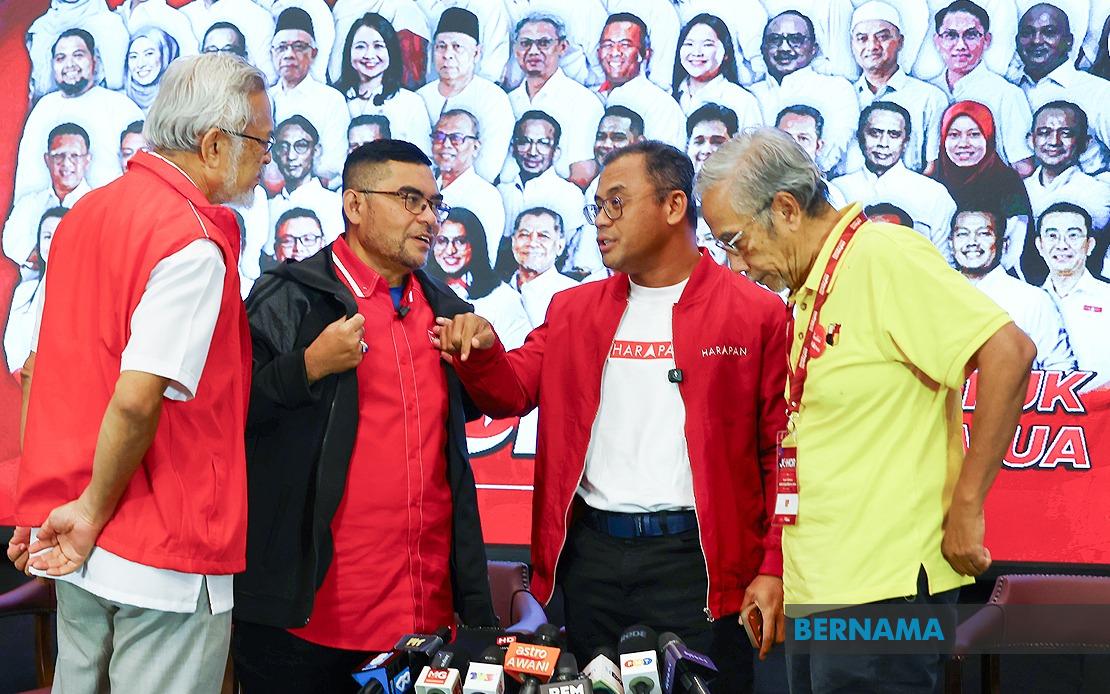
Pakatan Harapan is moving swiftly to capitalize on lessons from the Johor state election as it gears up for the Negeri Sembilan polls, with coalition leaders pledging a thorough examination of what went wrong and a recalibrated campaign strategy. Speaking at the PH Operations Centre in Johor Bahru on the evening of the election, Datuk Seri Amirudin Shari, the Selangor Menteri Besar and PKR Election Co-director, indicated that the coalition would dissect multiple factors influencing voter behaviour, particularly among younger demographics, to inform its approach in the neighbouring state.
The coalition faces a challenging political landscape after Barisan Nasional secured a commanding position in Johor by winning 29 of the 56 state seats, delivering BN more than half the seats contested and demonstrating the continued appeal of the traditional ruling coalition in the state. Amirudin acknowledged that the full picture remained incomplete at the time of his remarks, with several constituencies still pending official confirmation, underscoring the fluid nature of electoral outcomes even as they crystallize. He indicated that a comprehensive assessment would require roughly a week to compile reliable data across all polling streams, a deliberate approach suggesting that hasty conclusions would be counterproductive to strategic planning.
Pakatan Harapan's emphasis on scrutinizing voting pattern fluctuations and youth engagement reflects broader concerns within the coalition about demographic shifts that may have eroded its support base. The younger voter segment has become increasingly critical to electoral calculus across Malaysia, and understanding where PH lost traction or failed to mobilize youth enthusiasm could prove essential for reversing fortunes in Negeri Sembilan. This granular analysis will likely inform candidate selection, messaging refinement, and ground-level mobilization strategies in the weeks ahead.
Turning to Negeri Sembilan, PH appears considerably more optimistic about its prospects, citing the solid administrative record of incumbent Menteri Besar Datuk Seri Aminuddin Harun under PH stewardship. The coalition's confidence rests on tangible achievements in state governance and public service delivery that, theoretically, should resonate with voters seeking continuity and competent administration. Amirudin stressed that PH intended to retain control of the state administration, positioning the election as a choice between proven PH governance and an untested alternative.
Candidate selection discussions were scheduled for the day following the election, a notably quick turnaround that signals PH's determination to move decisively while maintaining internal consensus. The coalition planned to finalize and publicly announce its full slate of candidates by July 14, a compressed timeline that leaves minimal room for error or internal factional disputes. This urgency reflects the political rhythm of Malaysian electoral cycles, where momentum and organizational readiness often determine outcomes as much as policy platforms or voter sentiment.
The selection process, according to Amirudin, would prioritize identifying candidates who could credibly connect with local voters and effectively articulate PH's vision for Negeri Sembilan's development. Rather than imposing candidates from outside or relying solely on established political figures, the coalition sought to ensure alignment between its nominees and community expectations. This localized approach acknowledges that state-level politics in Malaysia frequently pivot on parochial concerns, development priorities unique to specific districts, and individual candidate standing within constituencies.
For the broader Malaysian political context, the Johor result and Negeri Sembilan preparations underscore the competitive intensity of multiparty democracy at the state level, where electoral fortunes remain volatile and no coalition can assume permanence. PH's decision to conduct a transparent internal review, rather than dismissing the Johor outcome, demonstrates institutional maturity and suggests the coalition understands the necessity of continuous adaptation. However, the gap between acknowledging electoral shortcomings and translating that awareness into concrete improvements remains substantial, and Negeri Sembilan will serve as an early test of whether PH can genuinely learn from setbacks.
Amirudin provided reassurance that state-level political developments would not destabilize federal governance, emphasizing that all component parties of the federal coalition—both PH and BN—remained committed to maintaining the government until the Prime Minister dissolves Parliament. This statement carries significance in Malaysian politics, where state and federal dynamics sometimes create cross-pressures that threaten coalition cohesion. By explicitly affirming that BN's strong Johor performance would not translate into federal instability or trigger early calls for parliamentary dissolution, Amirudin sought to prevent the election outcome from triggering wider political turbulence.
The assurance regarding federal stability reflects the mature understanding that Malaysia's political ecosystem requires predictability and continued governance capacity, particularly given ongoing economic challenges and the need for consistent policy implementation. Though BN's regional success might embolden some within the coalition to push for federal elections, Amirudin's comments suggest an elite consensus that such calculations remain premature. The federal government, under Prime Minister Datuk Seri Anwar Ibrahim, retains sufficient backing from coalition partners to function effectively until the constitutionally appropriate moment for parliamentary dissolution arrives.
Looking forward, Negeri Sembilan represents a pivotal test case for PH's ability to maintain state government control in the face of renewed BN competition. The coalition's emphasis on reviewing Johor comprehensively before deploying resources in Negeri Sembilan suggests a sequential, strategic approach to the electoral calendar. Rather than treating both contests as equivalent challenges, PH appears to have accepted Johor as a learning opportunity while positioning Negeri Sembilan as an opportunity to demonstrate resilience and operational competence.
The political dynamics at play reveal deeper truths about Malaysian electoral competition: both major coalitions retain substantial organisational capacity, geographic strongholds, and voter loyalty networks that prevent either from achieving dominance. The contest in Negeri Sembilan, following so closely after Johor, will provide Malaysian voters and analysts with clearer insight into whether the Johor outcome reflected broader anti-PH sentiment or represented state-specific factors. For PH, a successful retention of Negeri Sembilan would help cushion the psychological impact of the Johor loss and reinforce the coalition's narrative that it remains competitive at the state level despite recent setbacks.

