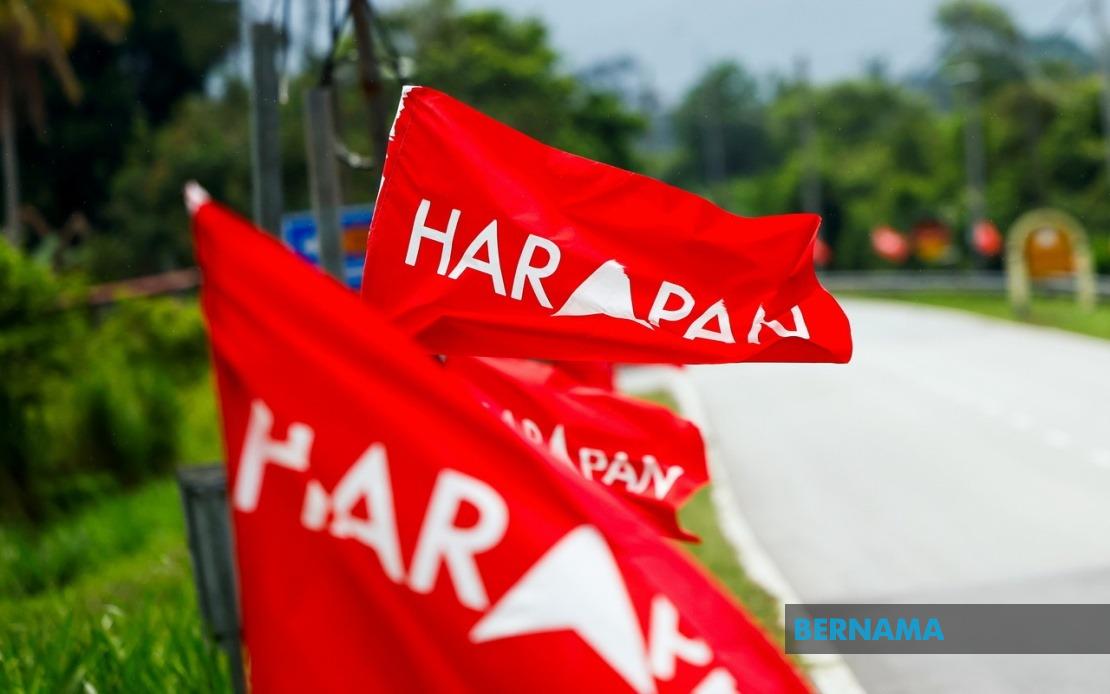
Pakatan Harapan is preparing to unveil its election manifesto for the 16th Negeri Sembilan state election, with the document expected to be presented to the public on the evening of July 19. The coalition intends to use this platform to consolidate its messaging around economic stewardship and sustained prosperity as it seeks another term in Malaysia's smallest state by population. The launch comes as the campaign enters its second phase, with voting scheduled for August 1 and early polling set for July 28.
The manifesto represents the culmination of strategic deliberation among PH's senior leadership, designed to articulate a coherent vision that transcends individual party interests within the coalition. According to Datuk Muhammad Zaki Md Sabri, the PH operations director for Negeri Sembilan, the document has been carefully constructed to demonstrate how the coalition intends to deliver measurable economic and social benefits to citizens over the next electoral cycle. This methodical approach reflects the competitive nature of the election, where PH must defend its incumbent position against opposition parties seeking to reclaim the state.
Since capturing control of Negeri Sembilan in 2018 following the federal political realignment, Pakatan Harapan has positioned itself as a moderating force in state politics. The manifesto will likely emphasise infrastructure projects, revenue generation, and public service improvements implemented during the coalition's tenure. Rather than introducing entirely new policy directions, the strategy appears calibrated towards demonstrating governmental competence and reliable administration—a particularly important messaging point for an incumbent facing voter fatigue or economic headwinds that have affected household finances throughout Malaysia.
Muhammad Zaki expressed satisfaction with the party machinery's operational performance during the initial campaign period, citing responsive logistics coordination and encouraging grassroots reception among voters in various constituencies. This positive sentiment matters considerably in determining whether PH can sustain momentum through the campaign's final weeks. The mechanics of ground operations—candidate visibility, volunteer mobilisation, and voter engagement—often prove decisive in state elections where margins tend to be narrower than in federal contests and local dynamics carry disproportionate weight.
The electoral environment in Negeri Sembilan reflects broader currents rippling through Malaysian politics. With 889,490 registered voters eligible to participate, the state represents a significant electoral laboratory where coalition fortunes can be tested before any potential federal recalibration. The voting population comprises 867,151 ordinary voters alongside 16,884 military and police personnel registered for early voting on July 28, a component that occasionally influences outcomes in marginal constituencies.
PH leadership has also signalled its commitment to maintaining campaign conduct that respects certain boundaries within Malaysian political culture. Muhammad Zaki called for all contesting parties to uphold standards that avoid excessive provocation and refrain from exploiting sensitivities surrounding the 3R framework—religion, royalty, and race. This appeal, while perhaps self-evident in principle, reflects recognition that state elections can occasionally veer into inflammatory rhetoric when political competition intensifies. By attempting to establish normative standards early, PH seeks to constrain spaces within which opposition parties might otherwise operate while maintaining its positioning as a responsible steward of state affairs.
The Election Commission's decision to dissolve the Negeri Sembilan State Legislative Assembly on June 5 initiated what amounts to a compressed timeline for electoral competition. The interval between dissolution and polling day permits only limited time for voter persuasion campaigns and candidate positioning, placing particular emphasis on the effectiveness of early messaging strategies. The manifesto launch thus carries heightened significance as an opportunity to shape the campaign's dominant narratives before attention fragments across multiple competing messages during the final fortnight.
Negeri Sembilan's political significance extends beyond its relatively modest population size. The state has historically served as a bellwether for Malaysian political sentiment, with results often preceding broader national trends. A decisive PH victory would suggest the coalition retains sufficient voter confidence despite ongoing challenges at the federal level, while setbacks would signal vulnerabilities that opposition parties might exploit elsewhere. Conversely, a narrow victory would indicate the coalition faces tightening margins in constituencies it previously dominated comfortably.
The manifesto's emphasis on sustainability and continuity reflects a strategic calculation that voters prioritise steady governance over radical transformation. This positioning acknowledges that most Negeri Sembilan residents are primarily concerned with routine government functions—maintaining roads, delivering timely services, and supporting business conditions—rather than sweeping ideological reorientations. By anchoring its campaign around demonstrated achievements from the 2018-2023 term, Pakatan Harapan attempts to frame the election as a choice between proven competence and uncertain alternatives.
As the campaign unfolds, the manifesto will serve as the coalition's principal policy document, repeatedly referenced in candidate speeches, social media messaging, and voter interactions. Its quality and clarity therefore influence whether PH can sustain coherent communication or whether voters receive fragmented impressions about the coalition's actual priorities. The document's success will ultimately be measured not merely by its contents but by how effectively PH translates its promises into electoral support across Negeri Sembilan's diverse constituencies, determining whether the coalition can maintain its hold on state government through August 1.

