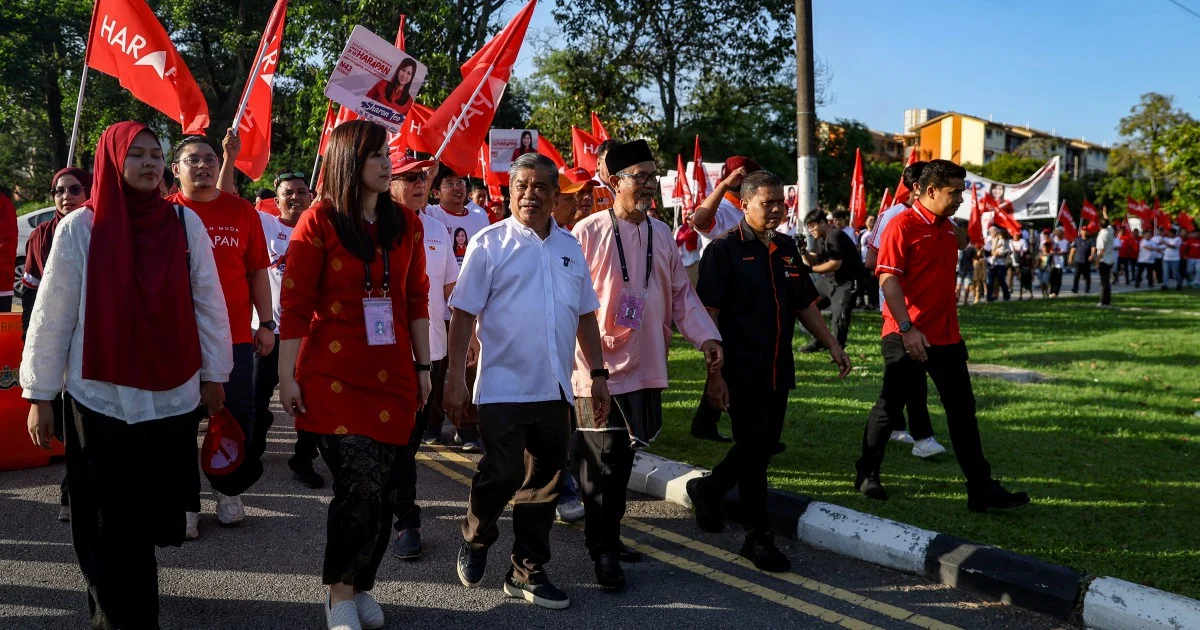
The air grew thick with political energy at Dewan Muafakat Taman Mawar in Pasir Gudang as Pakatan Harapan's candidate Sharon Teo arrived for the nomination centre in the Permas state constituency. Clusters of supporters greeted her with rhythmic chants of "Johor undi Pakatan Harapan"—a refrain reflecting the coalition's determination to sway voters in a state long dominated by Umno and its allies. The scene underscored the competitive intensity now gripping Johor's electoral landscape, where the opposition bloc is mounting its most serious challenge in recent years.
Permas represents a bellwether contest within the broader Johor state election framework. The constituency straddles Pasir Gudang, an industrial and residential area with a significant working-class demographic that has increasingly shown openness to alternative political narratives. This shifting terrain has emboldened Pakatan Harapan to contest seats previously considered safe for the ruling coalition, and Permas exemplifies that strategic recalibration. The decision to field Teo signals the coalition's confidence in her appeal to diverse voter groups within the constituency.
The nomination process itself has become a barometer of electoral momentum in Malaysian politics. Large turnouts of supporters at nomination centres—particularly coordinated displays like the chanting witnessed in Pasir Gudang—often translate into grassroots activation and volunteer mobilisation in the weeks that follow. For Pakatan Harapan, every visible demonstration of public backing carries strategic weight, especially in states where the coalition must overcome entrenched incumbent advantages and competing narratives about governance capability.
Johor's political complexion remains unique within Malaysia's federal system. The state has historically been a Umno stronghold, and any significant erosion of that base would reverberate across the entire peninsula's political economy. Recent state elections in other parts of Malaysia have shown that voter sentiment can shift rapidly around issues of cost of living, local service delivery, and perceptions of institutional integrity. Whether Johor voters are primed for such a shift will likely hinge on whether opposition candidates like Teo can articulate credible, locally-rooted solutions to pressing constituency concerns.
The chanting itself—"Johor undi Pakatan Harapan"—represents a deliberate framing of the election as a statewide referendum on the coalition's vision for Johor. This linguistic choice emphasises collective action rather than individual candidate promotion, a tactical decision that mirrors opposition messaging elsewhere in Southeast Asia where coalitions seek to project unity and shared purpose. Whether such collective rhetoric can overcome fragmentation within Pakatan Harapan remains an open question, particularly where component parties compete for influence and candidate selection.
Since the 2022 general election, the political terrain in Johor has shifted subtly. Anwar Ibrahim's government at the federal level has shifted some policy priorities and resource allocation mechanisms that touch local governance, creating both opportunities and vulnerabilities for opposition claims about performance and delivery. State-level elections now occur within a context where federal and state governments may be controlled by opposing coalitions, introducing complexity into voter calculations about who can most effectively serve local interests.
The nomination of Sharon Teo also reflects Pakatan Harapan's strategic choice to field women candidates in competitive constituencies. This represents a deliberate departure from historical patterns and signals an attempt to broaden the coalition's appeal beyond traditional demographic strongholds. Whether voters in Permas respond positively to this diversification of candidate profiles will provide insights into social attitudes within urban, industrial constituencies across Malaysia.
Support mobilisation at nomination centres serves multiple functions beyond theatrical demonstration. It identifies committed volunteers who can be activated for door-to-door campaigns, it generates media visibility that translates into earned coverage, and it projects confidence to wavering voters who may be susceptible to bandwagon effects. The visible backing for Teo at Permas thus functions as both genuine grassroots energy and calculated political theatre—categories that are never entirely separable in modern electioneering.
Johor's electoral calendar represents a crucial testing ground for political forces across Malaysia. The state's economic significance, its large voter population, and its historical role as a conservative bastion make its political complexion matter for national coalition mathematics. If Pakatan Harapan makes significant gains in Johor, it would vindicate the coalition's post-2022 strategy and suggest that federal governance performance can generate electoral rewards at state level. Conversely, if the ruling coalition holds its ground despite apparent voter enthusiasm at nomination centres, it would suggest that traditional party structures and patronage networks retain considerable resilience.
The weeks ahead will reveal whether the momentum visible in Pasir Gudang translates into sustained campaign intensity and ultimately into electoral success for candidates like Sharon Teo. The nomination process marks the formal beginning of the campaign period, and the initial scenes of supporter mobilisation set the tone for how energetically both coalitions will contest Johor's contested constituencies. For voters in Permas and across the state, the coming campaign will test whether established political arrangements remain durable or whether new coalitions can articulate sufficiently compelling visions of governance to warrant electoral trust.

