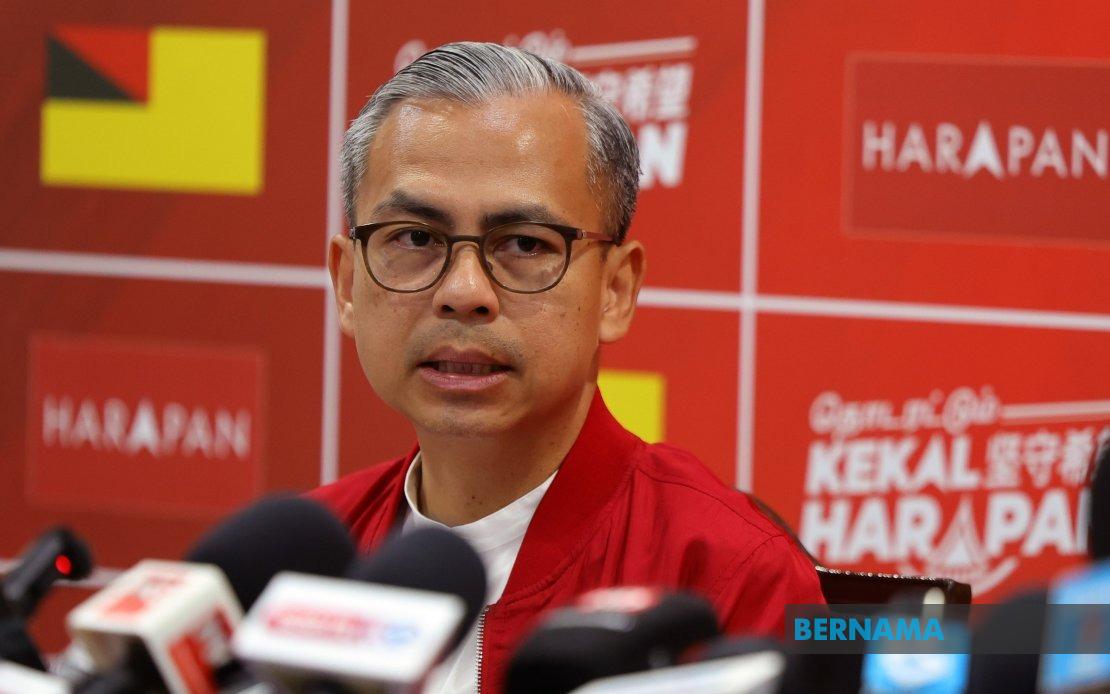
Pakatan Harapan has pushed back forcefully against campaign narratives suggesting that only one political bloc can legitimately claim to represent Malaysia's Malay-Muslim population, characterising such exclusionary framing as fundamentally at odds with the country's multicultural fabric. Speaking at a press conference in Seremban on July 23, PH communications director Datuk Seri Fahmi Fadzil argued that the attempt to portray representation of Malay-Muslims as the preserve of a single political entity misrepresents the coalition's composition and misunderstands Malaysia's political reality.
Fahmi, who serves concurrently as PKR information chief and Communications Minister, highlighted the presence of substantial numbers of Malay-Muslim leaders within PH's ranks, using himself and fellow coalition member Khalid Abdul Samad—Amanah's communications director—as concrete examples of this diversity. His rhetorical questions underscored a fundamental challenge facing PH as it campaigns in Negeri Sembilan: countering the perception among some voters that Malay-Muslim interests receive insufficient priority within a multiracial coalition framework. This perception has historically been weaponised by rival political forces seeking to consolidate support among this crucial demographic segment.
The timing of these remarks is significant, coming as Negeri Sembilan prepares for its state election, with early voting scheduled for July 28 and polling day set for August 1. The election represents a crucial test of PH's ability to maintain support in a state where Malay-Muslim voters constitute a substantial portion of the electorate. The coalition's narrative strategy reflects a broader challenge facing multiracial political alliances in Malaysia: demonstrating that they can simultaneously champion minority interests while maintaining the support of the Malay-Muslim majority without appearing to sideline either constituency.
Fahmi emphasised that PH advocates a model of unity grounded in shared values and collective welfare rather than ethnic particularism. He articulated a vision in which different communities—Malays, Chinese, Indians, and others—strengthen their internal coherence while simultaneously standing together as Malaysians, united by principles of goodness and righteousness rather than ethnic chauvinism. This framing attempts to reposition the debate from zero-sum competition over communal representation to a broader discourse about inclusive governance and national unity.
To substantiate PH's commitment to Malay-Muslim interests, Fahmi pointed to tangible achievements under the current Negeri Sembilan administration led by Menteri Besar Datuk Seri Aminuddin Harun. The administration has overseen expansion of mosque infrastructure and recorded dramatic growth in zakat collections—rising to nearly two-and-a-half times the levels achieved under the previous administration. These metrics, Fahmi argued, demonstrate that the PH-led Unity Government in Negeri Sembilan actively prioritises Islamic religious development and welfare support for Muslim populations rather than neglecting these dimensions of governance.
The emphasis on zakat collection growth is particularly instructive, as it extends beyond symbolic gestures to address material welfare provision that directly affects Malay-Muslim households. Enhanced zakat administration represents both an increase in resources available for poverty alleviation and religious purposes, and an implicit acknowledgment of government commitment to facilitating Islamic institutional frameworks. This approach suggests PH's strategy involves demonstrating its bona fides through concrete policy outcomes rather than relying solely on rhetorical appeals or symbolic gestures.
Yet PH faces a credibility challenge in this messaging. The coalition must navigate the tension between its multicultural character—which inherently involves compromise and balanced representation across communities—and the expectations of constituencies accustomed to political movements organised explicitly around communal identity. Some Malay-Muslim voters may perceive multiracial governance structures as inherently diluting their collective influence, regardless of actual policy outcomes. The narrative dispute occurring across Negeri Sembilan during this election cycle reflects this deeper structural tension within Malaysian politics.
The attendance of Khalid Abdul Samad alongside Fahmi and Negeri Sembilan DAP secretary Cha Kee Chin at the press conference itself carried symbolic weight, visibly demonstrating the coalition's internal diversity. This staging choice represented an implicit rebuttal to suggestions that PH's Malay-Muslim members occupy marginal positions within coalition structures. The presence of both Islamic-oriented Amanah representatives and secular-leaning DAP figures underscored the coalition's multifaceted composition and commitment to pluralistic representation at leadership levels.
PH's communications strategy reveals an important evolution in Malaysian political discourse. Rather than accepting exclusionary premises about communal representation, the coalition attempts to reframe the terms of political competition itself, positioning inclusive pluralism as not merely compatible with but essential to defending Malay-Muslim interests. This represents a departure from earlier political discourse patterns in which multiracial coalitions often accepted the validity of exclusive ethnic or religious representation claims, rather than contesting them directly.
The broader context matters considerably here. Malaysia's political landscape has experienced significant fragmentation in recent years, with voters increasingly willing to switch between coalitions and traditional patterns of communal voting becoming less deterministic. In this fluid environment, the ability to convince Malay-Muslim voters that their interests receive adequate representation within multiracial structures becomes critical to coalition competitiveness. PH's messaging in Negeri Sembilan accordingly emphasises that supporting multiracial governance need not entail accepting communal marginalisation.
However, the effectiveness of this narrative depends substantially on whether voters perceive measurable benefits in their daily lives. While mosque construction and zakat growth provide quantifiable indicators, broader questions persist regarding education policy, economic opportunity, and political power-sharing at state and federal levels. The election outcome in Negeri Sembilan will offer important evidence regarding whether PH's inclusive political vision resonates sufficiently with Malay-Muslim voters to counter more exclusionary competing appeals.
Looking forward, the Negeri Sembilan election represents a microcosm of larger questions facing Malaysian politics as a whole. The tension between multiracial coalitional governance and communal political identity remains unresolved, and no single electoral outcome will definitively settle these underlying structural questions. Nonetheless, how voters respond to PH's inclusive messaging relative to more exclusionary alternatives will provide important signals about the trajectory of Malaysian political competition and the future viability of multiracial coalition structures.

