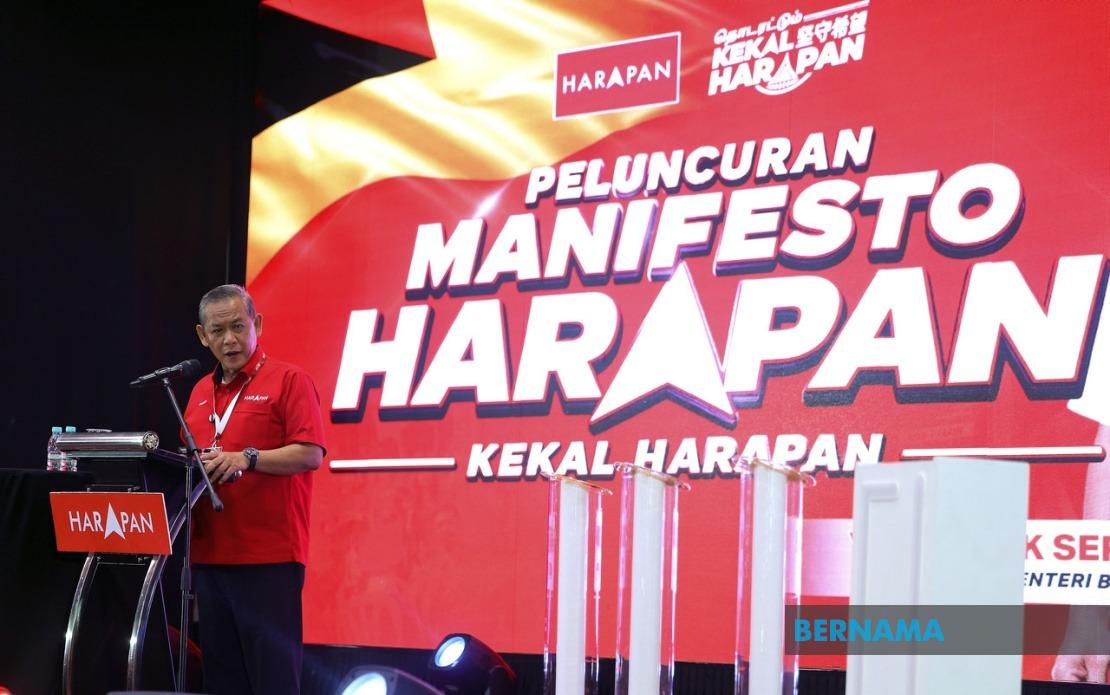
Pakatan Harapan launched its election manifesto for the 16th Negeri Sembilan state election in Seremban on July 20, presenting voters with a comprehensive set of 10 pledges under the banner 'Negeri Sembilan Kekal Harapan' (Negeri Sembilan Stays With Harapan). The initiative, unveiled by Negeri Sembilan PH chairman and Menteri Besar Datuk Seri Aminuddin Harun, signals the coalition's intent to consolidate support in a state where it has maintained electoral dominance in recent years.
At the heart of the manifesto lies a commitment to governance reform, with PH promising to deliver a stable, clean, and people-centric administration. This pledge reflects broader concerns about governmental transparency and accountability that have shaped electoral discourse across Malaysia since 2018, addressing voter expectations for efficient service delivery and reduced corruption. The emphasis on institutional stability aims to differentiate PH's vision from potential political competitors in the state contest.
Economic development features prominently in the coalition's platform, with an ambitious target to create 30,000 high-income jobs and build a more competitive economy. For Negeri Sembilan, traditionally reliant on manufacturing, mining, and plantation sectors, this commitment signals a pivot towards higher-value employment opportunities. The manifesto's economic focus reflects recognition that job quality and wage growth remain central concerns for working-class voters and urban professionals alike, particularly following pandemic-driven economic disruptions that affected the state's employment landscape.
Housing affordability emerges as another cornerstone initiative, with PH pledging to construct 20,000 affordable homes whilst addressing land-related disputes that have plagued many communities. This commitment carries significant weight in Negeri Sembilan, where rapid urbanisation around Seremban and surrounding districts has strained housing supplies and driven prices beyond reach for young families and first-time buyers. Resolving land issues simultaneously addresses a persistent source of public grievance and legal uncertainty affecting property owners across the state.
The manifesto commits to strengthening the 'Skim Sejahtera Rakyat' (People's Wellbeing Scheme), a social assistance programme designed to uplift lower-income households. By emphasising this scheme's expansion and efficacy, PH targets welfare-dependent demographics whilst signalling continuity of existing support structures. This approach balances social safety net maintenance with fiscal sustainability, a critical consideration for state governments managing budgetary constraints.
Educational advancement receives dedicated attention, with PH undertaking to ensure quality education access for all Negeri Sembilan residents. This pledge encompasses both infrastructure improvements and pedagogical enhancement, addressing parental concerns about school quality disparities between urban and rural areas. Given Malaysia's competitive education landscape and parents' aspirations for children's upward mobility, educational commitment resonates across socioeconomic strata.
The coalition's commitment to agricultural modernisation and food security reflects Negeri Sembilan's agricultural heritage and growing national concerns about supply chain resilience. By integrating farming sector reform into its platform, PH acknowledges rural constituencies' needs whilst positioning modernisation as compatible with smallholder prosperity. This strategic framing appeals to farming communities fearful of displacement through industrial expansion.
Tourism and cultural heritage development proposals align with Negeri Sembilan's potential as a secondary tourist destination, complementing established attractions like Kuala Lumpur's regional presence. Investment in these sectors promises employment diversification and revenue generation for peripheral communities, whilst preserving local cultural identity. This focus potentially attracts both heritage-conscious voters and business interests seeking economic opportunity.
Healthcare delivery improvements constitute another key manifesto plank, promising strategic infrastructure expansion and service quality enhancement. For a state where rural healthcare access remains uneven and specialist services concentrate in urban centres, this commitment directly addresses medical accessibility disparities affecting rural Negeri Sembilan residents.
The inclusion of Felda Development Plan implementation reflects attention to plantation worker communities and smallholder interests, historically important constituencies in Malaysian electoral politics. By addressing Felda settlers' longstanding concerns about land productivity and income security, PH targets a demographic facing generational economic pressures.
Youth empowerment, women's advancement, and family support initiatives round out the manifesto, recognising demographic shifts and evolving social values. These commitments appeal to younger voters concerned about career prospects and gender equality, as well as parents balancing work and family responsibilities. The emphasis on inclusivity signals PH's awareness that electoral success requires multi-generational, multi-gender coalition-building.
Interfaith unity promotion, the manifesto's final commitment, carries particular significance in Malaysia's plural society. By explicitly pledging interfaith harmony, PH attempts to position itself as a moderate, inclusive alternative to potentially divisive political messaging, appealing to voters prioritising social cohesion over religious or ethnic polarisation.
The manifesto's breadth reflects PH's attempt to construct a comprehensive electoral offering spanning economic, social, and governance domains. For Malaysian observers, the document signals renewed coalition confidence following recent electoral setbacks, with Negeri Sembilan representing an opportunity to reinforce support in historically sympathetic territory before potential national political realignments.

