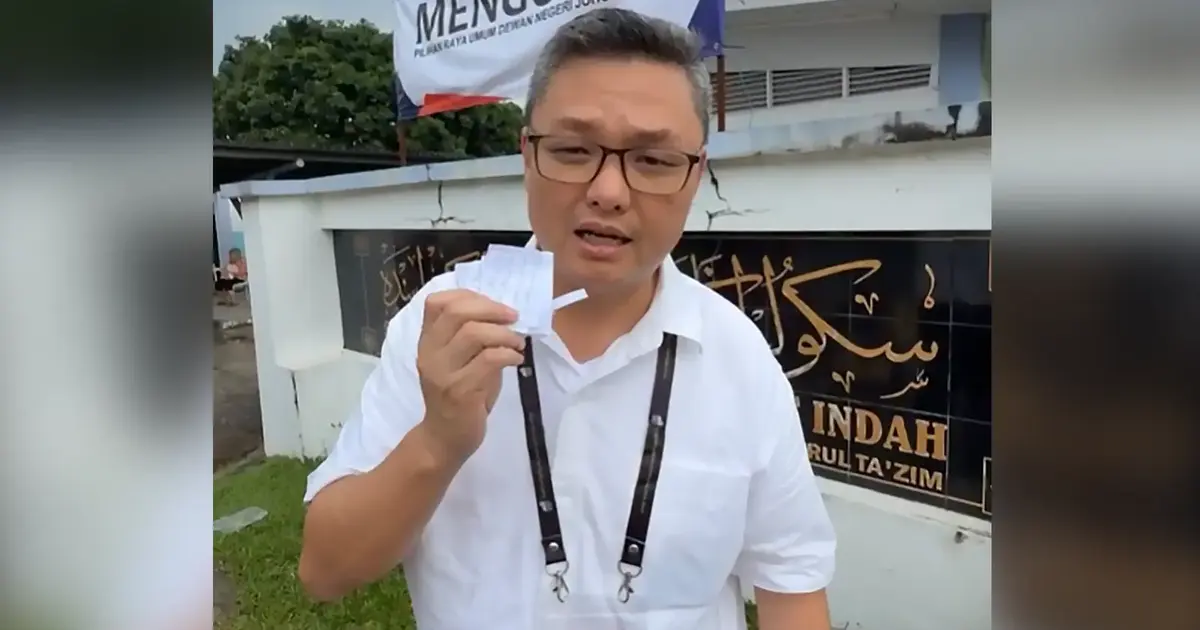
A senior Pakatan Harapan figure has formally escalated concerns about potential irregularities during vote counting operations, alleging that a Barisan Nasional representative documented individual voters' ballot preferences through handwritten notation. The complaint, filed by Tee Boon Tsong, represents a serious challenge to the integrity of vote tallying procedures and underscores mounting tensions between coalition partners over election administration protocols.
The alleged practice of recording specific voter choices stands in stark contrast to established electoral protocols, which maintain strict ballot secrecy as a cornerstone of democratic conduct. Under Malaysian Election Commission standards, vote counting operations should involve transparent procedures where designated officials tally results without documentation that could compromise the anonymity of individual voters. Such record-keeping, if verified, would constitute a fundamental breach of electoral principles and raise broader questions about observation and safeguarding mechanisms at counting venues nationwide.
Tee Boon Tsong's formal intervention signals that the incident has crossed from anecdotal concern into the realm of official complaint procedures. His insistence that authorities confiscate the allegedly compromising handwritten materials suggests the documentation may constitute direct evidence of a procedural violation. Should such materials exist, their seizure and examination could provide investigators with concrete proof of how votes were tracked and potentially mishandled during critical phases of the electoral process.
The Election Commission faces considerable pressure to conduct a thorough and transparent investigation that addresses both the immediate allegation and broader systemic vulnerabilities. The fact that a counting agent from a competing political coalition allegedly maintained such records indicates potential gaps in supervision protocols or insufficient training regarding permissible documentation practices. An effective investigation must establish not only whether the alleged recording occurred, but also how many counting venues may have similar practices and whether any records have already been destroyed or altered.
For Malaysian voters already grappling with concerns about electoral transparency, this complaint reinforces perceptions that procedural safeguards require reinforcement. The revelation that individual vote choices might be documented contradicts public assurances about ballot security and voter privacy protection. Regional observers monitoring Malaysian democratic institutions will scrutinise how seriously authorities treat such allegations, as responses directly impact confidence in the legitimacy of election outcomes.
The incident also highlights the delicate balance required when political coalition partners participate simultaneously in vote counting operations. When competing organizations maintain representatives at the same counting centres, the system depends upon mutual accountability and clear protocols that prevent any party from gaining informational advantages through undocumented note-taking or similar practices. Breaches of this trust dynamic undermine the entire observation framework that parties rely upon to validate results.
Historically, Malaysian elections have benefited from relatively robust procedural protections, yet periodic complaints about administrative inconsistencies persist. This complaint exemplifies the types of operational concerns that, while sometimes resolved through clarification or retraining, accumulate to erode public confidence if left unaddressed. The Election Commission's response will establish important precedent for how such allegations are handled prospectively.
Beyond the immediate complaint, the broader pattern of concerns about vote counting operations deserves systematic attention. Political parties across the spectrum have periodically raised questions about observer access, documentation practices, and the real-time verification of tallies. Addressing these concerns through enhanced transparency measures, standardised protocols, and explicit prohibitions on personal note-taking regarding individual ballots would strengthen the entire electoral system.
The confiscation request Tee Boon Tsong has advanced reflects standard investigative practice when evidence of procedural violations emerges. Physical evidence of alleged ballot documentation could clarify whether systematic recording occurred, how many voters were affected, and whether patterns suggest deliberate data collection for strategic purposes. The preservation and analysis of such materials would establish factual foundations for any disciplinary action or recommendations for procedural reform.
For regional observers tracking democratic developments across Southeast Asia, the Malaysian response to this complaint carries significance. Nations throughout the region face periodic allegations regarding election administration integrity, and how established democracies like Malaysia address such concerns influences perceptions about institutional resilience. Thorough, credible investigation—coupled with visible corrective measures—reinforces confidence that democratic systems can self-correct when problems emerge.
Moving forward, the Election Commission should consider comprehensive guidance clarifying permissible documentation during vote counting operations, explicit training for all counting agents regarding ballot secrecy obligations, and enhanced observation protocols that prevent undocumented note-taking. Such preventative measures would address the systemic vulnerabilities this complaint has exposed while affirming Malaysia's commitment to election integrity standards.
The outcome of the Election Commission's investigation will carry implications extending beyond the immediate complaint. Whether authorities confirm the allegation, establish procedures were followed, or uncover systematic breaches will shape political parties' confidence in administrative independence and voter perceptions about whether their ballot choices remain truly private. This complaint thus represents a critical moment for demonstrating institutional accountability.

