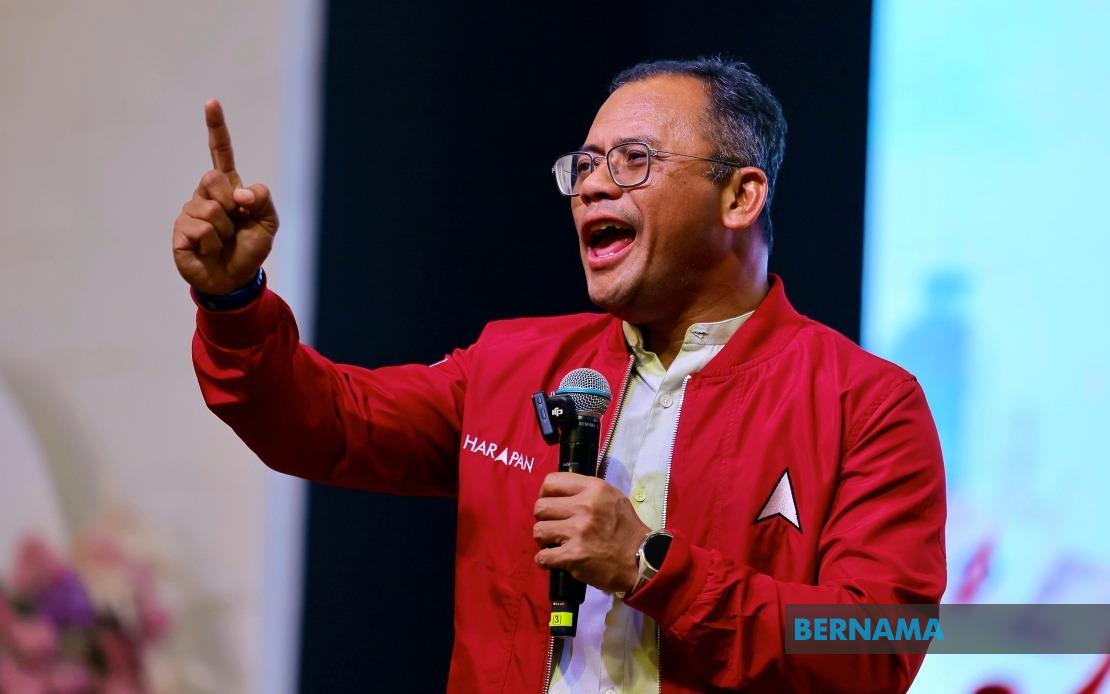
Pakatan Harapan formally presented its electoral blueprint for the upcoming 16th Johor state election on July 3, introducing a manifesto titled 'Johor for All' that encapsulates the coalition's policy commitments to state voters. The launch ceremony in Johor Bahru brought together senior party figures and political candidates unified under the PH banner, marking a significant milestone in the opposition coalition's preparations for what promises to be a keenly contested electoral battle in Malaysia's southernmost peninsula state.
Datuk Seri Amirudin Shari, a key figure within PH's Presidential Council and co-election director for PKR, took centre stage in unveiling the manifesto at the formal event. His leadership of the presentation underscores the coalition's intent to project a cohesive messaging strategy across its component parties and to demonstrate unity in articulating a shared vision for Johor's future. The involvement of such a senior coordinating figure signals that PH views the Johor contest as pivotal to its broader political trajectory in Malaysian politics, particularly given the state's economic significance and its status as a bellwether region.
The manifesto's inclusive title—'Johor for All'—itself carries considerable weight in contemporary Malaysian political discourse. By framing its policy agenda around universal accessibility and broad-based representation, PH appears positioned to appeal beyond its traditional support bases and encompass voters who may feel marginalized by incumbent administrations. This messaging strategy reflects a deliberate attempt to construct a narrative of unity that transcends the ethnic and religious divisions that have historically shaped Malaysian electoral contests, though the specific policy contents would ultimately determine whether such aspirations translate into concrete governance proposals.
Johor's political composition makes PH's manifesto launch particularly significant for Malaysia's wider political ecosystem. As the nation's second-largest state by population and a crucial economic hub anchoring the southern region, electoral outcomes here frequently foreshadow broader national trends. The coalition's decision to articulate a comprehensive manifesto well ahead of polling day suggests strategic confidence in its organizational capacity, though it also indicates recognition that persuading voters in a state with traditionally strong support for rival coalitions remains fundamentally challenging.
Among the attendees was Aminolhuda Hassan, serving as Johor PH's chairman, whose presence highlighted the coalition's emphasis on regional leadership structures. Teo Nie Ching, heading DAP operations in the state, represented the Democratic Action Party's stake in the upcoming contest, while Datuk Seri Dr Zaliha Mustafa, PKR's Johor chairman, embodied the primary component party's commitment to the electoral battle. This cross-party representation in leadership roles underscores PH's functional maturity as a coalition entity capable of coordinating diverse political organizations toward shared electoral objectives.
The presence of coalition candidates at the manifesto launch served multiple purposes simultaneously. It provided these individuals with public visibility and associational legitimacy derived from alignment with a formal policy programme, while simultaneously allowing the coalition to demonstrate that it possesses a ready roster of individuals prepared to contest seats across the state. For voters attempting to evaluate their choices, the visibility of specific candidates alongside the manifesto's principles offers opportunities to assess consistency between publicly stated positions and individual representatives' track records and credibility.
From a Southeast Asian perspective, Johor's political dynamics warrant attention because the state's governance outcomes ripple across the broader region's stability calculations. As an immediate neighbour to Singapore and with significant cross-border economic integration with southern Thailand, Johor's political orientation influences bilateral relations and regional economic coordination. An opposition coalition's stronger performance in this strategic location could marginally shift internal Malaysian political calculations regarding regional governance and economic development priorities.
The manifesto's launch timing reflects PH's internal assessment of optimal campaign sequencing. By introducing comprehensive policy commitments during the formal campaign period, the coalition attempts to establish intellectual and programmatic dominance of the political conversation, forcing rival coalitions into reactive postures rather than allowing them to set the initial agenda. This strategic approach has become standard practice in Malaysian electoral contests, where the coalition successfully capturing the narrative frame in early campaign phases frequently maintains that advantage through polling day.
For Malaysian voters in Johor specifically, manifestos serve as crucial accountability mechanisms. By formally committing to specific policies and programmes before elections occur, political coalitions and parties create documents against which their subsequent governance performance can be measured. The 'Johor for All' framing will thus inevitably become a reference point for assessing whether a potential PH-led state administration actually delivers on the inclusive vision the manifesto proposes, making the launch event itself a significant moment in establishing the basis for future political evaluation.
The coalition's presentation of a unified manifesto also carries implications for intra-PH dynamics and partner stability. DAP, PKR, and other component parties maintaining separate organizational identities while presenting a common electoral platform requires careful negotiation around policy priorities and leadership allocation. The successful launch of this manifesto without apparent public discord suggests that such negotiations proceeded reasonably smoothly, though whether this unity extends through the full campaign period and beyond into hypothetical governance arrangements remains an open question that will occupy Malaysian political observers throughout the electoral cycle.

