Pakatan Harapan has unveiled a comprehensive manifesto for the upcoming 16th Negeri Sembilan state election that marks a significant shift in the coalition's approach to social support policies. The document, carrying the theme 'Negeri Sembilan Kekal Harapan' (Negeri Sembilan Stays with Harapan), contains 10 key commitments that deliberately extend benefits beyond the traditional focus on the B40 low-income segment to encompass the M40 middle-income group as well. This expansion signals PH's attempt to broaden its political base and demonstrate responsiveness to a wider cross-section of Negeri Sembilan's electorate.
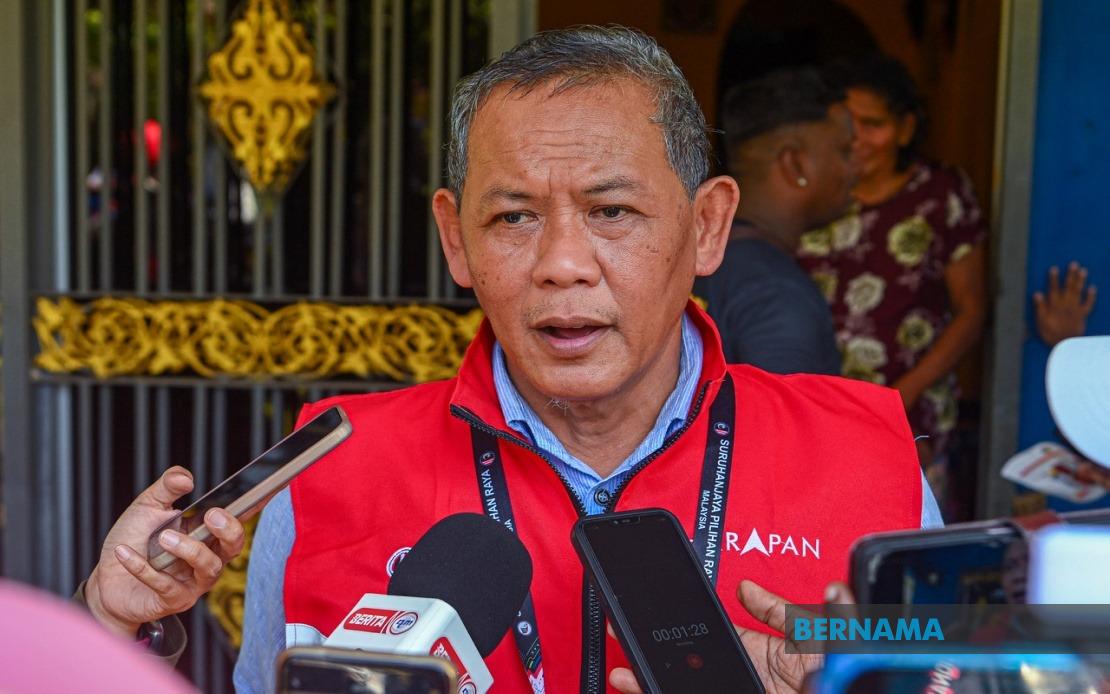
According to state PH chairman Datuk Seri Aminuddin Harun, the revised approach represents a deliberate strategic recalibration aimed at creating meaningful impact across more households in the state. Speaking after a community engagement session with the Indian community at Sekang Estate in Linggi, Aminuddin emphasised that the coalition's initiatives now encompass not just poverty alleviation programmes but also expanded access to education benefits for children from middle-income families. This repositioning suggests PH recognises the economic pressures faced by the M40 group, who earn between RM4,850 and RM10,970 monthly, and seeks to address their specific needs alongside traditional lower-income support.
The move to include M40 households in welfare provisions reflects broader economic realities in Malaysia, where middle-income families increasingly struggle with rising living costs despite earning above the poverty line. By acknowledging this demographic squeeze, PH appears to be responding to mounting pressures on households managing between modest and moderate incomes—those often overlooked by programmes targeting only the poorest segments. The expansion of educational access initiatives is particularly significant for the M40 group, whose incomes typically place them just above subsidy eligibility thresholds, creating affordability gaps for children's schooling and skills development.
Aminuddin stressed that PH distinguishes itself from political competitors by demonstrating concrete delivery rather than making hollow campaign promises. He highlighted the coalition's governance record since 2018 as evidence of its commitment to implementing pledged initiatives, arguing that translating manifestos into actual policy implementation proves far more challenging than simply presenting attractive campaign documents. This emphasis on track record serves a dual purpose: it positions PH as a responsible steward of state affairs while implicitly challenging competing coalitions to demonstrate similar implementation capacity.
The Negeri Sembilan state election context adds particular urgency to these pledges. Aminuddin is personally contesting the Linggi state seat in a three-cornered contest against Barisan Nasional incumbent Datuk Mohd Faizal Ramli and Bersatu's Zamri Md Said. As both Menteri Besar and the seat's primary PH candidate, Aminuddin's electoral performance will largely determine PH's political fate in the state, making the credibility of his policy commitments especially important to his campaign narrative.
Beyond the manifesto itself, Aminuddin made an unusual appeal for electoral maturity and social harmony. In a political climate where state and local elections increasingly become vehicles for contentious identity and religious discourse, his call for responsible campaigning that avoids issues potentially divisive to Negeri Sembilan's multiethnic society represents a notable stance. Given that the community engagement occurred at an Indian estate, and that Negeri Sembilan has substantial Indian, Malay, and Chinese populations, this positioning may reflect efforts to consolidate minority community support while steering clear of polarising rhetoric.
The timing of the manifesto release and the subsequent campaign also matters contextually. The Negeri Sembilan State Legislative Assembly was dissolved on June 5, with the Election Commission setting August 1 as polling day and July 28 for early voting. This compressed campaign period means political messaging must resonate quickly, making a clearly articulated, broad-based manifesto essential for reaching voters across constituencies and demographic segments within the limited timeframe.
PH's expansion to include M40 households also reflects lessons from recent electoral outcomes across Malaysia, where middle-income urban and semi-urban voters have become increasingly volatile politically. These swing voters, neither poor enough to depend exclusively on welfare nor affluent enough to be insulated from economic pressures, represent critical decision-makers in closely contested elections. By explicitly acknowledging their existence in the manifesto and pledging to address their needs, PH signals awareness of this pivotal electoral bloc.
The manifesto's comprehensiveness—spanning 10 major commitments—suggests PH attempted to construct a platform addressing diverse constituency interests simultaneously. However, this breadth also carries risks; broader commitments sometimes dilute focus and raise questions about funding sustainability and implementation prioritisation. How PH articulates the balance between B40 poverty alleviation and M40 affordability support will prove important as the campaign develops, particularly regarding resource allocation and which programmes take precedence during implementation.
For Malaysian observers monitoring political developments in state elections, the Negeri Sembilan contest offers insights into how coalitions are recalibrating their political messaging and policy priorities. The explicit inclusion of the M40 group suggests recognition that contemporary Malaysian electoral politics increasingly centre on addressing middle-income anxieties rather than focusing exclusively on extreme poverty or elite interests. This reflects demographic and economic shifts that will likely influence political competition not just in Negeri Sembilan but across Malaysia's federal landscape in coming years.
Amidst intensifying competitive pressures and evolving voter expectations, PH's manifesto positioning itself as delivery-oriented while expanding its welfare net demonstrates sophisticated campaign strategy. Whether voters reward such positioning with support or remain sceptical of implementation promises will become apparent once campaign arguments develop further and voters consider alternative offerings from BN and other contenders in the rapidly approaching August 1 polling day.

