Pahang's approach to removing tracts of land from Permanent Forest Reserves operates within a framework of established safeguards and administrative protocols, according to Menteri Besar Datuk Seri Wan Rosdy Wan Ismail, who addressed concerns about the state's degazettement procedures during comments made in Kuantan on August 30.
The Menteri Besar emphasised that the Pahang government does not undertake such degazettement decisions through ad-hoc means. Rather, each removal of forest reserve status involves adherence to specific conditions and rigorous procedural checks designed to ensure that land-use changes align with state planning objectives and broader resource management principles. This framework reflects the delineation of responsibilities under Malaysia's federal system, where states retain considerable autonomy over forestry and land administration matters within their territories.
One of the more contentious aspects of Pahang's approach involves its decision not to mandate a public inquiry prior to degazettement. The Menteri Besar attributed this choice to the state's constitutional authority over forest management and land governance, suggesting that such inquiries fall outside the mandatory requirements imposed on Pahang's administration. This interpretation underscores a key tension in Malaysia's forest governance architecture: while the National Forestry Act (Amendment) 2022 introduced new safeguards at the federal level, the extent to which these obligations apply uniformly across all states remains subject to differing legal interpretations and jurisdictional claims.
The position adopted by Pahang is not unique within Malaysia's federal landscape. Wan Rosdy noted that several other states have similarly opted not to implement the public inquiry requirement, suggesting that Pahang's approach reflects a broader pattern of state governments exercising their reserved powers under the Federal Constitution. This variation across states creates a patchwork of forest governance standards, with some jurisdictions adopting more stringent public consultation processes while others rely primarily on internal administrative review mechanisms. The implications of such differentiation extend beyond procedural niceties; they potentially influence the pace at which forest areas transition to alternative land uses, such as agricultural development or industrial projects.
Pahang has notably distinguished itself as the fourth state declining to adopt both key safeguards stipulated in the 2022 amendments to the National Forestry Act. These protections include not only the public inquiry requirement but also the obligation to identify and designate replacement forest land before degazettement proceeds. The absence of replacement land provisions means that the net forest cover within Pahang may decline without corresponding reforestation commitments, a consideration that environmental advocates and scientific researchers have flagged as potentially problematic for long-term ecosystem health and climate-related objectives.
For Malaysian stakeholders following forest governance issues, Pahang's position illuminates the challenges inherent in implementing uniform environmental standards across a federal system where land remains a state matter. While the federal government has sought to strengthen forest protections through legislative amendments, the actual effectiveness of these measures depends significantly on state-level cooperation and implementation. The divergence in approaches suggests that investors, conservation organisations, and communities seeking clarity on forest policy face considerable complexity when evaluating the stability and transparency of land-use decisions across different jurisdictions.
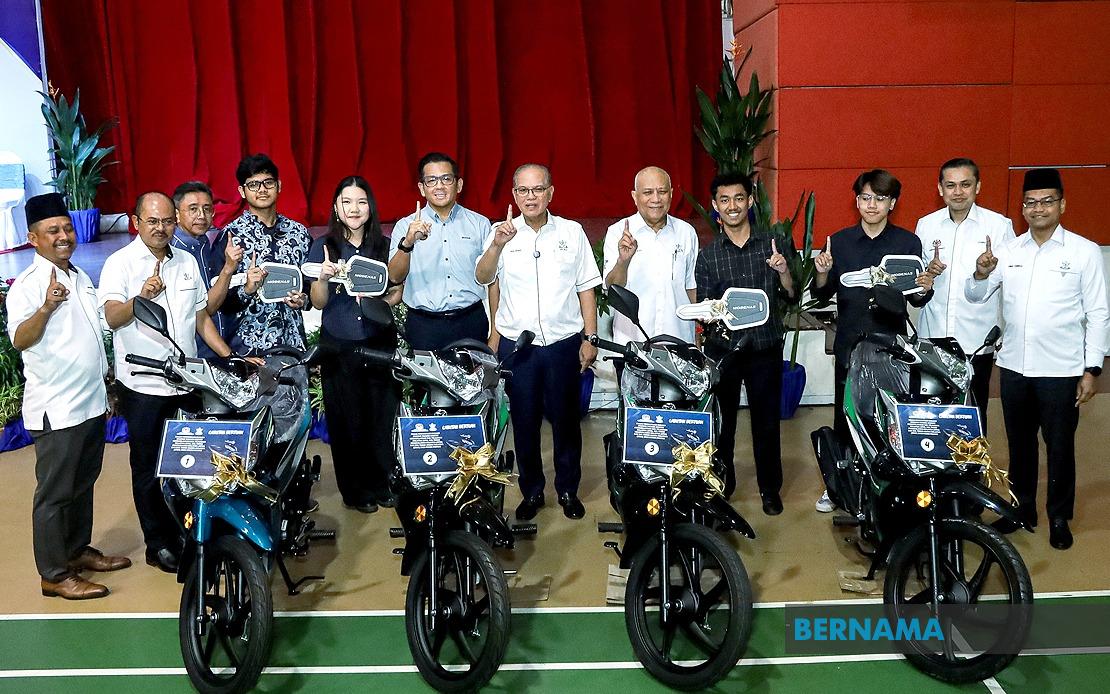
Beyond forest matters, the Menteri Besar used the occasion to unveil a new financial initiative aimed at supporting youth mobility and economic participation. Pahang plans to introduce an interest-free loan scheme specifically designed to facilitate motorcycle purchases among young people, targeting students aged 18 to 21 enrolled at public and private higher education institutions throughout Malaysia. This programme addresses a recognised gap in youth financing options, as motorcycles serve as essential transportation for many students commuting between residential areas and campuses, particularly in states with dispersed educational facilities like Pahang.
The loan initiative will be formally presented to the Pahang State Legislative Assembly as part of the 2027 state budget deliberations, indicating that the proposal has progressed beyond preliminary discussion to a stage requiring legislative appropriation. The scheme's interest-free structure differentiates it from conventional financial products, reducing the total cost of ownership for young borrowers and potentially expanding access to motorcycle financing among students from lower-income households. Such targeted support mechanisms have gained traction across Southeast Asia as governments recognise the correlation between affordable transportation and educational participation, particularly in rural and semi-urban areas.
Simultaneously, the Pahang government recognised exceptional academic achievement among the state's secondary and tertiary students. More than 2,000 high-performing students who obtained distinguished results in the 2025 Sijil Pelajaran Malaysia (SPM), Sijil Tinggi Agama Malaysia (STAM), and Sijil Tinggi Persekolahan Malaysia (STPM) examinations received incentive payments drawn from an allocation of RM2.4 million. These incentives form part of a broader state strategy to encourage educational excellence and acknowledge the efforts of students who have demonstrated mastery across diverse subject streams and educational pathways.
The combination of forest governance clarification and youth-focused initiatives reflects the Pahang government's attempt to balance competing policy priorities. While forest degazettement decisions affect longer-term environmental and land-use trajectories, youth support programmes address immediate socioeconomic concerns affecting current and prospective students. Together, these announcements reveal the multifaceted nature of state-level governance, where environmental management, economic development, and social investment intersect within constrained fiscal and constitutional frameworks.
For regional observers monitoring developments in Malaysian federalism and environmental policy, the Pahang government's articulation of its forest degazettement rationale provides insight into how states justify departures from federal safeguard standards. The invocation of state jurisdiction and the reference to similar practices elsewhere represent predictable regulatory strategies, yet they also highlight the persistent challenge of achieving coordinated forest conservation across Malaysia's thirteen states and three federal territories. As climate concerns and biodiversity protection gain prominence in regional discourse, the gap between federal aspirations and state-level implementation may intensify scrutiny of Malaysia's fragmented forest governance architecture.

