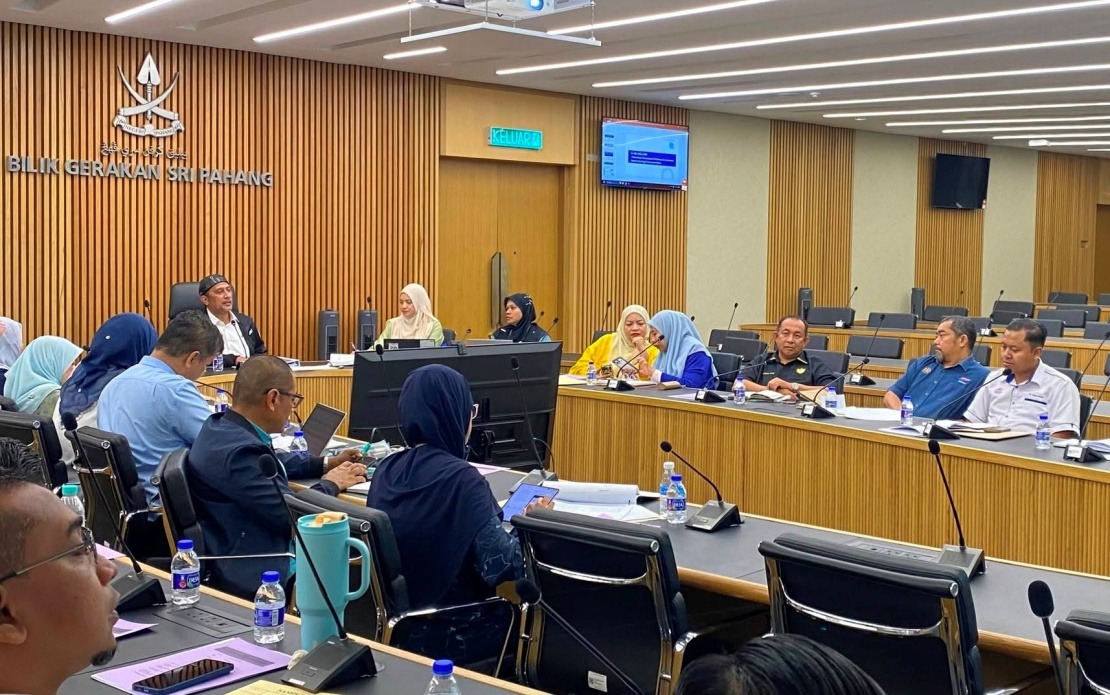
The Pahang state government has initiated a comprehensive inter-agency review to untangle a complex land dispute involving the Orang Asli community in Kampung Sungai Cot, Maran. The effort will involve the Department of Orang Asli Development (JAKOA), the Pahang Land and Mines Office (PTG), and district land authorities working in concert to identify workable solutions that balance the interests of indigenous cultivators with existing legal allocations and commercial interests.
According to Datuk Seri Syed Ibrahim Syed Ahmad, who heads the Pahang state committee responsible for Islamic affairs, rural development, and Orang Asli matters, the state government intends to handle the dispute through lawful channels and inclusive consultation rather than unilateral action. His statement on July 20 stressed that the situation differs from how some external parties have characterised the disagreement, suggesting that simplified or one-sided narratives do not capture the full complexity of the overlapping claims and prior administrative decisions involved.
The core of the dispute centres on competing land rights in a single parcel. Twelve members of the local Orang Asli community had submitted written claims to JAKOA indicating their intention to cultivate the land, yet the identical area was formally approved for allocation to a private company through a decision of the 32nd State Executive Council (MMK) dated November 4, 2015. This temporal overlap and the absence of prior coordination between the Orang Asli claims process and the commercial approval process have created the present deadlock.
JAKOA officials have convened multiple rounds of discussion with the Orang Asli representatives to explore practical pathways forward. During these sessions, the scope of active claimants narrowed from the original twelve to six individuals who continue to pursue their land rights through official channels. The claimants have asserted that the disputed area constitutes their ancestral homeland, a claim deeply rooted in cultural and historical identity. However, the relevant government authorities have been unable to substantiate these ancestral land claims based on existing administrative records and verifiable documentation, complicating any legal resolution that might prioritise indigenous land rights.
The broader context reveals that Pahang has made substantial progress in formalising Orang Asli land security across the state. The state now recognises 264 Orang Asli villages with a combined registered population exceeding 90,000 residents. Significantly, 30 of these villages have achieved formal gazettement status under Section 6 and Section 7 of the Orang Asli Act 1954 and Section 62 of the National Land Code, conferring stronger legal protection. Furthermore, the state government has approved outright land ownership transfers to the Orang Asli community in 16 villages operating under Section 76 of the National Land Code, demonstrating governmental commitment to indigenous land security as a matter of policy.
The pipeline of future land security improvements underscores the state's ongoing engagement with this issue. Seventy-five applications for formal land gazettement affecting the Orang Asli community remain under review. Of these, thirty-one applications have completed the necessary technical work and now await consideration by the State Executive Council. A further forty-four applications are stalled at the critical resolution phase because the relevant land parcels are subject to overlapping claims—a category that likely includes the Kampung Sungai Cot dispute. Additionally, one hundred and forty-three more applications are still in the initial measurement and survey stages conducted by JAKOA, representing future cases in the pipeline.
The existence of such a substantial backlog of overlapping claims highlights a systemic challenge in Malaysian land administration affecting indigenous communities. Many Orang Asli villages occupy land whose boundaries and ownership status remain ambiguous in government records, creating recurring situations where Orang Asli aspirations for formal land security collide with prior government allocations to commercial entities, government agencies, or non-indigenous individuals. The Kampung Sungai Cot case exemplifies this pattern and serves as a test of whether Pahang's approach—emphasising law, consultation, and inter-agency coordination—can produce outcomes that satisfy all stakeholders.
For Malaysian readers and policymakers, this situation raises questions about the adequacy of current institutional mechanisms for protecting Orang Asli land interests within the context of rapid economic development and competing land demands. The reliance on written claims to JAKOA, coupled with the challenge of documenting ancestral land use without formal administrative records, places Orang Asli communities at a structural disadvantage when their claims encounter prior commercial approvals made through formal government decision-making processes. The November 4, 2015 MMK decision that allocated the land to a company presumably followed proper administrative procedure, yet it appears to have proceeded without comprehensive verification of potential Orang Asli claims in the same area.
The consultative approach advocated by Syed Ibrahim represents an important departure from adversarial or bureaucratic closure of such disputes. By convening JAKOA, PTG, and district land offices, the state government signals an intention to gather comprehensive information before finalising any decision. This approach may also create space for creative solutions, such as partial land allocations, community partnerships with the approved company, or alternative land compensation, rather than a zero-sum outcome favouring either the Orang Asli claimants or the commercial licence holder.
Regionally, Malaysia's handling of Orang Asli land disputes carries implications for how Southeast Asian governments manage land rights for indigenous minorities amid development pressures. Countries such as Thailand, Myanmar, and Cambodia grapple with similar tensions between indigenous land security and national resource allocation priorities. Malaysia's formal legal framework recognising Orang Asli land rights, while imperfect, is relatively advanced within the region, yet real-world implementation of that framework—as the Kampung Sungai Cot case demonstrates—remains inconsistent and subject to administrative bottlenecks.
The ultimate resolution of this dispute will likely depend on whether the inter-agency review can locate either documentary evidence supporting the Orang Asli claims or alternative mechanisms for meeting their land security aspirations without entirely displacing the existing commercial approval. The state government's emphasis on prudence and law-based solutions suggests that it will resist both arbitrary seizure of the land for the Orang Asli claimants and cavalier dismissal of their concerns. Success in Kampung Sungai Cot may also accelerate resolution of the forty-four other applications involving land overlaps currently awaiting administrative solution, establishing precedents and best practices for Pahang and potentially for other states managing similar disputes.

