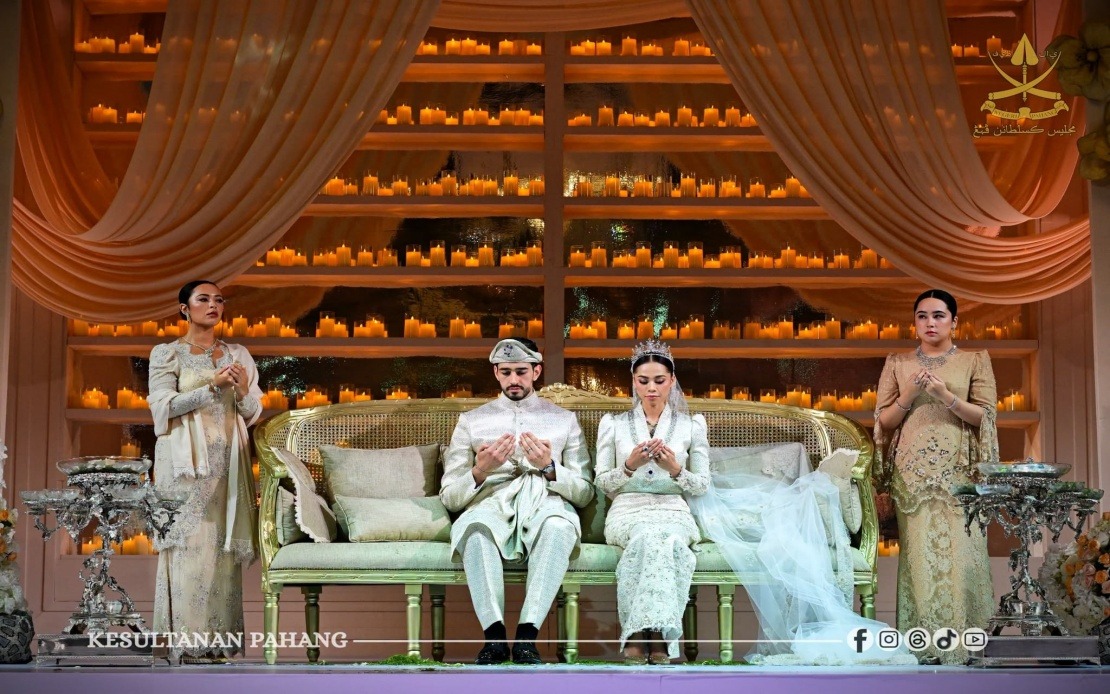
Pahang Sultan Al-Sultan Abdullah Ri'ayatuddin Al-Mustafa Billah Shah joined the celebration of his daughter's marriage at a Kuala Lumpur hotel, presiding over a wedding reception that brought together members of the royal family and distinguished guests from across the region. Tengku Puteri Raja Tengku Puteri Ilyana Alia exchanged vows with Christopher Lionel Froggatt in a union that reflected both Malaysian royal traditions and international connections, with the formal reception providing an opportunity for official acknowledgement of the newlyweds.
The Sultan's presence underscored the significance of the occasion, with the royal entourage including Pahang's Regent Tengku Hassanal Ibrahim Alam Shah and other close family members spanning multiple generations. This multi-generational representation demonstrated the importance placed upon the union within the hierarchy of the Pahang royal household, with siblings of the Sultan also joining the festivities alongside various members of the extended royal family.
The event attracted notable political figures, including Pahang Menteri Besar Datuk Seri Wan Rosdy Wan Ismail, who represented the state government's acknowledgement of the occasion. The attendance of Shaikh Mohammed Hamad Tahnoon Al Nahyan, serving as the representative of the President of the United Arab Emirates, signified the growing diplomatic connections between Malaysian royalty and regional dignitaries, particularly those from the Gulf states. Such international presence at the reception highlights the cosmopolitan nature of Malaysia's royal sphere and the expanding networks that characterise modern royal protocols.
The reception incorporated several significant ceremonial elements deeply rooted in Malaysian royal tradition. The couple took their formal position on the dais, a traditional focal point in Malay-Muslim wedding celebrations, where they became the centre of attention for the assembled guests and participated in the ritualistic components of the reception.
The 'Istiadat Menyuap Nasi Semangat' ceremony, which translates to the ritual feeding of blessed rice, carried particular symbolic weight in the proceedings. Tengku Puteri Seri Lela Wangsa Tengku Tan Sri Meriam Sultan Ahmad Shah conducted this ceremony, involving a senior female member of the royal family in a role that has been customary within Malay royal celebrations for generations. This ceremony represents a moment of spiritual blessing and family affirmation within the broader context of the wedding reception.
Following this, the 'Istiadat Bersanding dan Merenjis' took place, a ceremonial component in which the bride and groom traditionally sit together in elevated position while family members and guests offer their blessings. The Sultan himself participated in this ritual, with other family members subsequently performing the merenjis, a sprinkling gesture considered auspicious in Malay wedding traditions. The Sultan's direct involvement in these ceremonial acts represented his formal blessing and public endorsement of the marriage.
A particularly notable moment arrived when Al-Sultan Abdullah performed the 'Istiadat Meletakkan Panca Bicara', a ceremonial act intended to convey paternal blessing upon the newlyweds. The panca bicara, traditionally understood as five words of wisdom or guidance, represents a formal gesture through which the Sultan imparted his blessings and honour upon the couple as they embarked upon married life. This gesture carries deep significance within the Malaysian royal system, serving both a spiritual and social function within the family framework.
The religious dimension of the reception received attention through the involvement of Pahang's religious leadership. Pahang Mufti Datuk Dr Asmadi Mohamed Naim provided a concluding prayer, adding an Islamic spiritual component to what had been an increasingly formal and ceremonial occasion. This integration of religious observance with royal protocol reflects the way Malaysian royal ceremonies blend secular formality with Islamic principles, creating events that satisfy both constitutional and spiritual requirements.
The wedding reception demonstrated how contemporary Malaysian royal occasions continue to honour traditional customs whilst accommodating international elements and modern expectations. The presence of Christopher Lionel Froggatt, whose background reflects the international connections increasingly common among younger members of Malaysia's royal families, illustrates the gradual evolution of these institutions whilst maintaining their ceremonial substance and cultural grounding.
The detailed documentation of these events, shared through official royal channels such as the Kesultanan Pahang's Facebook page, reflects modern communication practices within royal institutions. Such transparency allows the broader Malaysian public to understand and participate vicariously in significant royal occasions, democratising access to knowledge about royal ceremonies that might previously have remained confined to those present in person.
For Malaysia's royal system, such occasions serve multiple purposes beyond the celebration of individual families. They reinforce the importance of monarchy within Malaysian society, demonstrate the continuity of traditions across generations, and provide opportunities for royal families to maintain their cultural and social prominence. The international dimensions of this particular reception, particularly with UAE representation, also suggest the expanding regional diplomatic roles that Malaysian sultans increasingly undertake beyond their constitutional domestic responsibilities.

