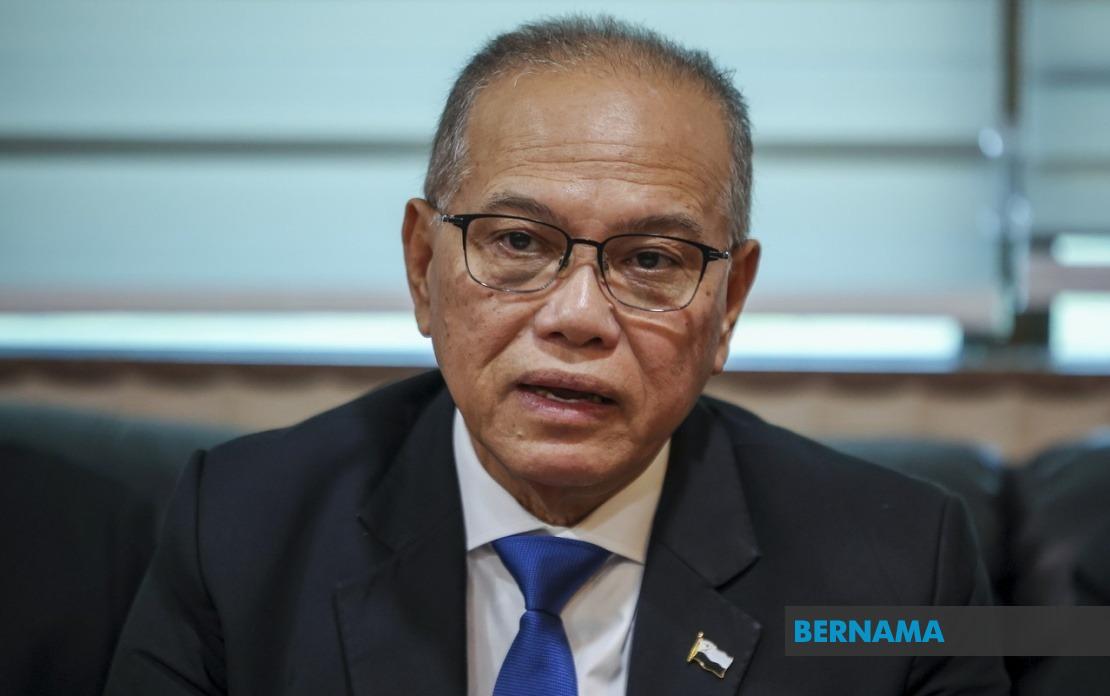
Pahang's fiscal performance through late August demonstrates the state government's capacity to sustain revenue collection amid evolving economic conditions. With RM921.72 million collected as of August 26, the state has achieved nearly three-quarters of its RM1.279 billion revenue target for 2026, according to Menteri Besar Datuk Seri Wan Rosdy Wan Ismail during proceedings at the Pahang State Legislative Assembly at Wisma Sri Pahang.
The revenue milestone represents a critical indicator of state financial health at a time when many Malaysian states face budgetary pressures. Achieving 72 per cent of the annual target with four months remaining in the fiscal year suggests Pahang remains positioned to exceed or meet its financial objectives, barring unforeseen economic disruptions. For a state that competes with more developed counterparts for commercial and industrial investment, sustained revenue growth underscores its attractiveness to both domestic and foreign investors seeking stability in their operating environment.
Wan Rosdy attributed the strong collections to broader economic momentum across Pahang. The state's Gross Domestic Product grew to RM71 billion in 2025 from RM68.8 billion the previous year, reflecting diversification and expansion in key sectors. This GDP trajectory matters considerably for Malaysia's regional balance, as Pahang represents a significant portion of the nation's eastern corridor development and resource extraction industries. Healthy state-level growth contributes to national economic resilience and regional employment opportunities.
Investment inflows into Pahang provide further evidence of business confidence in the state's trajectory. The state government recorded RM11.47 billion in committed investments as of August 2026, with realised investments reaching RM1.044 billion. These figures suggest that businesses are not merely making pledges but actively deploying capital, which typically indicates genuine confidence in regulatory stability, infrastructure quality, and market potential. For Malaysian readers in other states, Pahang's investment performance offers a comparative benchmark for assessing regional competitiveness.
The state's financial stability has enabled more direct support for residents through the Makmur Pahang Initiative, a programme designed to deliver tangible benefits to ordinary Pahang residents. Since 2024, the state government has allocated RM173.93 million to this initiative, with funding increasing progressively from RM38.8 million in 2024 to RM50.54 million in 2025, and RM84.59 million in 2026. This escalating allocation pattern reflects a deliberate policy choice to prioritise citizen welfare as revenues strengthen, rather than allowing increased income to flow entirely into operational or administrative expenses.
The trajectory of Makmur Pahang Initiative funding carries significance beyond Pahang's borders. As a concrete example of how state revenues translate into citizen-directed programmes, it demonstrates an alternative model to federal-dependent development. States that successfully generate independent revenue streams can theoretically design and implement welfare schemes aligned with local needs rather than conforming entirely to centrally-defined parameters. This devolution of social support to subnational governments remains a live debate in Malaysian federalism.
Wan Rosdy's statement also reflects political messaging aimed at reassuring investors and constituents about governmental competence. During periods of economic uncertainty or political transition, clear articulation of financial performance becomes a tool for demonstrating stability and forward planning. By publicly outlining revenue targets, achievement rates, and planned allocations, the Menteri Besar signals that the state apparatus maintains professional financial management and transparent accountability mechanisms.
The revenue performance also arrives amid broader conversations about state government capacity across Malaysia. As the federal government manages its own fiscal constraints—including persistent deficits and rising debt servicing costs—state governments increasingly shoulder responsibility for developmental initiatives. Pahang's ability to collect nearly three-quarters of its annual revenue target demonstrates that subnational administrations can maintain revenue discipline even when macroeconomic headwinds persist nationwide. This capacity becomes critical as federal-state fiscal relationships evolve.
The state government plans to further increase Makmur Pahang Initiative allocations in the coming year through the forthcoming Pahang State Budget presentation. This forward commitment suggests leadership confidence in sustained or improved revenue collection beyond 2026. However, such optimism depends on global commodity prices—particularly for palm oil and tin, historically significant for Pahang's economy—and continued investment inflows. Any sharp downturn in either area could pressure subsequent budgets.
For Malaysian businesses and investors eyeing Pahang as a potential location for expansion or establishment, the revenue and investment figures offer reassurance of stable state governance and adequate public finance for maintaining infrastructure and services. The state's demonstrated capacity to collect revenues efficiently and allocate them toward citizen programmes creates a governance environment where business can operate with reasonable predictability about tax regimes and public service quality.
The underlying economic data—GDP growth, investment realisation, and revenue collection—paints a picture of an East Coast state increasingly diversifying beyond traditional resource extraction. Whether through manufacturing, services, or value-added activities, Pahang appears to be broadening its economic foundation. This diversification matters for Malaysia's overall economic resilience, as excessive regional concentration of growth creates imbalances and vulnerability to sector-specific shocks.
As Pahang moves toward finalising 2026 results and preparing its 2027 budget, the revenue trajectory established to date provides a strong foundation. However, state officials will need to monitor global economic indicators and domestic policy shifts that could affect investment flows or consumer spending patterns. The next several months will prove crucial for determining whether Pahang's current momentum can sustain into the new fiscal year and beyond, ultimately shaping the state's capacity to fund public initiatives and attract continued business interest.

