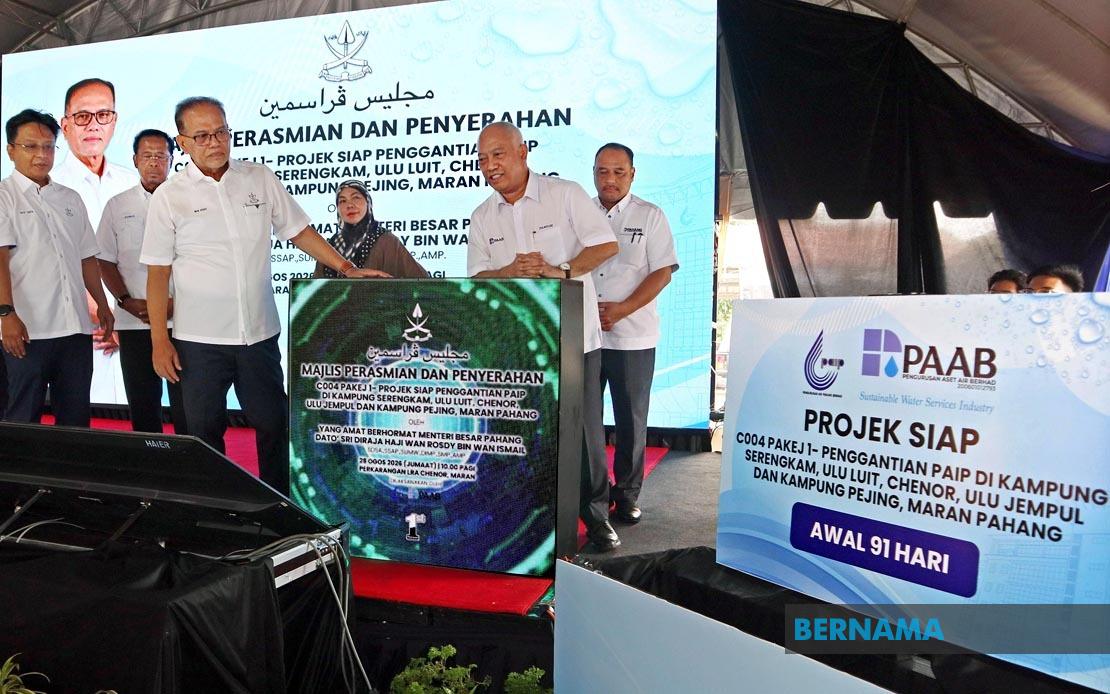
Pahang's leadership is committing to a staged approach for resolving persistent shallowness in Sungai Pahang, particularly in communities such as Kampung Pesagi within Maran district. The state government's decision to prioritise this issue reflects growing awareness that the problem extends beyond immediate water management concerns, touching the economic vitality of riverside settlements and their dependence on river-based activities. Menteri Besar Datuk Seri Wan Rosdy Wan Ismail outlined the strategy during an event marking the completion of a major pipe replacement initiative in the district, signalling the government's broader commitment to infrastructure modernisation.
Before implementation of specific interventions, the Pahang administration is gathering comprehensive data on the river's current condition from relevant authorities. This deliberate pace reflects a recognition that hasty fixes may prove ineffective or create unintended consequences downstream. The gathering of technical reports will enable officials to evaluate multiple solution pathways rather than applying a one-size-fits-all remedy. Wan Rosdy indicated the findings will be presented to the state executive council for detailed evaluation and refinement, underscoring the multi-departmental nature of the challenge.
The government's framework contemplates solutions across three distinct timeframes. Short-term measures could provide immediate relief while longer initiatives develop, medium-term strategies might address underlying contributing factors, and long-term solutions would aim at sustainable river management. This structured approach acknowledges that some interventions require legislative changes, budget allocations, or environmental assessments that cannot be rushed. The specificity of identifying Kampung Pesagi alongside other affected areas suggests the government recognises the uneven distribution of impact across different river sections.
The economic dimension of this problem deserves particular attention for Malaysian observers. Shallow waterways constrain transport, fishing, and agricultural activities that communities have relied upon for generations. As Peninsular Malaysia continues to urbanise and industrialise, rural populations increasingly depend on secondary and tertiary economic activities enabled by navigable waterways. The shallow Sungai Pahang represents not merely an environmental issue but a barrier to livelihoods and regional development equity. Addressing it sends a signal about the state's commitment to inclusive growth beyond urban centres.
Parallel infrastructure initiatives reveal the state's broader development priorities. The pipe replacement programme has achieved resolution rates exceeding 90 per cent in four districts, with Maran expected to reach similar success. This water supply modernisation programme addresses distinct but related challenges—aging infrastructure limiting service provision to growing populations. The convergence of water supply upgrades with river management concerns illustrates how aging infrastructure across multiple systems can compound disadvantages for communities.
Energy infrastructure expansion complements these water-related initiatives. The Tenaga Nasional Berhad project involving a 500kV Transmission Main Intake Substation in Kampung Awah represents a RM350 million investment scheduled for completion by 2030. This substantial commitment to Eastern Malaysia's power grid reflects recognition that industrial capacity requires reliable electricity supply. The linkage between energy infrastructure and economic development is explicit—improved power networks attract manufacturers and service providers seeking operational reliability. For Pahang, bolstering transmission capacity positions the state as an attractive investment destination competing with other East Coast jurisdictions.
The proposed energy transmission network will interconnect strategic Eastern Coast locations, creating a more resilient and robust power system. This networked approach differs from isolated power generation, allowing better load distribution and reducing vulnerability to localised disruptions. Such grid modernisation is essential infrastructure for the kind of advanced manufacturing and technology sectors that regional economic plans prioritise. However, the long development timeline extending to 2030 indicates that immediate capacity constraints may persist, potentially limiting expansion of energy-intensive industries in the interim.
Integrating water management, urban infrastructure, and energy development reflects sophisticated governance thinking about interconnected systems. Rivers, water pipes, and electrical grids all form part of the basic infrastructure upon which modern economies depend. A state government addressing all three domains simultaneously demonstrates awareness that piecemeal improvements leave critical bottlenecks unresolved. The coordination required across technical departments, contractors, and funding bodies remains challenging but appears to be receiving leadership attention.
For Malaysian readers, Pahang's approach offers a template for how state governments might tackle complex, multi-layered infrastructure challenges. Rather than postponing decisions until perfect solutions emerge, the Pahang administration is gathering intelligence, building consensus through executive council processes, and sequencing interventions across timeframes. This methodology acknowledges realistic constraints on funding and implementation capacity while maintaining momentum toward resolution. The willingness to admit that solutions require comprehensive study before execution distinguishes this approach from reactive policymaking.
The shallow river issue also reflects broader environmental management questions relevant throughout Malaysia. Population growth, upstream water extraction, agricultural practices, and climate variability all influence river conditions nationwide. Pahang's investigation into Sungai Pahang's shallowness may generate insights applicable to other watercourses. State governments elsewhere facing similar challenges could benefit from documenting the technical assessments, solution methodologies, and implementation outcomes emerging from this initiative. Regional cooperation on river management—particularly where waterways cross state boundaries—may emerge as increasingly important for shared resource challenges.
Stakeholder engagement in addressing the river problem remains implicit rather than explicit in available statements. Communities living along Sungai Pahang possess intimate knowledge of changing conditions, seasonal variations, and practical impacts that formal hydrological surveys might miss. Integrating local resident perspectives alongside technical expert assessment could strengthen the eventual solutions. Future public communication about findings and proposed interventions will test whether the government's consultation extends beyond district authorities to affected populations themselves.
The investment in both water and energy infrastructure carries significant fiscal implications for Pahang's budget across the medium term. While the RM350 million energy project receives mention, comparable cost estimates for addressing river shallowness remain unstated. Transparency about implementation budgets and funding sources would help residents understand the government's seriousness and realistic timeframes. As these projects mature, comparative analysis of actual versus planned expenditure and timeliness will reveal whether ambitious infrastructure programmes maintain momentum through political and economic cycles.
Moving forward, Pahang's dual focus on immediate water supply modernisation and longer-term river management reflects the state's evolution toward comprehensive infrastructure planning. The integration of these initiatives with energy sector development suggests a coordinated vision for economic transformation. Success in delivering on these commitments could position Pahang as a model for East Coast development while addressing persistent inequities affecting rural communities dependent on natural resources and traditional economic sectors.

