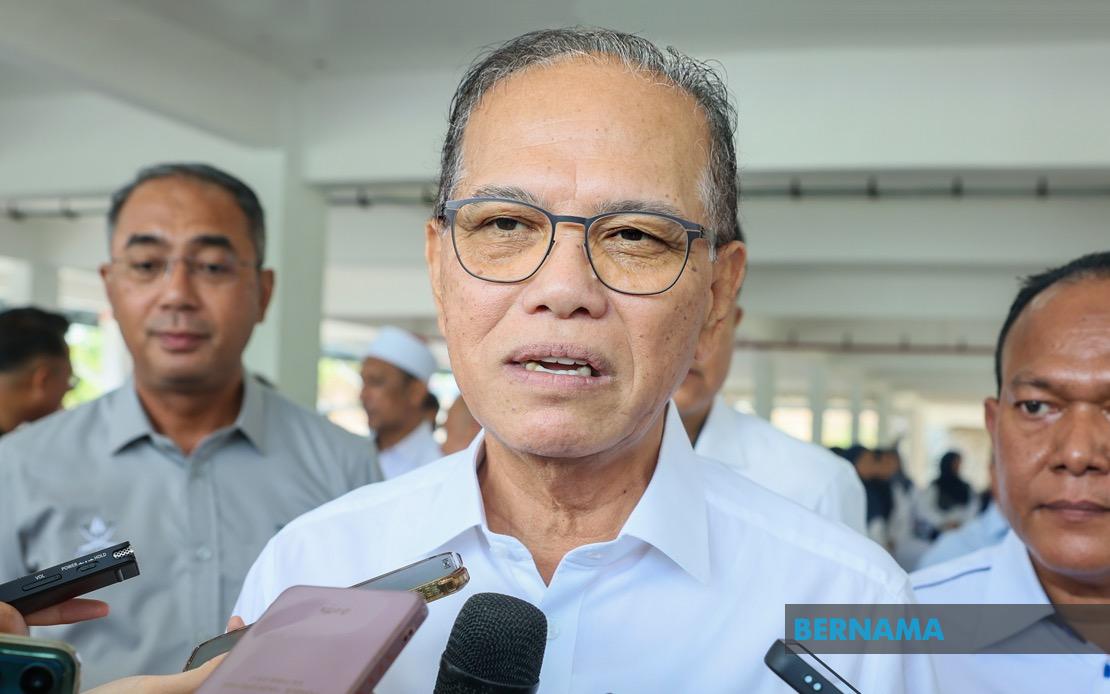
The Pahang state government is taking decisive action to reshape its sporting landscape through a RM3.5 million investment designed to build competitive excellence in three key sports disciplines. Menteri Besar Datuk Seri Wan Rosdy Wan Ismail announced the initiative at the closing ceremony of the Pahang 1st Netball League Championship at the Pahang Sports Complex (SUKPA) in Kuantan on July 5, signalling the administration's commitment to systematic talent development at every level.
The funding breakdown reveals a strategic prioritisation of sports considered most likely to deliver measurable success. Football receives the largest share at RM2 million, reflecting both its popularity and competitive potential, while netball attracts RM1 million in annual support. Sepak takraw, the traditional Southeast Asian sport gaining renewed momentum across the region, secures RM500,000. This allocation structure demonstrates Pahang's recognition that sustainable sports development requires sustained financial commitment across disciplines rather than scattered, one-off investments.
Wan Rosdy articulated an ambition to position Pahang among Malaysia's sporting powerhouses, a goal that requires sustained effort given the historical dominance of states with longer-established sports infrastructure and funding histories. The Menteri Besar's emphasis on avoiding half-hearted implementation suggests awareness that previous initiatives may have faltered through insufficient follow-through or inadequate resource allocation. This rhetorical positioning indicates the state government recognises that competitive parity in national sports requires not merely annual pledges but demonstrated institutional commitment.
The netball programme appears poised for particular acceleration. The state government has already committed to increasing netball's allocation by RM500,000 from the following financial year, bringing its total to RM1.5 million annually. This escalation indicates either strong performance expectations from the current investment or recognition that women's netball represents an underexploited avenue for sporting achievement and national representation. The decision to enhance netball funding ahead of schedule also reflects gender-inclusive sports policy, a significant development in Malaysian state-level sporting administration.
Grassroots identification and nurturing of emerging talent forms the philosophical foundation underlying these investments. Wan Rosdy's articulation of the government's desire to systematically discover and develop new athletes suggests Pahang has previously struggled to maintain pipelines of competitive talent. Without robust grassroots frameworks identifying promising young athletes early, even substantial funding proves inefficient. The emphasis on youth development infrastructure indicates recognition that sustainable competitive success requires decades-long commitment to talent cultivation rather than short-term performance chasing.
The timing of this announcement, coupled with the hosting of the Pahang 1st Netball League Championship with 42 participating teams, suggests the state is investing in institutional capacity alongside direct athlete support. The championship itself, won by Semambu with RM10,000 in prize money, represents competitive infrastructure that encourages participation and establishes measurable performance standards. Such tournaments serve dual functions as both performance platforms and motivation mechanisms for emerging athletes.
For Malaysian sports development more broadly, Pahang's initiative exemplifies a pattern whereby state governments increasingly recognise sports as legitimate vehicles for state building and community cohesion. Wan Rosdy explicitly framed sports development as a platform fostering unity, cooperation and discipline across diverse communities. This positioning transcends purely athletic considerations, situating sports within broader social development agendas increasingly prioritised by Malaysian state administrations.
Sepak takraw's inclusion in Pahang's sporting strategy deserves particular attention for regional significance. As Southeast Asia's indigenous sport experiencing resurgence across the region, competitive investment in sepak takraw development aligns Pahang with broader ASEAN sporting trends. The RM500,000 allocation, while modest compared to football funding, signals recognition that traditional sports merit institutional support alongside globalised disciplines.
The competitive landscape within Malaysia itself presents significant challenges for Pahang's ambitions. Established sporting states maintain institutional advantages spanning decades of accumulated expertise, athlete development networks, and sponsorship relationships. Pahang's investments must therefore demonstrate exceptional efficiency and strategic focus to generate competitive returns. The three-sport concentration rather than broader diversification suggests sophisticated prioritisation based on realistic assessment of which disciplines offer achievable pathways to national competitiveness.
Moving forward, the success of Pahang's sports development initiative will depend substantially on consistent year-on-year funding, institutional commitment from relevant national federations, and integration of these investments within broader economic development and talent attraction strategies. States across Southeast Asia increasingly recognise that sporting excellence serves as both economic stimulus through tourism and international sporting events, and as nation-building through athlete representation. Pahang's approach represents earnest attempt to harness these dynamics, though results will only materialise over multi-year implementation cycles requiring sustained political will and budgetary prioritisation.

