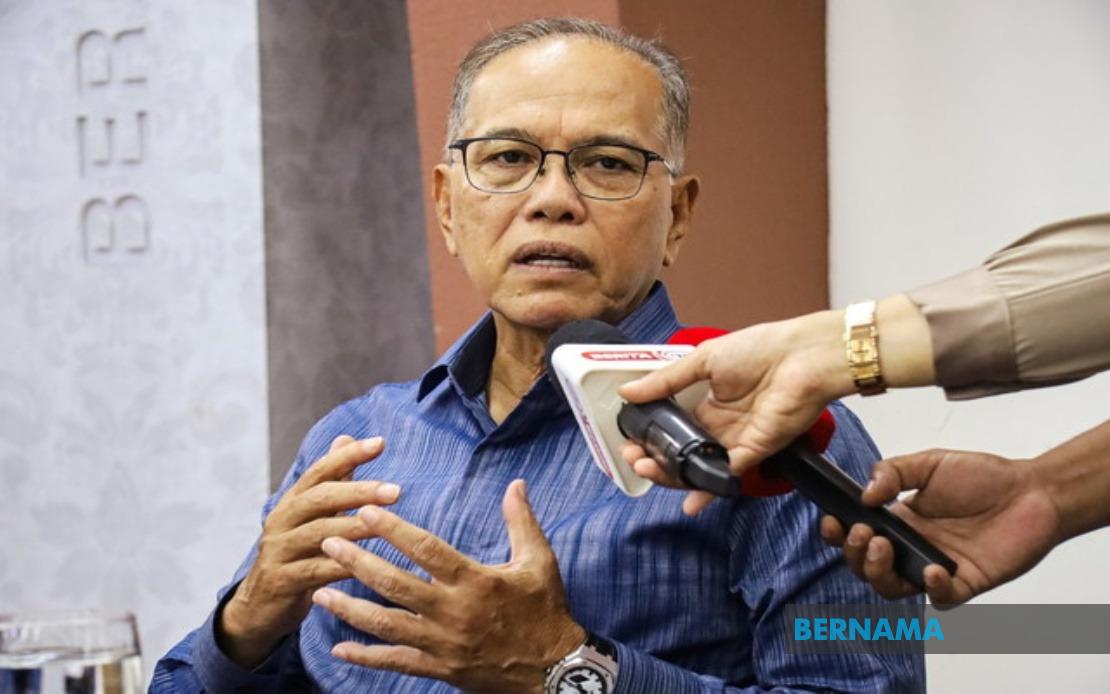
The Pahang Barisan Nasional leadership has signalled its intention to preserve the Unity Government partnership with Pakatan Harapan through the 16th General Election, with state chairman Datuk Seri Wan Rosdy Wan Ismail underlining the administration's dedication to this arrangement. Speaking in Kuantan on August 14, Wan Rosdy indicated that internal discussions would determine the trajectory of the coalition, though his remarks suggest strong support for maintaining the current political alignment until voters next go to the polls.
The Pahang Menteri Besar emphasised that the state government remains focused on delivering tangible benefits to residents regardless of broader political considerations. This commitment to governance fundamentals reflects a pragmatic approach adopted by BN leadership in the state, which recognises that electoral promises must be backed by substantive policy delivery. By framing the Unity Government as a mechanism for advancing public welfare rather than merely a temporary political convenience, Wan Rosdy appears intent on building public confidence in the coalition's legitimacy and durability.
The current political configuration in Pahang took shape following the 2022 constitutional agreement between BN and PH to form a joint state administration. This arrangement emerged after the 15th General Election in 2023, when neither coalition secured an outright majority in the state assembly. BN and Perikatan Nasional had each won seventeen seats from the forty-two member Dewan Undangan Negeri, while PH captured eight seats, creating a hung parliament scenario that necessitated cross-coalition negotiations. The subsequent agreement reflected a broader national trend toward consensus-building politics that emerged following GE15's inconclusive outcome.
Wan Rosdy's emphasis on openness to cooperation with other parties positions Pahang within the evolving landscape of Malaysian coalition politics. While reaffirming commitment to the existing PH partnership, the statement leaves room for tactical flexibility should circumstances change before GE16. This calculated ambiguity serves multiple functions: it reassures current coalition partners of continuity while signalling to other potential allies that dialogue remains possible. For Malaysian political observers, such positioning reflects the increased volatility and transactional nature of modern coalition management, where rigid long-term commitments have become less tenable.
The timing of these remarks carries significance for regional politics. As the nation gradually moves toward the electoral cycle that will culminate in GE16, state-level leaders like Wan Rosdy are already laying groundwork for their respective political futures. Pahang, as one of Malaysia's larger states with significant federal representation, carries outsized influence in national coalition mathematics. Statements from its leadership therefore reverberate beyond state borders, offering signals to party headquarters about the sustainability of the federal Unity Government framework.
Beyond the coalition politics, Wan Rosdy's public remarks during the Makmur Pahang Initiative presentation ceremony highlighted the state administration's investment in human capital development. The government allocated one hundred eighteen thousand ringgit to support one hundred eighteen students from higher education institutions pursuing further studies in Egypt and New Zealand during August. This investment underscores an often-overlooked aspect of state governance: educational advancement programmes that receive less media attention than headline-grabbing policy announcements.
The Pahang state government has also channelled additional support through Yayasan Pahang, providing one thousand United States dollars to students enrolled in tertiary institutions in Jordan and Morocco. This international scholarship initiative reflects recognition that quality higher education increasingly occurs beyond Malaysian borders, and that state governments must facilitate student mobility to ensure access to specialised programmes unavailable domestically. Such initiatives acquire particular importance in Southeast Asia, where competition for talent and brain drain pose persistent developmental challenges.
Wan Rosdy articulated criteria guiding the selection of overseas study destinations and programmes, emphasising consideration of curriculum content and relevance to Pahang's developmental priorities. The inclusion of courses featuring Islamic elements within selection frameworks demonstrates how state authorities balance modernisation with cultural and religious values. This approach typifies the contemporary Malaysian governmental ethos, which attempts to reconcile development objectives with communal expectations regarding religious and cultural continuity, a tension that has become increasingly pronounced across Southeast Asian policy-making.
The Makmur Pahang Initiative represents a medium-term institutional commitment to scholarship provision, with leadership indicating plans for continued expansion and enhancement. This signals sustainability beyond immediate electoral cycles, suggesting that educational investment has achieved acceptance across Pahang's political spectrum. Such bipartisan consensus on human development priorities, even amid coalition tensions, demonstrates that Malaysian state governments retain capacity for cooperative governance in sectors perceived as technologically and strategically vital.
Wan Rosdy's exhortation to scholarship recipients to uphold Pahang's reputation internationally reveals expectations that overseas students function as state ambassadors and talent repositories for eventual domestic deployment. This reflects familiar Southeast Asian patterns wherein educational investment is understood not solely as individual advancement but as strategic national development. The advice to students to develop mental and physical resilience, framed within the context of overseas education challenges, acknowledges the psychological and social dimensions of student mobility that often receive insufficient policy attention.
As Pahang navigates the period preceding GE16, the state administration appears focused on demonstrating effective governance through sustained delivery of development initiatives. The scholarship programme exemplifies this approach, offering tangible evidence of state capability and concern for constituent advancement. Whether the Unity Government framework survives until the next general election will likely depend on whether such concrete achievements outweigh factional tensions that could eventually destabilise the coalition.
The broader context for Pahang's political arrangement involves the ongoing national experiment with multiparty consensus governance. The Unity Government at federal level faces similar pressures and opportunities as the state-level arrangement, and Pahang's leadership decisions carry implications for how other state administrations navigate their own coalition challenges. Wan Rosdy's statement, therefore, represents not merely a local political declaration but a contribution to the emergent Malaysian model of collaborative governance that balances ideological differences against shared governance objectives.

