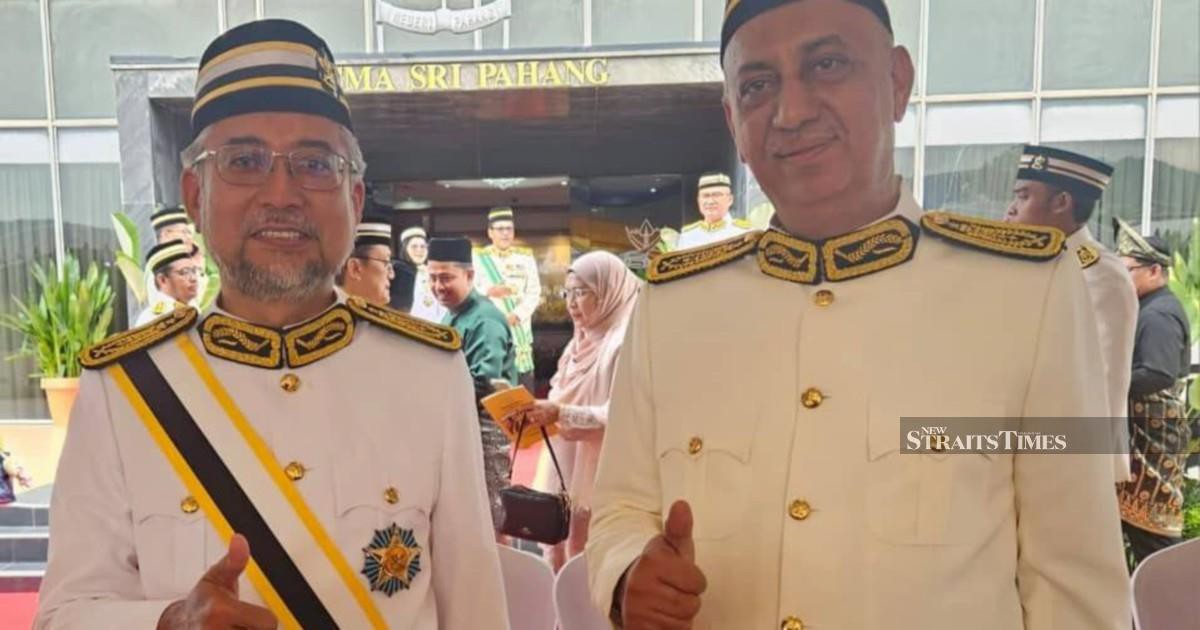
The political landscape in Pahang has been affirmed by two state assemblymen from Bersatu, who have publicly declared their backing for Menteri Besar Datuk Seri Wan Rosdy Wan Ismail in his administration's governance of the state. The show of solidarity comes at a time when regional coalitions continue to reshape electoral dynamics across Malaysia, particularly as attention turns toward the 16th general election cycle.
Wan Rosdy's tenure as Menteri Besar has been marked by navigating complex inter-party dynamics within the ruling coalition. The Pahang government has operated under a coalition framework that requires careful management of multiple stakeholder interests. The pledge from these two Bersatu representatives strengthens his position by securing commitments from within his own party machinery at the state assembly level, a development that typically signals confidence in both his leadership direction and the coalition's stability heading into electoral contests.
Bersatu has positioned itself as a significant component in Pahang's political calculations since the 2018 general election reshaped the nation's political composition. The party's representatives in the state assembly function as crucial votes within the delicate balance that determines the Menteri Besar's parliamentary majority. Securing fresh pledges of allegiance from within party ranks demonstrates proactive relationship management and suggests efforts to preempt any potential defections or wavering support among coalition partners.
The timing of such public declarations often carries strategic implications for state politics. By formalizing support ahead of electoral cycles, assemblymen create a political record that binds them publicly to the administration's fortunes. This creates a shared accountability framework where political figures become invested stakeholders in the government's performance metrics, which will ultimately be judged by voters at the ballot box.
Pahang represents one of Malaysia's most significant states by landmass and economic importance, producing substantial revenue through oil palm cultivation, mining operations, and increasingly through tourism development. The stability of its state government therefore extends implications beyond purely local concerns, affecting national political configurations and investor confidence in the broader regional economy. A stable administration capable of securing internal support can more effectively pursue developmental agendas and maintain policy continuity.
The approach toward the 16th state election remains a critical juncture for Pahang's political trajectory. State elections in Malaysia have increasingly demonstrated voter sensitivity to governance effectiveness, corruption management, and delivery of local services. Menteri Besars entering electoral contests with visibly fractious coalitions or uncertain internal support often face voter skepticism about their capacity to govern effectively. Conversely, administrations projecting unity and focused commitment to development objectives tend to generate more positive electoral momentum.
Bersatu's role in Pahang warrants particular attention given the party's broader positioning within national coalition politics. The party has experienced internal tensions and leadership transitions that occasionally manifest at state levels. By having individual assemblymen make explicit public commitments to support their Menteri Besar, potential vulnerabilities arising from higher-level party dynamics are partially insulated. Individual representatives become tied to the success of their state administration, creating personal political investment in its continuity.
The coalition framework governing Pahang involves balancing interests across multiple parties with sometimes divergent policy preferences and electoral calculations. Assemblymen from different parties often maintain cautious relationships, with support contingent on perceived benefits flowing to their respective constituencies and party interests. Statements of commitment from within Bersatu therefore carry particular weight, as they represent support from within the Menteri Besar's own party structure, where expectations of loyalty typically run highest.
Looking toward the 16th state election, Pahang's political configuration will likely reflect broader Malaysian trends including evolving voter preferences regarding local leadership, economic management, and representation quality. The state has diverse demographic composition with significant Orang Asli communities, substantial Felda settlement populations, and growing urban centers. Different constituencies within these populations respond to distinct policy priorities and governance approaches, creating complex electoral mathematics that require careful administration.
The commitment from these assemblymen provides Wan Rosdy with documented support that can bolster his narrative of stable, capable governance. In Malaysian politics, where coalition mathematics directly determine executive authority, such pledges function as concrete political assets. They reduce uncertainty about parliamentary support and enable forward planning regarding legislative agendas and developmental initiatives that require multi-year implementation cycles.
As Pahang moves closer toward state elections, the degree of internal coalition cohesion will prove decisive in determining electoral outcomes and the subsequent opportunity for government formation. Administrations entering elections with fractious partnerships often find themselves weakened by voter perception of instability and susceptibility to post-election realignments. The public backing from Bersatu representatives therefore serves both symbolic and practical functions, signaling unity while creating political commitments that extend through the electoral cycle.

