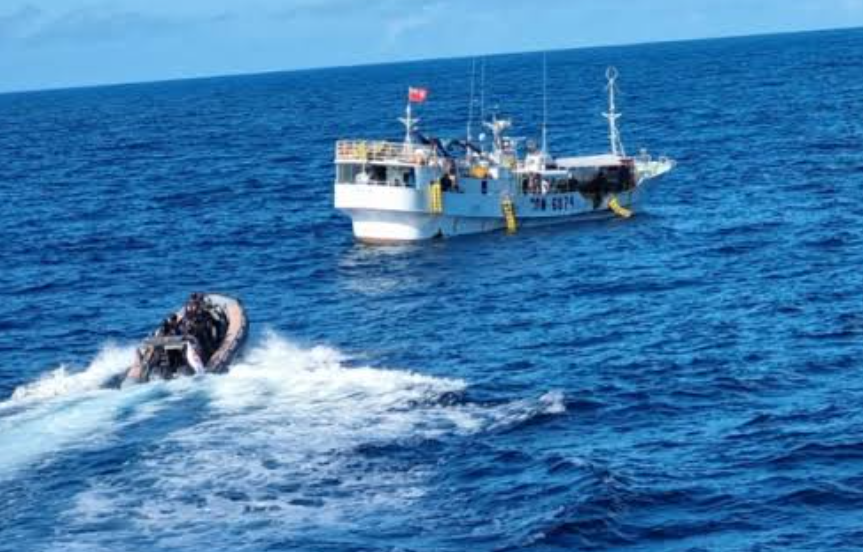
Pacific island nations have intensified their enforcement efforts against illegal fishing, detaining multiple vessels flagged to China and Indonesia during a significant coordinated operation this month. Four ships have been brought into port or seized by maritime authorities in Kiribati, Palau, and Papua New Guinea for operating without proper authorisation or violating the terms of their fishing licenses, according to statements from the Pacific Islands Forum Fisheries Agency, which oversees fisheries management across the region.
The enforcement push represents part of a broader two-week surveillance campaign known as Operation Island Chief, which ran from August 3 to 14 and brought together maritime authorities from eleven separate island nations. During this intensive period, enforcement teams boarded and inspected more than one hundred vessels operating across a vast area encompassing 28 million square kilometres of ocean. The operation deployed substantial resources, including aerial reconnaissance carried out by an Australian military aircraft and maritime patrols conducted by a United States Coast Guard vessel alongside local Pacific maritime police forces.
The Pacific region holds extraordinary economic and strategic importance in global fisheries. Approximately half of the world's tuna supply is harvested within these waters, yet Pacific island nations currently process or handle only 15 per cent of the catch domestically. The remaining fish is typically transported to Asian markets by large long-distance fishing fleets that operate under license agreements with the island states. This arrangement generates substantial revenue streams for the participating nations, with access fees alone contributing US$500 million annually, supplemented by US$1.2 billion in export earnings from processed products. For many Pacific communities, these fisheries revenues represent critical support, sustaining the livelihoods of approximately one-third of all Pacific island households.
The identification of sixteen additional vessels as subjects of concern during the operation demonstrates the scope of the enforcement challenge facing Pacific authorities. However, the Fisheries Agency has declined to release detailed information about these vessels or the specific findings from their inspections. This discretion reflects broader diplomatic sensitivities that complicate enforcement efforts in the region. Chinese fishing companies operate extensive long-distance fleet operations across Pacific exclusive economic zones and maintain joint venture fisheries partnerships with several island governments, making public disclosure of enforcement actions a delicate matter requiring careful diplomatic handling.
The enforcement operation comes at a particularly significant moment for regional governance. An annual summit of eighteen Pacific island leaders is scheduled to convene on August 30 in Palau specifically to chart a new strategic direction for protecting fishing rights and expanding revenue generation. These discussions are being driven by growing concerns about the sustainability of fish stocks as climate change progressively alters ocean conditions and threatens the long-term viability of traditional fishing grounds. The illegal fishing problem has become increasingly pressing as legitimate operators and island governments face mounting economic pressure to maximise returns from diminishing resources.
Recent enforcement incidents illustrate the persistent nature of illegal operations in the region. Last month, maritime authorities in Tuvalu apprehended a Chinese-flagged vessel that was engaged in unauthorised fishing within Tuvalu's territorial waters while simultaneously broadcasting false location information to evade detection. The vessel remained in custody for twenty-four days before being released following the imposition of a substantial fine. This case was facilitated by personnel from the conservation organisation Sea Shepherd, whose vessel transported Tuvalu police officers on maritime patrol missions. The incident is particularly significant given Tuvalu's political alignment with Taiwan rather than Beijing, suggesting that enforcement applies regardless of diplomatic relationships.
Statistical data compiled by the Western and Central Pacific Fisheries Commission reveals the persistent scale of enforcement challenges involving Chinese vessels. Between 2008 and 2026, inspectors issued two hundred seventy-eight penalty notices to Chinese-flagged fishing boats, representing the second-highest number of violations recorded. Taiwan-flagged vessels accumulated three hundred nineteen infringements during the same period, indicating that violations span multiple Asian fishing nations operating in the region. These figures underscore that illegal fishing represents a systemic problem rather than isolated incidents, involving numerous operators across the region's most significant fishing fleets.
For Malaysia and other Southeast Asian nations, the enforcement developments carry multiple implications. Many regional countries either participate in Pacific fisheries through joint ventures or maintain subsidiary operations in Pacific waters, making enforcement standards and transparency important competitive considerations. Additionally, the broader issue of illegal, unreported, and unregulated fishing affects Southeast Asian markets, as fish products from Pacific sources flow through regional supply chains and trading networks. The effectiveness of Pacific enforcement mechanisms influences global seafood markets and the sustainability of regional fish supplies that support Southeast Asian populations.
The coordination demonstrated during Operation Island Chief suggests evolving capacity among Pacific island nations to conduct sophisticated surveillance and enforcement operations. The involvement of Australian and American maritime assets indicates broader international cooperation frameworks that supplement the region's own resources. However, the Fisheries Agency's reluctance to publicly disclose details about identified vessels and ongoing investigations points to constraints in transparency that may limit the deterrent effect of enforcement actions. For illegal operators, the costs of detection and enforcement must appear substantial enough to discourage violations, yet diplomatic and economic considerations sometimes complicate the credibility of enforcement threats.
The upcoming Pacific leaders' summit will likely generate proposals for strengthening governance frameworks and establishing more transparent, consistent enforcement standards. Discussions may focus on enhancing technological monitoring systems, increasing penalties for violations, and establishing regional agreements that bind participating nations to standardised enforcement protocols. The economic stakes are sufficiently large that Pacific island governments face mounting pressure to demonstrate effective control over their exclusive economic zones, particularly as climate impacts threaten to reduce overall fish stocks and heighten competition for remaining resources.

