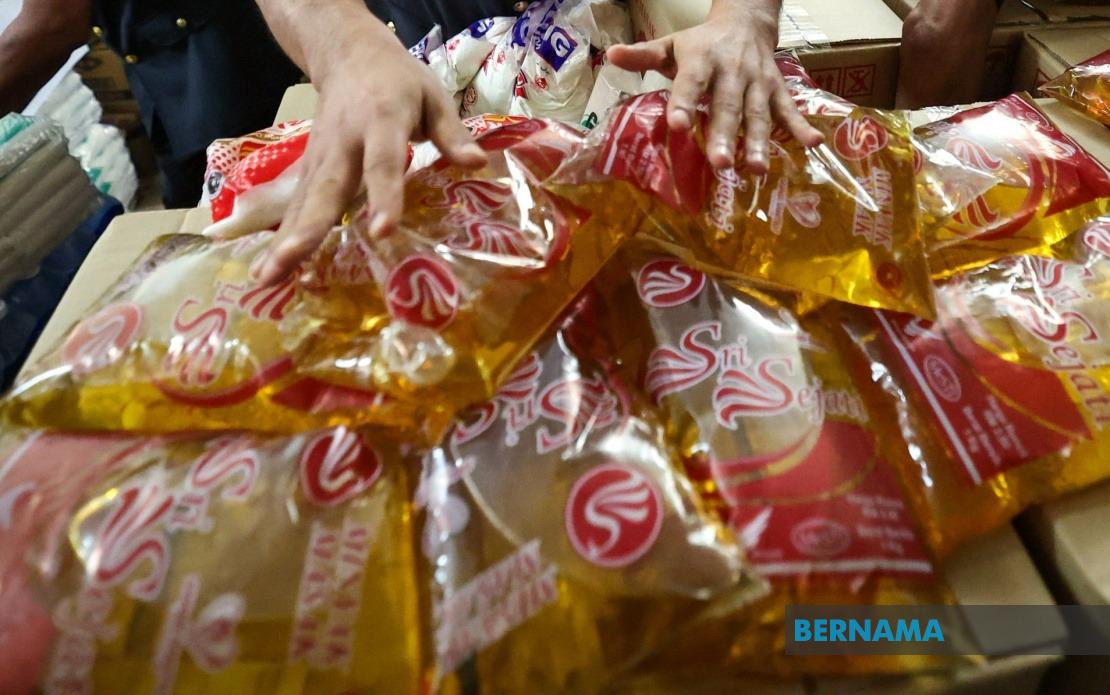
The Public Accounts Committee has identified serious systemic failures in Malaysia's cooking oil price control and subsidy programme, revealing that government assistance totalling RM10.879 billion between 2019 and February 2025 has been diverted away from its intended beneficiaries. PAC deputy chairperson Teresa Kok unveiled eight formal recommendations at Parliament designed to restructure the entire supply chain, signalling deepening concerns about how state support for this essential commodity has been managed and distributed across the nation.
At the heart of the committee's findings lies a fundamental mismatch between allocated and actual domestic requirements. The Cooking Oil Price Stabilisation Scheme currently operates with a quota of 60,000 metric tonnes monthly, yet investigation proceedings revealed that genuine Malaysian consumption stands between merely 19,000 and 30,000 metric tonnes per month. This vast oversupply creates numerous opportunities for diversion and waste, with subsidised cooking oil packets frequently being purchased by ineligible groups including foreign nationals and commercial food businesses that should bear full market costs.
The absence of meaningful controls over distribution channels has compounded the problem substantially. One-kilogramme packets of subsidised cooking oil, marketed as consumer assistance, have become commodities subject to market manipulation and resale at prices exceeding the controlled RM2.50 rate. Retailers engage in conditional sales practices, accumulate excessive stocks, and circumvent price ceilings with minimal consequences, indicating that enforcement mechanisms at the point of sale remain inadequate despite years of implementation. Teresa Kok specifically highlighted how ineffective retailer-level monitoring has transformed what should be a targeted welfare measure into a mechanism that benefits those it was never designed to assist.
Halal certification standards, which should provide basic quality assurance, have similarly fallen short of expectations. The committee discovered that two of nine packaging companies involved in the subsidy scheme lack proper halal certification from JAKIM, a situation that appears inconsistent with claims of improved certification procedures. This gap raises questions about quality oversight and whether consumers actually receive cooking oil processed according to Islamic standards despite the government's emphasis on halal compliance throughout its domestic supply frameworks.
Spoilage and stock degradation represent another hidden drain on public resources. Packaging companies currently lack standardised operating procedures for managing cooking oil that has deteriorated or become unsuitable for consumption. Remarkably, the government continues subsidising these damaged stocks even though they never reach consumers and serve no public purpose beyond transferring funds to commercial operators. The PAC's investigation found no systematic mechanism to prevent subsidy claims on spoiled inventory, essentially requiring taxpayers to finance waste and corruption simultaneously.
Profit margins for repackaging companies have become disproportionately generous relative to actual processing costs. These firms receive RM600 per metric tonne in subsidies, yet committee evidence suggests their genuine operational expenses fall considerably lower. This generous subsidy structure inflates government spending without corresponding justification, effectively transferring wealth to private operators under the guise of consumer assistance. The recommendation to recalibrate these rates represents recognition that current arrangements have strayed far from cost-covering principles into outright rent-seeking by industry participants.
Market concentration among foreign-owned refineries further distorts the subsidy scheme's intended purpose. Foreign companies control 67 percent of the subsidised cooking oil quota at refining level, while Malaysian government-linked companies including FGV and SD Guthrie together account for only 10.6 percent. This imbalance means that most state support ultimately flows to international corporations rather than strengthening domestic capacity or supporting local industry. The PAC explicitly recommended studying quota redistribution mechanisms that would prioritise competitive Malaysian enterprises, acknowledging that subsidy design has inadvertently disadvantaged homegrown competitors.
The committee proposes accelerating transition to a fully digital targeted subsidy system through the enhanced eCOSS platform, representing perhaps the most transformative recommendation. Moving beyond bulk allocation to verified individual eligibility would eliminate many current abuse pathways and ensure assistance reaches only citizens who genuinely qualify. This technological shift from blunt subsidy instruments to precision targeting reflects lessons learned across Southeast Asia regarding how welfare programmes can be modernised to prevent leakage while maintaining genuine support for lower-income households.
Payment mechanisms require fundamental restructuring to prevent subsidising waste. The PAC recommends that packaging companies receive subsidy payments exclusively on undamaged stocks, directly tying government disbursements to product quality and eliminating perverse incentives to claim compensation for spoiled inventory. This straightforward reform would automatically reduce unnecessary subsidy expenditure without requiring complex new bureaucratic structures or enforcement arrangements. Combined with improved stock management procedures, such changes could recapture significant portions of currently wasted public funds.
Beyond specific operational modifications, the investigation reflects broader accountability questions about how Malaysia allocates resources for essential commodities. The RM10.879 billion figure represents substantial public investment that could have supported healthcare, education, or infrastructure development had it been properly targeted and protected from diversion. The PAC's willingness to document these failures and propose concrete solutions suggests Parliament is reasserting its oversight function after the Auditor-General's critical assessment exposed inadequacies in ministerial management. Whether KPDN implements these recommendations comprehensively will determine whether this investigation produces genuine reform or merely another advisory document filed away without consequence.
The implications extend throughout Malaysia's subsidy ecosystem and cost-of-living management strategy. If cooking oil programmes leak funds this substantially despite serving only one commodity, comparable weaknesses likely afflict other price-controlled essentials. The PAC's findings create pressure to audit similar schemes affecting fuel, sugar, flour, and other staple goods. For consumers, the investigation confirms suspicions that retail price controls often fail to protect their intended beneficiaries while enriching intermediaries. Addressing these structural failures could simultaneously reduce government spending and improve assistance targeting, a rare alignment of fiscal and social objectives that should incentivise rapid implementation.

