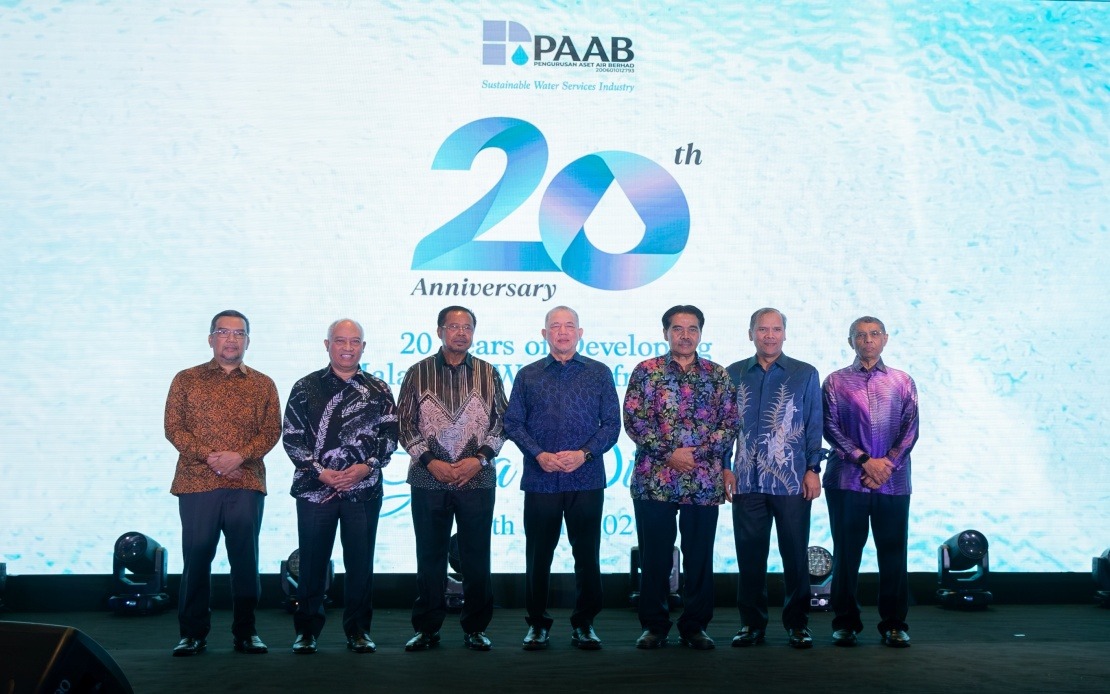
Pengurusan Aset Air Berhad (PAAB), a finance company wholly owned by the Minister of Finance Incorporated, reached a significant milestone this week as it marked two decades of stewardship over Malaysia's water sector restructuring agenda. Since its establishment on May 5, 2006, the organisation has emerged as a pivotal institution in reshaping the nation's water services landscape, channelling vast sums into infrastructure modernisation whilst navigating the complex task of securing long-term supply reliability across the country.
The scale of PAAB's financial commitments underscores the magnitude of the water sector's transformation. Over its 20-year tenure, the organisation has financed the assumption of water industry loans totalling RM23.04 billion, effectively absorbing decades of accumulated debt from water operators whilst simultaneously investing RM23.84 billion in new infrastructure development. These dual tracks—debt management and capital expenditure—reflect the dual challenge facing Malaysia's water authorities: addressing inherited financial obligations whilst building the modern systems required to meet growing demand. Combined, the total financing and investment portfolio has reached RM46.88 billion, a figure that positions PAAB as one of the largest drivers of public infrastructure spending in the country.
Deputy Prime Minister Datuk Seri Fadillah Yusof, who holds the Energy Transition and Water Transformation portfolio, officiated the anniversary dinner at Menara Felda Platinum Park and used the occasion to sound an urgent alarm about the nation's water efficiency crisis. Malaysia's non-revenue water (NRW) rate—the percentage of treated water lost through leakage before reaching consumers—remains stubbornly high at approximately 40 percent nationwide, a figure that represents both massive economic waste and a constraint on future growth. In a water-stressed region where climate variability increasingly threatens supply stability, this leakage rate is particularly concerning for a nation seeking to attract substantial foreign direct investment in water-intensive sectors.
Fadillah's remarks underscored growing frustration with the pace of progress on this critical issue. He characterised the current timeline for addressing NRW as insufficient, noting that waiting until 2050 for full resolution was incompatible with Malaysia's immediate economic imperatives. The nation's ambitions to establish regional hubs for data centres and other high-value manufacturing require not merely adequate water supply but guaranteed, uninterrupted availability—precisely what Malaysia cannot currently promise given its leakage challenges. His call for immediate coordinated action across federal and state agencies reflected recognition that the issue transcends any single institution's remit and demands urgent cross-government intervention.
The infrastructure projects completed under the National Water Services Industry Restructuring Plan provide tangible evidence of PAAB's operational impact. As of December 2025, ten states have signed onto the restructuring programme, resulting in the construction and commissioning of 21 new water treatment plants with a combined production capacity of 2,085 million litres per day—a meaningful expansion of the nation's treatment capacity. Complementing this are 42 new water storage tanks with 783 million litres of combined capacity, providing buffer storage against supply disruptions. Additionally, 3,263 kilometres of pipeline upgrades and extensions have been completed, addressing critical vulnerabilities in the distribution network where ageing infrastructure has historically contributed to both leakage and service interruptions.
PAAB's operational structure reflects a phased approach to sector transformation that extends across four decades. The organisation's mandate centres on implementing the National Water Services Industry Restructuring Plan through what is termed the Full Cost Recovery Roadmap, a framework stretching to 2050. This long-term vision divides the transformation journey into four distinct phases: Migration (2008–2020), which involved the initial transfer of assets and liabilities; Stabilisation (2021–2030), focused on establishing operational efficiency; Consolidation (2031–2040), which will integrate fragmented services; and ultimately Full Cost Recovery (2041–2050), when water tariffs will theoretically reflect the true cost of service delivery. This extended timeframe acknowledges the scale of institutional and financial restructuring required.
Of the RM23.84 billion in capital expenditure deployed through December 2025, the allocation reveals the phased nature of current activities. Some RM8.33 billion has been spent on completed projects that have been transferred to operating companies, representing tangible assets now delivering water services. A further RM1.84 billion is committed to projects currently under construction, suggesting near-term completion. The remaining RM13.67 billion—more than half the total—remains in design and planning stages, indicating that the most substantial wave of infrastructure development lies ahead. This distribution suggests that many of the capital-intensive projects envisioned in the restructuring roadmap have yet to commence.
The involvement of state governments in the restructuring plan adds another dimension to the implementation challenge. Ten states have currently signed the National Water Services Industry Restructuring Plan agreement, yet Malaysia comprises 13 states and three federal territories. The incomplete take-up suggests either ongoing negotiations with holdout jurisdictions or differing commitments to the restructuring agenda across the federation. For a nation attempting to build a coordinated, efficient water sector, this patchwork of adoption presents coordination challenges, potentially fragmenting standards and approaches across regions and complicating the achievement of national efficiency targets.
Fadillah's emphasis on the centrality of data centres to Malaysia's economic future reveals how water security has become integral to broader development strategy. These facilities consume enormous quantities of water for cooling purposes, and their reliability depends on assured supply. As Southeast Asian economies compete to host regional artificial intelligence and digital infrastructure hubs, nations with unstable water supplies face competitive disadvantages. Malaysia's efforts to position itself as such a hub thus cannot succeed without simultaneously solving its water efficiency crisis, making Fadillah's urgent calls for action on NRW fundamentally about economic competitiveness, not merely environmental stewardship or public health.
PAAB chairman Datuk Seri Jaseni Maidinsa framed the organisation's success not merely in financial or asset terms but through the lens of public impact: more stable, cleaner water reaching consumers with fewer interruptions. This outcome-focused rhetoric masks the significant complexity involved in coordinating water supply across Malaysia's diverse geography and multiple institutional actors. The 20-year journey from establishment to the present moment represents an incremental accumulation of infrastructure and institutional learning, yet the persistence of the NRW challenge suggests that investment in physical assets alone has proven insufficient to deliver the transformation originally envisioned when PAAB was created two decades ago.

