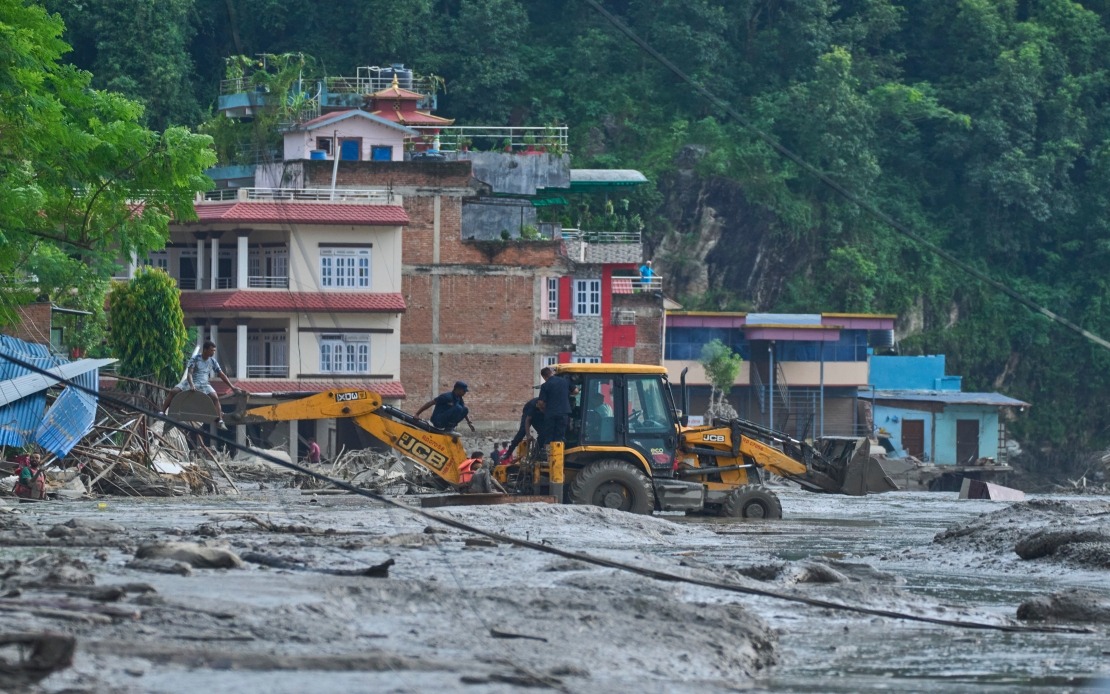
A catastrophic series of flash floods and landslides has struck the Nepal-China border region, leaving a mounting humanitarian crisis as authorities on both sides grapple with one of the region's most severe natural disasters in recent memory. As of Wednesday, confirmed fatalities stand at 160, with Nepalese police recovering 157 bodies while Chinese state media reports three deaths in the southern Tibet region. The true scale of the tragedy, however, extends far beyond these figures, with more than 680 people reported missing across both countries—a number that reflects the disaster's devastating scope and the chaos that has engulfed affected communities.
The disaster has struck with particular force along major travel corridors, catching tourists, migrant workers and security personnel in its path. Nepalese government records indicate that missing persons include 391 foreign nationals and 93 Nepali citizens who were in the Rasuwagadhi area and surrounding regions. Among those unaccounted for are travellers from Nepal, India, the United Kingdom, South Africa, Malaysia, Australia and the Netherlands, with the nationalities of many others still being confirmed. South Korea's Foreign Ministry has reported eight nationals unaccounted for in the region, while ten others remain stranded following the initial disaster. The international dimension of this crisis underscores how the Rasuwagadhi area serves as a crucial gateway for regional tourism, attracting visitors bound for Nepal's renowned Langtang trekking circuit and the sacred Mount Kailash and Lake Mansarovar in Tibet.
Among the missing are significant numbers of personnel involved in development and security operations. The Nepalese Prime Minister's Office confirmed that 44 army personnel, 28 police officers, 13 armed police personnel and 60 civilian employees engaged in hydropower project construction have gone missing. This loss of trained personnel compounds the disaster's impact, straining the capacity of rescue and relief operations at a moment when experienced manpower is most desperately needed. The concentration of these workers in hydropower projects reflects Nepal's ongoing push to develop its substantial water resources, a sector that has expanded considerably over recent years but remains vulnerable to environmental hazards.
The scale of physical destruction across the border region rivals the human toll. At least 19 bridges have been swept away entirely, while approximately 40 kilometres of road infrastructure has been damaged or destroyed, effectively isolating numerous communities. Thirteen hydropower projects have suffered severe damage, representing significant setbacks to Nepal's energy infrastructure development agenda. The mudslide that struck near Gyirong Port, a major border crossing in China's Xizang Autonomous Region (Tibet), has severed crucial transport links on the Chinese side whilst simultaneously disrupting communications and power supplies to the area. Nepalese Foreign Minister Sishir Khanal informed parliament that the floods erased large swathes of hydropower installations, government offices and road facilities across the Rasuwa, Dhading and Chitwan districts, illustrating the comprehensive nature of the destruction.
Rescue operations have mobilised substantial resources from both nations. Nepalese authorities have deployed personnel from the Nepal Police, Armed Police and Nepal Army, equipped with helicopters, drones and rafting equipment to navigate the treacherous terrain and search for survivors. Chinese President Xi Jinping has ordered "all-out" search and rescue efforts, directing authorities to evacuate residents in danger zones and provide immediate medical treatment to the injured. The Xizang emergency management bureau has coordinated mobilisation of regional forces, though the destruction of communications and power infrastructure has complicated coordination efforts. So far, Nepalese rescuers have managed to extract 54 people from flood-affected areas, though many more are believed to be trapped in remote locations.
Regional governments are mobilising in response to the humanitarian emergency. In Kathmandu, government-run hospitals and medical facilities operated by security agencies have been cleared to receive injured survivors. Indian Prime Minister Narendra Modi telephoned Nepalese counterpart Balendra Shah to express condolences and pledge support, with India already dispatching ten tonnes of humanitarian assistance, disaster relief supplies and essential medicines across the border. The Indian state of Bihar, located to the south and vulnerable to downstream effects, has issued directives for round-the-clock monitoring of embankments and heightened vigilance in sensitive districts, reflecting concerns that the disaster's impacts may extend into Indian territory through watershed connections and seasonal flooding patterns.
The Rasuwagadhi area has long served as a vital transit point for regional commerce and tourism, situated at the intersection of major trekking routes and pilgrimage pathways. The Langtang region, which draws thousands of international visitors annually, relies on this corridor for access, whilst many trekkers and pilgrims utilise the route to reach Mount Kailash and Lake Mansarovar, sacred sites in Hindu, Buddhist and other faith traditions. The disruption of these transportation networks will have cascading economic effects throughout Nepal's tourism sector, an industry that generates substantial foreign exchange and employment for rural communities. The damage to hydropower projects is equally consequential, as Nepal has been aggressively developing its hydroelectric capacity to meet growing energy demand and export electricity to neighbouring countries.
The disaster highlights the increasing vulnerability of border regions to climate-driven hazards, a concern that resonates across South and Southeast Asia as extreme weather events become more frequent and severe. The Nepal-China border's topography—characterised by steep mountain slopes and rapid elevation changes—creates conditions particularly susceptible to flash flooding and landslide formation during heavy precipitation events. Climate scientists have documented intensification of monsoon patterns and increased glacial melt in the Himalayan region, factors that contribute to the severity of such disasters. For Malaysia and other Southeast Asian nations with mountainous terrain, the Nepal-China disaster serves as a sobering reminder of the region's collective exposure to similar hazards and the importance of cross-border cooperation in disaster response and preparedness.

