The Federal Territories have embarked on an ambitious patriotic campaign, distributing 62,386 Jalur Gemilang national flags across Kuala Lumpur, Putrajaya and Labuan since the start of August. This initiative forms part of the broader National Day and Malaysia Day (HKHM) 2026 celebrations, designed to instil national consciousness among residents and encourage widespread display of Malaysia's national symbol throughout the region's public spaces and residential communities.
Minister in the Prime Minister's Department (Federal Territories) Hannah Yeoh spearheaded the distribution effort, which has seen the flags prominently displayed along protocol roads and throughout both official and residential areas. The campaign extends beyond physical flag placement, with officials urging Malaysians to showcase their patriotic spirit through digital channels as well. Yeoh emphasised that this moment of celebration provides an opportunity for citizens to reflect on the independence their nation enjoys today and to express their love for Malaysia through tangible symbols of sovereignty.
A critical component of the campaign centres on educating the public about proper flag etiquette. Yeoh stressed that agencies and organisations must ensure flags are displayed according to established guidelines, addressing concerns that incorrect handling could diminish the flag's dignified representation. She acknowledged public hesitation about potential mistakes and moved to alleviate such fears by directing citizens to available resources detailing correct flag display procedures. Rather than fostering anxiety about compliance, the campaign aims to create an inclusive environment where ordinary Malaysians feel empowered to participate in patriotic displays.
The minister highlighted the importance of instilling flag consciousness from an early age, suggesting that school environments should be spaces where children learn not only the technical aspects of flag display but also the deeper significance of national symbols. This educational approach recognises that patriotism is most effectively cultivated when citizens understand the meaning behind their actions rather than simply following rules by rote. By framing flag-flying as an accessible and encouraged activity rather than a potentially error-prone task, authorities seek to normalise the practice across Malaysian society.
For business establishments and commercial operations, Yeoh issued specific guidance regarding staff training and management oversight. She advised proprietors to ensure their employees receive proper instruction on flag handling procedures and that supervisory personnel conduct regular checks to maintain standards. This directive reflects an understanding that the quality of flag displays across the Federal Territories depends not merely on official distribution but on widespread adoption of best practices throughout both public and private sectors.
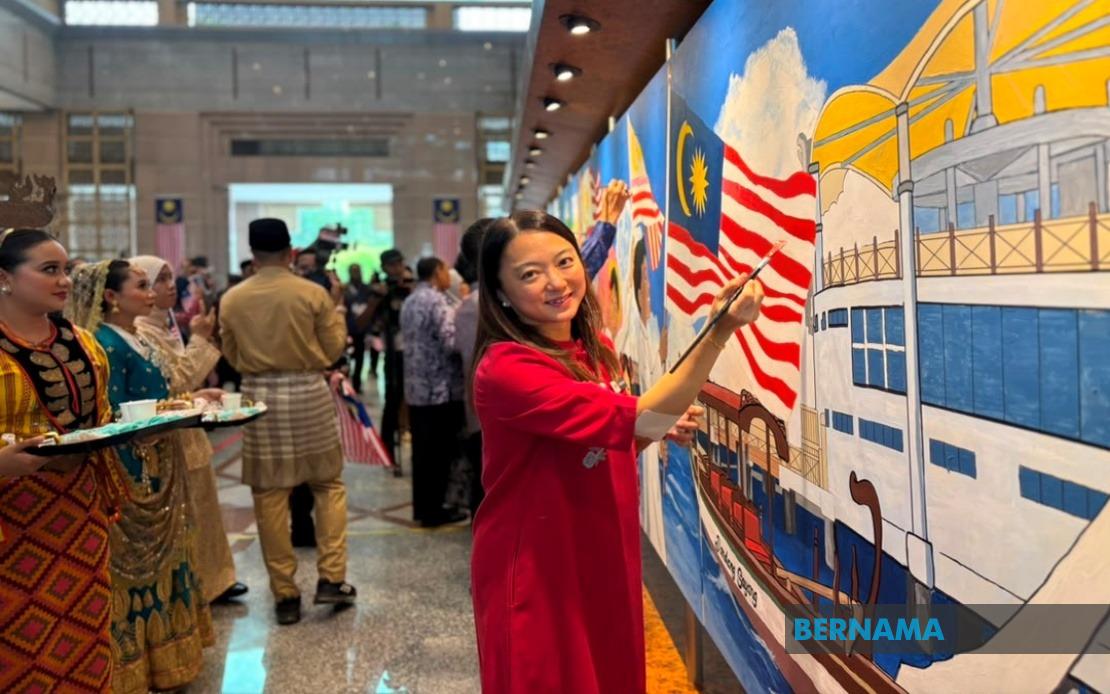
The campaign reached a symbolic crescendo with the completion of a monumental Independence Mural at Menara Seri Wilayah on August 27. Spanning 25.40 metres, this artistic installation was crafted with direct participation from Hannah Yeoh and personnel from the Federal Territories Department (JWP), transforming the flag distribution initiative into a tangible expression of collective national purpose. The mural's design deliberately incorporates visual representations of iconic landmarks from all three Federal Territories, reinforcing the geographic scope and inclusive nature of the patriotic endeavour.
The artwork's inclusion of the Jalur Gemilang as a central motif serves multiple purposes within the broader HKHM 2026 campaign. Beyond its obvious symbolic function, the mural demonstrates that flag representation can transcend conventional pole-mounted displays and enter the realm of public art, making patriotic expression accessible to diverse audiences and artistic mediums. This creative approach may inspire other communities and organisations to consider innovative ways of celebrating national symbols.
Present at the Aspirasi Jalur Gemilang mural inauguration were Federal Territories Department director-general Datuk Muhammad Azmi Mohd Zain and Putrajaya Corporation (PPj) president Datuk Mohd Sakeri Abdul Kadir, underscoring the multi-institutional coordination required for such comprehensive campaigns. The gathering of high-level officials signified government commitment to ensuring the HKHM 2026 celebrations achieve their intended impact across all three Federal Territories.
For Malaysian readers in the Federal Territories and beyond, this campaign carries broader implications about how official messaging around national identity is evolving. Rather than imposing patriotic sentiment through top-down directives, authorities increasingly recognise that sustainable national consciousness emerges when citizens feel supported, informed, and genuinely encouraged to participate. The provision of guidelines and resources, coupled with reassurance that mistakes need not prevent participation, reflects a matured approach to civic engagement.
The timing of this distribution ahead of the formal HKHM 2026 celebrations suggests government intentions to build anticipatory momentum throughout the Federal Territories. By placing flags in prominence for several months before the actual commemorative dates, administrators create an extended period of visible national symbolism, potentially reinforcing patriotic sentiment through repeated exposure rather than concentrating celebrations into brief public holidays.
The initiative also carries significance for understanding how Malaysia's federal administration approaches regional identity. The deliberate inclusion of all three Federal Territories—Kuala Lumpur as the capital, Putrajaya as the administrative centre, and Labuan as the federal territory on Borneo—demonstrates commitment to integrated governance messaging across geographically dispersed jurisdictions. This symbolic unity finds expression through coordinated flag distribution and collective artistic projects.
Looking forward, the success of this campaign may influence how subsequent national celebrations are organised across Malaysia's various regions and states. The model of combining practical distribution initiatives with high-profile public art projects and emphasis on public education offers a template that other jurisdictions might adopt. As Malaysia continues to grapple with questions of national cohesion and civic identity, such carefully calibrated patriotic campaigns serve as both practical infrastructure for celebration and barometers of how government and citizenry negotiate shared symbols of nationhood.

