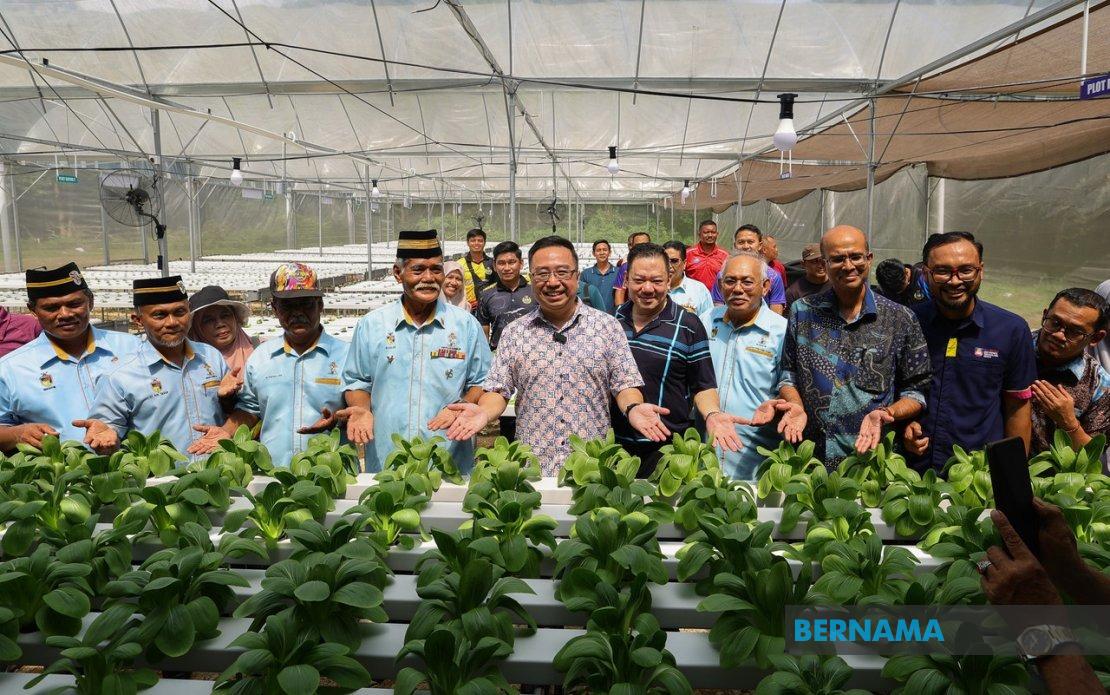
Malaysia's commitment to leveraging technology for rural development gained fresh momentum at Port Dickson this week, where a new aquaponics farming project was unveiled as part of the broader Malaysia Social Innovation Programme (MyIS Komuniti). The initiative has already extended its reach across the country, touching the lives of more than 6,700 individuals drawn from diverse community backgrounds. Since its launch in 2021, the programme has channelled RM13.97 million into 67 separate projects, each designed to tackle persistent challenges around food security, skills gaps and economic opportunities in underserved localities. The expansion underscores a growing recognition among policymakers that technological innovation, when paired with community engagement and sustainable practices, can drive meaningful social change beyond urban centres.
Science, Technology and Innovation Minister Datuk Chang Lih Kang emphasised the programme's wider significance during the launch ceremony at Pasir Panjang. He framed MyIS Komuniti not merely as a collection of isolated initiatives but as part of a coherent strategy pursued by Yayasan Inovasi Malaysia (YIM) since 2015 to democratise access to innovation tools and knowledge. By placing emerging technologies directly into the hands of rural communities, the programme creates what officials describe as a more inclusive and sustainable development pathway. The minister highlighted how each project serves a dual purpose: addressing immediate material needs whilst simultaneously building local capacity and fostering economic resilience. This dual-track approach reflects lessons learned from earlier development efforts that foundered when outside support was withdrawn, leaving communities without the skills or infrastructure to maintain gains independently.
The Port Dickson aquaponics project exemplifies this philosophy in concrete terms. Allocated RM251,616 under the MyIS framework, the facility represents a significant capital investment in what amounts to a closed-loop food production system. Aquaponics merges two complementary agricultural practices—fish farming in water tanks and hydroponic vegetable cultivation—into a single integrated operation. The nutrient-rich water discharged from fish tanks serves as a natural fertiliser for crops growing in suspended systems, which then cleanse the water before it cycles back to the fish. This circular design dramatically reduces water consumption, minimises waste streams and eliminates the need for synthetic chemical fertilisers. For communities in water-scarce regions or facing contamination concerns, such efficiency gains translate into genuine competitive advantages and lower operating costs.
What elevates this project beyond traditional small-scale farming is its integration of digital intelligence. Solar-powered systems equipped with Internet of Things (IoT) sensors enable real-time monitoring of critical parameters including water quality, temperature fluctuations and overall system performance. This technological layer allows operators—many of whom may lack formal agricultural training—to detect emerging problems quickly and intervene before losses mount. The system essentially democratises expertise, translating complex biological and chemical processes into accessible digital dashboards that guide decision-making. For a community facility, such responsiveness proves invaluable, as a system failure can rapidly undermine economic returns and erode confidence in the model itself.
Production metrics reveal the initiative's growing maturity. Across 2024, the Pasir Panjang operation has already yielded more than 800,000 kilogrammes of fresh vegetables, a substantial volume that demonstrates the system's capacity to serve both household consumption and broader commercial channels. This productivity gains significance when contextualised against Malaysia's ongoing food security concerns, particularly regarding fresh produce supply chains and the vulnerability of communities dependent on imports. University partner Universiti Teknologi MARA (UiTM), through its Research Nexus division, has contributed expertise in designing and refining the integrated aquaponics architecture. Fish farming operations remain in earlier growth phases, suggesting considerable upside potential as breeding and harvesting protocols mature and operators accumulate practical experience.
Community participation extends beyond individual beneficiaries. The Negeri Sembilan branch of the Royal Electrical and Mechanical Engineers (JLJD) Veterans Association has emerged as a strategic partner, with more than 100 association members involved either as direct recipients or as collaborative stakeholders. This institutional anchoring provides valuable social capital and governance frameworks that can help sustain projects when initial enthusiasm wanes. The Federal Agricultural Marketing Authority (FAMA) has similarly integrated the project into broader value chains, assisting with product distribution and connecting local producers directly to consumer markets. Such ecosystem integration transforms what might otherwise remain an isolated pilot into part of a functioning agricultural economy.
The aquaponics model carries implications extending well beyond Port Dickson. Malaysia confronts ongoing pressures on conventional agriculture stemming from land scarcity, water stress and the flight of younger generations from farming. Aquaponics addresses multiple constraints simultaneously: it requires minimal land, operates with high water efficiency and generates economically viable returns within relatively short timeframes. For densely populated coastal areas or regions where traditional farming has declined, aquaponics facilities can be located near population centres, shortening supply chains and reducing distribution costs. The technology also suits different scales, from household-level systems meeting a family's vegetable needs to commercial operations generating substantial income.
Beyond production, the programme delivers soft benefits that reshape community capacity. Skills development training equips participants with knowledge spanning system management, crop rotation, pest control through sustainable methods and basic financial record-keeping. For regions experiencing high unemployment or underemployment, such skills translate into tangible employment possibilities. Young people, in particular, gain practical experience in technology-enabled agriculture—a potential circuit-breaker against rural-to-urban migration that depletes communities of human capital. When coupled with income opportunities generated by vegetable sales, these skills create genuine livelihood pathways that retain people in their communities rather than forcing migration to urban centres.
The RM13.97 million investment across 67 projects from 2021 onwards represents meaningful fiscal commitment, yet the returns extend well beyond financial metrics. When 6,700 community members gain improved food security, income opportunities and technological fluency, the multiplier effects ripple through local economies and social structures. Children eat better-quality vegetables; households reduce expenditure on purchases; local producers capture income previously leaking to external suppliers. These shifts, whilst difficult to quantify precisely, strengthen community resilience against economic shocks and environmental disruptions. The MyIS Komuniti portfolio suggests that targeted, technology-enabled interventions, delivered through local partnerships and sustained by community engagement, can unlock development pathways that broader top-down strategies frequently miss.

