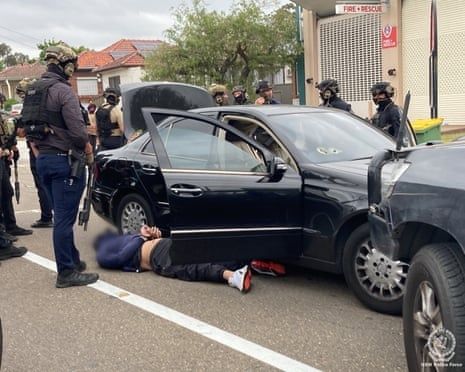
New South Wales police have intensified their crackdown on public transport crime with over 350 arrests during the latest phase of a coordinated enforcement operation, reflecting sustained commitment to making trains, buses and ferries safer for commuters across Australia's most populous state. The NSW Police Force deployed more than 400 officers daily across the state's entire public transport network from Thursday to Saturday, resulting in 356 arrests and 645 combined charges during what authorities designated as the sixth operational phase. The scale of the deployment underscores the seriousness with which NSW law enforcement is treating violence and sexual assault on commuter services, issues that have long concerned regional commuters and advocacy groups across Eastern Australia.
Operation Waratah was established in 2024 as a dedicated response to growing community concerns about personal safety during public transport use, a priority that resonates across Southeast Asia where densely populated urban centres similarly grapple with commuter security. The operation has now resulted in more than 1,800 arrests since its inception, establishing it as one of NSW's more substantial public safety initiatives in recent years. The breadth of the operation reflects a recognition that public transport crime affects entire communities, discouraging vulnerable populations from using buses, trains and ferries during evening hours and ultimately undermining urban mobility and economic participation.
During the three-day operation, police conducted comprehensive patrols across 539 trains, 127 buses and 29 light rail trams, demonstrating the logistical complexity required to enforce safety across an integrated transport network. This intensive coverage meant that officers were present throughout commuting periods and across both high-traffic and peripheral routes, creating deterrent effects while also enabling rapid response to incidents. The geographic spread of patrols distinguishes this approach from traditional, reactive policing that responds to reported crimes, instead positioning law enforcement as a visible presence throughout the transport system.
Weapons seizures constitute a significant component of the operation's outcomes, with officers recovering 28 knives or other weapons during the three-day phase. The presence of bladed weapons and other implements on public transport represents a particular concern, as crowded carriages and stations provide confined environments where weapon possession dramatically elevates risk to other passengers and staff. These seizures potentially prevented serious injuries or worse outcomes, illustrating how preventative enforcement can intervene in dangerous situations before escalation occurs.
Drug-related detections also featured prominently in the operation's results, with 137 separate drug detections recorded during the phase. Public transport networks frequently serve as venues for drug dealing and consumption, particularly at major interchange hubs and during evening hours when supervision is minimal. The integration of drug enforcement alongside violent and sexual crime investigations reflects understanding that substance abuse frequently correlates with transport-related offences and that comprehensive safety requires addressing multiple criminal vectors simultaneously.
For Malaysian readers accustomed to the relatively well-regulated public transport systems in Kuala Lumpur and other major cities, the scale of NSW's operation may seem surprising, though it reflects the distinct challenges facing Australia's sprawling regional centres where transport networks cover vast geographic areas. The operation's evolution through six distinct phases suggests an iterative approach, with police presumably learning from earlier enforcement phases to refine deployment strategies and resource allocation. This methodical escalation contrasts with ad-hoc enforcement and demonstrates institutional commitment to sustained intervention rather than symbolic gestures.
The 645 offences attributed to the 356 arrested individuals indicates that many detainees faced multiple charges, suggesting that the operation targeted individuals with patterns of problematic behaviour rather than focusing exclusively on isolated incidents. This distinction matters for understanding policing effectiveness, as habitual offenders who commit numerous crimes against vulnerable passengers warrant priority attention. The charging ratio of approximately 1.8 offences per person also suggests that officers were exercising professional judgment in determining which arrests proceeded to formal charges, reducing system overload while maintaining accountability.
Public transport safety remains a persistent policy concern across major Australian cities, with periodic media reporting of assaults on drivers and passengers keeping the issue visible in public consciousness. Operation Waratah appears designed partly to reassure commuters and transport workers that authorities are actively addressing these concerns, creating psychological deterrent effects beyond the direct impact of arrests and seizures. When commuters believe enforcement is active and visible, usage patterns may shift, potentially reducing victimisation and improving overall service experience.
The operation's focus on violent and sexual offences reflects prioritisation that aligns with community safety research and victim advocacy perspectives, which consistently identify these crime categories as particularly harmful and underreported. Sexual assault on public transport frequently goes unreported due to victim shame, fear of not being believed, or practical difficulties in identifying transient offenders. By creating highly visible enforcement presence, the operation may increase reporting confidence among victims who witness police dedication to these particular crimes.
For transport authorities managing NSW's integrated network, the operation represents collaboration between police and transit operators, likely including information sharing about problem locations or times when offences cluster. This coordination approach recognises that sustainable transport safety requires coordination across law enforcement, operator management, environmental design and community awareness rather than relying exclusively on reactive police response. Moving forward, maintaining this operational momentum while building community reporting confidence will determine whether the initiative achieves lasting improvements in transport safety culture.

