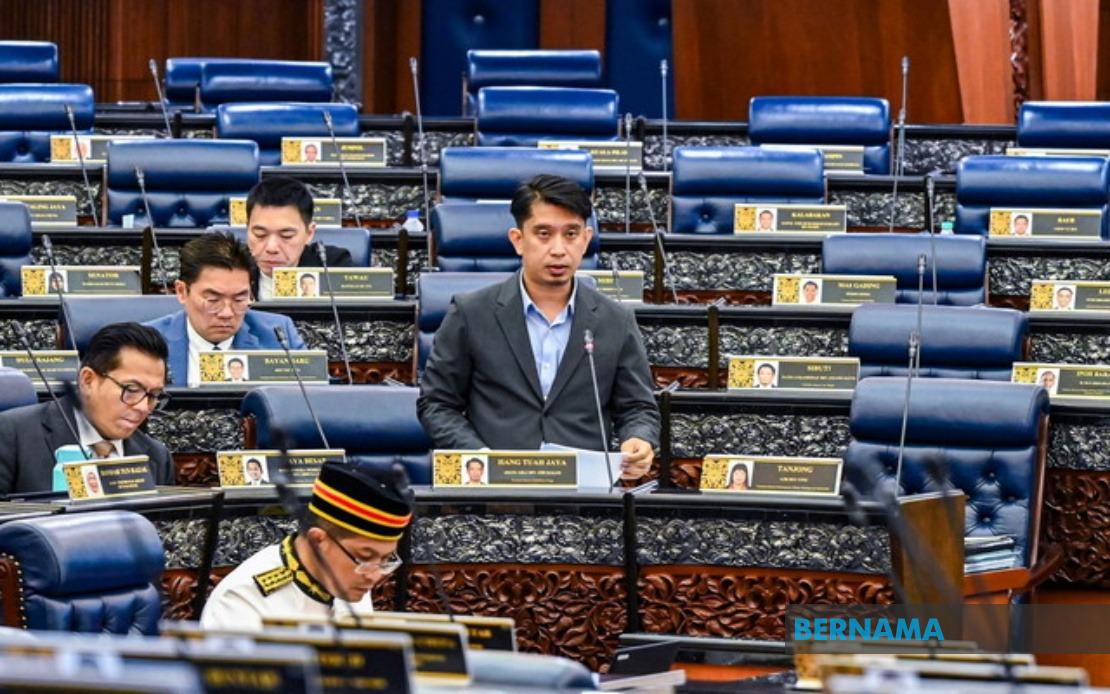
The Malaysian government disclosed that 326,419 students pursuing Science, Technology, Engineering and Mathematics fields constitute nearly 60 per cent of the 556,556 diploma and degree students admitted to public higher education institutions between 2023 and March 2026. Deputy Minister of Higher Education Adam Adli Abd Halim revealed this breakdown during parliamentary questioning, illustrating the substantial pipeline of talent flowing into technology-focused disciplines across Malaysia's IPTA network. The remaining 230,137 enrollees selected non-STEM pathways, reflecting the continued diversity of educational offerings despite the strategic emphasis on science and engineering fields.
This enrolment pattern reflects deliberate government steering towards sectors deemed critical for Malaysia's economic transformation. By channelling nearly three in five new university entrants into STEM disciplines, the country aims to build competitive advantage in industries that will define the next decade of growth. The deputy minister characterised the intake statistics as validation that Malaysia's public university system remains aligned with both immediate labour market demands and longer-term national development ambitions, particularly in emerging technology domains such as artificial intelligence, semiconductor manufacturing, industrial automation, digital infrastructure and environmental sustainability.
When questioned about projected engineering requirements, Adam Adli articulated Malaysia's strategic approach through the National Science, Technology and Innovation Policy framework spanning 2021 to 2030. Rather than targeting specific numbers of engineers by specialisation, the policy adopts a holistic perspective centred on developing what officials term the Researchers, Scientists, Engineers and Technologists ecosystem. This broader framing recognises that innovation competitiveness depends not merely on raw graduate numbers but on the interconnected capacity of institutions, research facilities and human expertise working in concert.
Under this framework, Malaysia has established a measurable target: the country aims to cultivate 200 RSET professionals for every 10,000 workers by 2030. Applied to Malaysia's projected workforce of approximately 17.06 million people, this benchmark translates to a requirement for roughly 341,200 specialised professionals across research, scientific, engineering and technical domains within the next five years. This figure considerably exceeds current graduation rates, suggesting sustained pressure on universities to expand capacity and quality simultaneously.
The gap between current STEM enrolment and future workforce targets underscores the scale of Malaysia's human capital challenge. Even with 326,000 students currently pursuing STEM qualifications, the pipeline must account for graduation rates, international competition for talent, migration of skilled workers, and varying specialisation levels. The 341,200 target assumes not just quantity but also quality—professionals capable of contributing to advanced industries competing on a global stage rather than in lower-value manufacturing roles.
For Malaysian employers and industry planners, these figures carry significant implications. The concentration of university resources and enrolment capacity into STEM fields may eventually generate labour surpluses in certain disciplines while creating bottlenecks in others. Semiconductor engineering, artificial intelligence expertise and advanced digital skills remain in acute shortage despite the enrolment surge, suggesting that graduate quality and specialisation matching remain ongoing challenges. Companies in high-technology sectors continue reporting difficulty recruiting suitable candidates despite improved pipeline numbers.
The government's emphasis on public institutions reflects recognition that private higher education, while substantial, operates under different incentive structures and may not align fully with national technological priorities. By directing public enrolment towards STEM, policymakers attempt to ensure that foundational capacity building occurs within institutions directly responsive to national strategy. However, this approach creates dependencies—if public universities cannot deliver quality STEM education at scale, the entire innovation agenda becomes vulnerable.
Adam Adli's reference to the Malaysian Technical University Network indicates where the government is concentrating infrastructure investment. MTUN comprises four specialised institutions designed to anchor technical excellence and support emerging industries. This targeted investment approach acknowledges that not all public universities require identical focus; rather, concentrating resources in dedicated technical institutions may yield faster capability development than spreading resources thinly across all IPTA campuses. The strategy reflects lessons from regional competitors like South Korea and Singapore that created innovation anchors before expanding broadly.
Singapore and South Korea's experience offers instructive context for Malaysian policymakers. Both neighbours invested heavily in technical education but coupled enrolment expansion with rigorous quality controls, sustained infrastructure spending, and industry-academia partnerships ensuring relevance. Malaysia's 326,000 STEM students represent a similar scaling ambition, yet questions persist regarding laboratory capacity, lecturer expertise and industry engagement depth. Parliamentary questioning specifically addressed facility and expert lecturer shortages, indicating these remain acknowledged constraints.
The supplementary question regarding expert lecturers, research laboratories and high-technology equipment reveals an underlying tension in Malaysia's STEM expansion strategy. Enrolment growth typically outpaces infrastructure development, creating risk that students enter programmes lacking adequate learning resources. Artificial intelligence, semiconductor and advanced digital engineering programmes demand expensive, regularly updated equipment and instructors with current industry experience—requirements that strain even well-funded universities. Concentrating focus on MTUN institutions may partly address this by preventing resource dispersion.
Regionally, Malaysia's enrolment figures situate it among Southeast Asia's larger STEM cohorts, yet comparable populations in Vietnam and Indonesia suggest alternative pathways are possible. Vietnam's strategy emphasises vocational training alongside university education, potentially creating more immediate workforce alignment. Indonesia's decentralised system distributes STEM capacity across numerous institutions. Malaysia's centralised emphasis on public university STEM may eventually prove either strategic advantage or vulnerability depending on execution quality.
The pathway forward requires sustained investment not merely in enrolment but in infrastructure, faculty quality and industry partnerships. The 326,000 STEM students currently progressing through Malaysian public universities represent significant national investment and aspiration. Whether this cohort emerges equipped to drive advanced industries or merely swells existing supply of generically trained engineers depends on implementation rigour. The government's acknowledgement of lecturer and facility constraints suggests awareness of risks, yet translating awareness into adequate funding and rapid facility expansion remains an ongoing challenge for Malaysia's higher education system seeking to compete globally.

