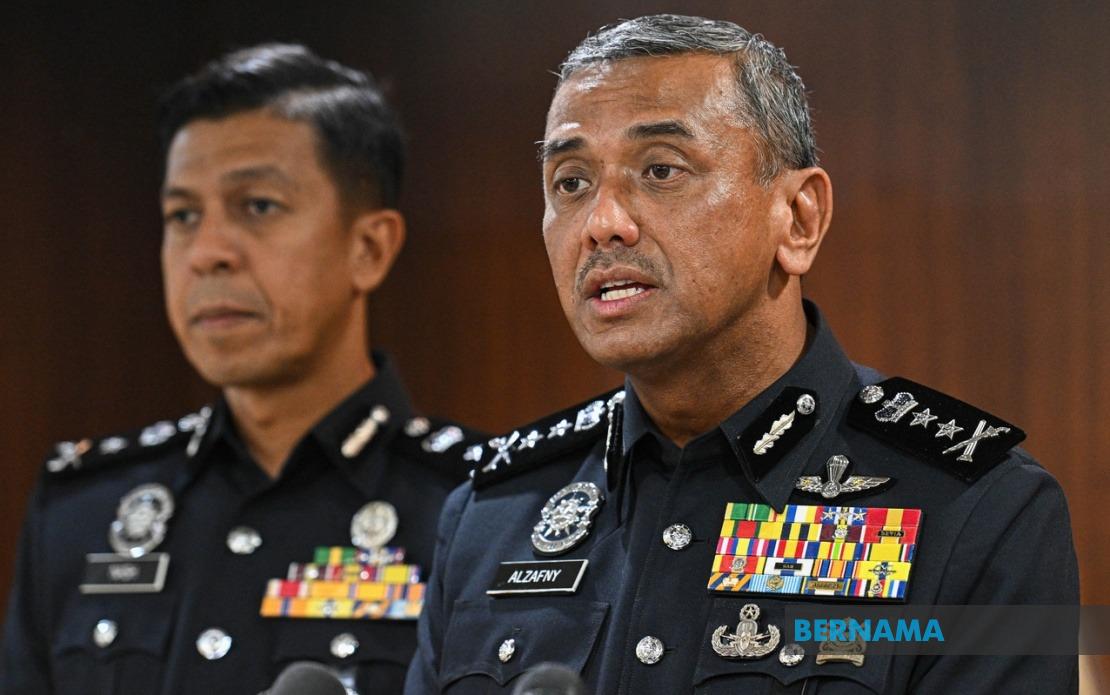
The 16th Negeri Sembilan state election will see a substantial turnout of uniformed services personnel exercising their voting rights through an early poll mechanism. The Royal Malaysia Police Negeri Sembilan and Malaysian Armed Forces have confirmed that 22,339 eligible voters from their ranks, including spouses, will cast ballots on July 28, nearly four days ahead of the official polling day scheduled for August 1. This advance voting arrangement is a standard provision in Malaysian electoral law designed to accommodate security personnel who may be deployed on election day itself, ensuring they retain their democratic participation rights despite operational demands.
Breaking down the composition of early voters, Negeri Sembilan police chief Datuk Alzafny Ahmad revealed that 5,455 PDRM officers and personnel will participate, with the Malaysian Armed Forces making up the larger contingent at 16,884 active servicemen and women along with their eligible family members. The substantial military representation underscores the significant security footprint maintained in the state, reflecting Malaysia's commitment to maintaining law and order infrastructure even during electoral exercises. This dual-force involvement ensures that the backbone of the nation's internal security apparatus can contribute to democratic processes without compromising their primary operational readiness.
The coordination required to manage such large-scale early voting demonstrates the sophisticated electoral logistics now embedded in Malaysian elections. To facilitate the early poll on July 28, authorities will deploy 1,796 personnel across all zones, a dedicated contingent tasked solely with managing that day's proceedings. This represents substantial manpower mobilisation, suggesting that the electoral commission and police department are treating this phase with considerable organisational seriousness. The specific zone-based deployment across Negeri Sembilan indicates a geographically distributed approach, likely reflecting the state's administrative divisions and ensuring adequate coverage regardless of where security personnel are stationed.
Beyond early voting, the election machinery requires extensive personnel commitments throughout the entire electoral calendar. A separate deployment of 2,393 officers and personnel is scheduled for nomination day this Saturday, the formal commencement of the electoral process where candidates officially register their candidacies. During the actual campaign period, which typically spans several weeks, a standing force of 1,685 personnel will maintain order and security. The largest single deployment, however, comes on polling day itself on August 1, when 4,788 security personnel will be mobilised to ensure the election proceeds without incident across all constituencies.
Negeri Sembilan police leadership has seized the pre-election period to issue firm reminders to political contestants about expected conduct standards. Datuk Alzafny Ahmad's message to all candidates and their supporters emphasises maintaining discipline and restraint throughout the campaign season, a critical period where emotional temperatures often run high. The chief specifically cautioned against unauthorised public processions, which have historically triggered tensions during electoral campaigns in Malaysia. His warnings extend to the spread of misinformation and unverified claims, a concern that has grown increasingly relevant in the social media age, where false narratives can rapidly acquire credibility and trigger community divisions.
The police chief's particular emphasis on avoiding provocative statements and maintaining social cohesion reflects broader concerns about electoral violence and communal tensions that have occasionally marred Malaysian elections. Slanderous remarks targeting opponents, hate speech directed at specific communities, and statements designed to inflame religious or racial sentiments all fall within the prohibited conduct framework that authorities are actively monitoring. This categorical approach demonstrates an understanding that electoral competition, while legitimate, must operate within boundaries that protect the nation's multicultural fabric and prevent cross-community hostility from escalating during the campaign.
A notable restriction affecting political communications concerns what Negeri Sembilan police term the 3R issues—religion, race, and the Royal Institution. This prohibition is comprehensive in scope, extending across political speeches delivered at rallies, campaign materials distributed to voters, media statements issued by candidates and party officials, and content shared on social media platforms. The inclusion of social media regulations reflects recognition that digital campaigning now parallels or sometimes exceeds traditional campaign methods in reach and impact. By establishing clear boundaries around sensitive topics, authorities aim to prevent electoral competition from becoming a vehicle for religious extremism, racial polarisation, or challenges to constitutional monarchical institutions.
Electoral authorities and police have also explicitly called upon all stakeholders to accept final election results with maturity and composure once the Election Commission officially announces outcomes. This message carries significant weight in the Malaysian context, where occasional post-election disputes have tested social stability. The directive makes clear that while candidates and parties retain rights to legal challenge through proper judicial channels, any extra-legal resistance to results or street-level protests that threaten public security will face serious consequences. This framing positions electoral acceptance not as mere political convention but as a civic responsibility essential to national security and stability.
The emphasis on orderly, peaceful, and harmonious electoral proceedings reflects both pragmatic governance concerns and constitutional ideals. Negeri Sembilan, as a state nestled within Malaysia's geographic and demographic heartland, holds symbolic importance beyond its electoral significance. An election conducted smoothly and without incident in the state sends reassuring signals about the health of Malaysian democracy and the maturity of its political culture. Conversely, any serious breaches of electoral peace could reverberate nationally, prompting concerns about the broader stability of the nation's electoral system.
The Electoral Commission has structured the Negeri Sembilan timeline to allow sufficient time for nomination, campaigning, and administrative preparation. Nomination day on July 20 marks the formal opening of the electoral window, followed by the early voting mechanism for security personnel on July 28, and culminating in the public election on August 1. This spacing provides adequate campaign duration while maintaining momentum, though it also compresses the overall timeline compared to some previous state elections. For security personnel who would otherwise face deployment conflicts, the early voting provision represents a critical safeguard of democratic rights.
The scale of police and military involvement in electoral management underscores the serious responsibility that security agencies shoulder in preserving the integrity and peacefulness of Malaysian elections. These personnel serve simultaneously as both voters exercising democratic rights and as custodians of public order protecting the electoral process itself. This dual role requires careful training, clear guidelines, and strong ethical leadership—all factors reflected in the detailed pre-election messaging and deployment planning evident in Negeri Sembilan's preparations. The state election will serve as a measurable test of whether these preparations translate into an election that meets the stated standards of security, order, and democratic legitimacy.

