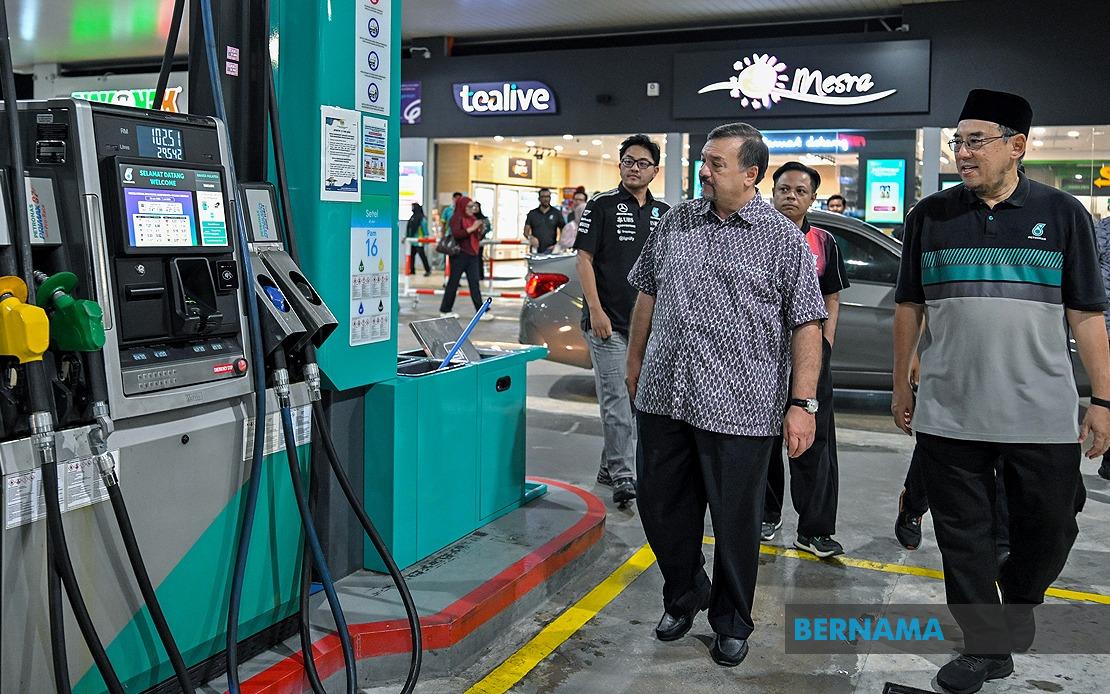
Malaysia's revamped diesel subsidy initiative is gaining rapid traction, with the government receiving more than 18,000 applications for additional subsidised fuel allocations within the opening 48 hours of its second phase rollout. Second Finance Minister Datuk Seri Amir Hamzah Azizan disclosed the figures following an inspection of implementation sites on the NKVE Damansara Bound, underscoring the programme's early momentum as it moves toward its formal nationwide launch.
The BUDI MADANI Diesel programme, which commenced its pilot phase yesterday in Peninsular Malaysia, permits eligible owners of diesel-powered pickup trucks and sport utility vehicles to purchase up to 200 litres monthly at heavily subsidised rates. The initiative extends a government support mechanism that has traditionally benefited commercial operators and lower-income vehicle owners, reflecting Putrajaya's continued commitment to managing fuel costs for critical user segments. The programme's flexible quota structure acknowledges varying consumption patterns across different vehicle types and usage intensities.
Operational performance during the initial rollout has exceeded expectations, with government officials reporting zero technical disruptions or system failures. According to Amir Hamzah's observations during the Damansara inspection, conducted alongside Treasury secretary-general Tan Sri Johan Mahmood Merican, more than 40,000 fuel transactions have been successfully processed since the scheme's inception. This volume suggests substantial penetration among the targeted vehicle-owner demographic, indicating that eligible beneficiaries have quickly adapted to digital application processes and point-of-sale verification mechanisms.
The government has deliberately designed the application process to maximise accessibility across different demographic segments and digital literacy levels. Vehicle owners may submit quota requests through the dedicated BUDI MADANI online portal, while those encountering technical difficulties or lacking digital proficiency can obtain in-person assistance from Inland Revenue Board offices, Urban Transformation Centres distributed throughout urban and semi-urban areas, and service counters operated by participating petroleum retailers. This multi-channel approach recognises Malaysia's varied digital infrastructure and ensures that rural or less-connected populations are not disadvantaged by the transition to digital administration.
A particularly innovative feature addresses a common administrative challenge: the distinction between a vehicle's registered owner and its actual operator. Government policy now permits quota transfers between individuals through the same digital portal, allowing registered vehicle owners to formally assign their fuel allocation to family members, employees, or business partners who genuinely operate the vehicles. This flexibility accommodates the complex ownership and usage patterns prevalent in Malaysian commercial operations, where vehicles may be registered to holding entities but operated by designated drivers or leaseholders.
Verification mechanisms employ personal identification linked to fuel consumption records rather than vehicle registration alone. Once a quota transfer receives approval, the system tags the allocation directly to the recipient's identity card number rather than maintaining the original vehicle-centric linkage. Petrol station point-of-sale systems will recognise the transferred quota when the designated user presents their identification, creating a secure audit trail while simplifying the purchasing experience at the pump. The quantity of fuel remains perpetually associated with the specific vehicle, however, preventing any single allocation from being fragmented across multiple vehicles or users.
The pricing structure reflects government determination to provide meaningful relief while maintaining fiscal sustainability. Current subsidised diesel costs RM2.15 per litre during the initial implementation phase, representing substantial savings compared to market rates, with further reduction to RM2.10 per litre commencing on the following Wednesday. These price points signal government commitment to supporting transportation and logistics sectors disproportionately affected by energy cost fluctuations, while the incremental pricing adjustment suggests a managed approach to subsidy calibration rather than abrupt shock policy.
The July 1 formal nationwide launch represents a critical juncture for programme scalability and operational resilience. Government officials have explicitly prioritised smooth system performance throughout the transition period, acknowledging that technical failures or administrative bottlenecks could rapidly erode public confidence in digital service delivery. The absence of reported issues during the initial two-day window provides encouraging baseline data, though genuine pressure testing will emerge once the scheme extends beyond Peninsular Malaysia into Sabah and Sarawak, where telecommunications infrastructure and banking system integration present additional complexity.
For Malaysian businesses dependent on diesel consumption, the programme carries significant implications for operational economics. Commercial transport operators, agricultural enterprises, and construction companies utilising eligible vehicle classifications can anticipate measurable reductions in fuel procurement costs, potentially improving margins or permitting competitive pricing adjustments in customer-facing services. However, the quota ceiling of 200 litres monthly may prove restrictive for high-utilisation operators, necessitating supplementary fuel purchases at market rates and requiring refined financial planning.
The programme's expansion reflects broader government recognition that energy subsidies remain politically sensitive and economically consequential across Southeast Asia. Unlike previous iterations focused narrowly on commercial operators, BUDI MADANI Diesel explicitly encompasses pickup truck and SUV owners who operate vehicles in mixed commercial-personal usage patterns—a substantial population category within Malaysian society. This broader eligibility base suggests that policymakers view fuel cost management as a middle-class concern alongside traditional support for lower-income transport workers, acknowledging inflationary pressures affecting wage-earning households.
Regional observers should note that Malaysia's continued reliance on targeted subsidies distinguishes its approach from neighbouring economies pursuing gradual subsidy removal or means-testing mechanisms. While Thailand and Indonesia have experimented with variable subsidy structures contingent on vehicle classification or income verification, Malaysia maintains relatively generous blanket allocations for defined vehicle categories. This policy choice prioritises political stability and social cohesion over fiscal consolidation, a calculation shaped by Malaysia's particular history of fuel-subsidy-related public discontent and by revenue available from petroleum export proceeds.
Longer-term sustainability questions remain incompletely addressed. The BUDI MADANI framework requires continuous government expenditure to maintain price differentials between subsidised and market-rate diesel, a commitment that becomes increasingly burdensome as fuel costs fluctuate or vehicle ownership expands. Without clearly articulated transition pathways or graduation mechanisms encouraging efficiency improvements or alternative energy adoption, the programme risks becoming a permanent fiscal liability requiring periodic government recalibration. The rapid uptake observed during initial rollout suggests that once beneficiary populations expand and normalise subsidy access, demand elasticity may prove substantial, complicating future policy adjustments.

