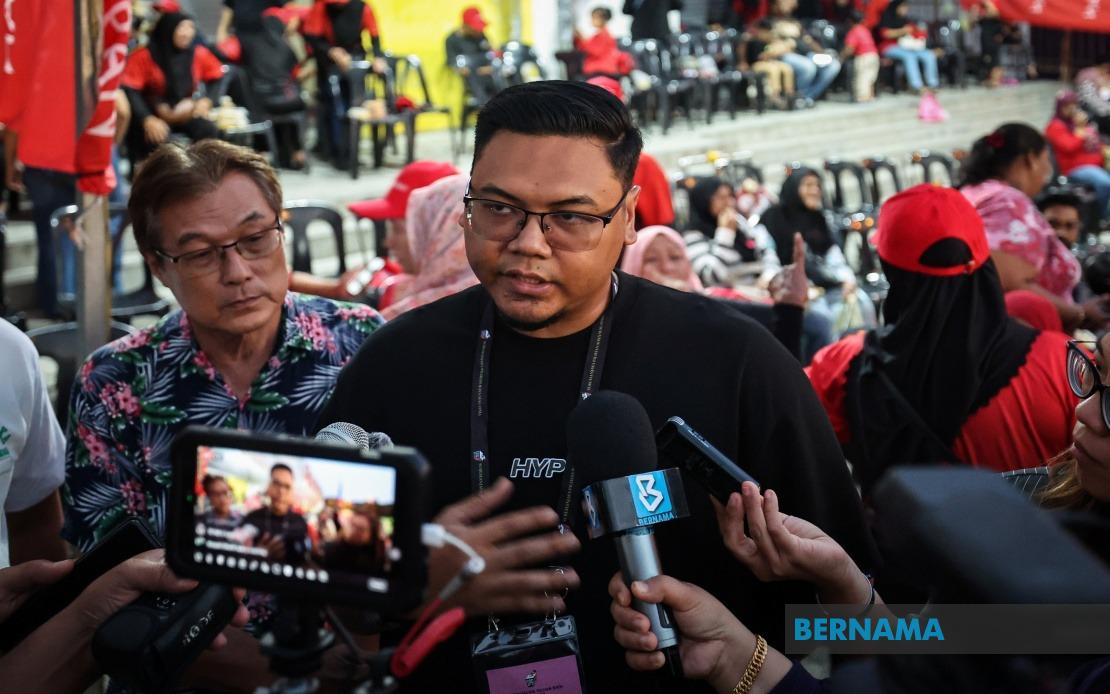
A significant political realignment emerged in Johor on July 8 when more than 120 former members and leaders from the Pulai division of Parti Pribumi Bersatu Malaysia (Bersatu) publicly announced their shift to Pakatan Harapan (PH). The announcement came during the campaign period for the state election, with PH's Kempas candidate Muhammad Faezuddin Mohd Puad confirming that prominent Bersatu figures including former Pulai Bersatu Srikandi Information chief Rafidah Ani, former Pulai Srikandi secretary Noriah Mat Daud, and former Bukit Mewah Bersatu branch chief Mohd Suhimi Abdul Rahman had committed to supporting the coalition.
The defection reveals growing internal fractures within Bersatu's organizational structure in Johor, particularly within its women's and grassroots wings. While these party members had privately signaled their intentions to PH earlier, they strategically delayed the public announcement, allowing time for careful coordination and formal notification of their departure to Bersatu's leadership. This measured approach suggests the defectors sought to manage their transition professionally rather than create unnecessary conflict or surprise their former party colleagues.
According to Muhammad Faezuddin, who also serves as head of Johor Angkatan Muda Keadilan (AMK), PH's inclusive governance model formed the primary attraction for these former Bersatu members. He emphasized that PH's administration provides assistance and public services to all residents regardless of their political affiliation, marking a departure from what he characterized as the traditional politics of patronage. This philosophy of non-partisan service delivery resonated with former Bersatu members who felt marginalized within their previous organizational structure.
Rafidah Ani articulated a fundamental grievance: the Srikandi branch members experienced systematic undervaluation within Bersatu's organizational hierarchy. Despite her commitment to assisting vulnerable populations such as single mothers throughout her tenure, she encountered persistent obstacles in securing institutional support from Bersatu's leadership to implement community assistance programs. This disconnect between individual initiative and organizational backing created frustration among women's wing members who felt their contributions lacked meaningful recognition.
Mohd Suhimi's perspective underscored broader concerns about Bersatu's current trajectory and internal management. His dissatisfaction stemmed from inadequate acknowledgment of his efforts combined with the party's apparent inability to channel resources toward addressing local residents' needs. Having informally distanced himself from Bersatu following the 2022 Johor state election, Suhimi seized the current electoral cycle as an opportunity to formalize his political repositioning and actively support PH's development agenda in Kempas.
The defectors harbor specific aspirations for Kempas under PH representation, particularly regarding economic development and healthcare infrastructure enhancement. These constituencies align with the material concerns of residents in the Kempas area, including those residing in the Kempas People's Housing Project (PPR), where improving living standards and access to social services rank as pressing priorities. The defectors view the PH candidate as better positioned to translate these community needs into tangible policy outcomes.
Muhammad Faezuddin's candidacy for the Kempas seat places him in a competitive three-way race against candidates from Barisan Nasional (BN) and Parti Bersama Malaysia (Bersama). This triangular contest reflects the fractured political landscape within Johor, where no single coalition commands overwhelming dominance across all constituencies. The 2022 Johor state election results, which saw BN-UMNO's Datuk Ramlee Bohani secure the Kempas seat with a majority of 3,514 votes, establish the baseline from which current contestants must project their performance.
The defection of over 120 Bersatu members to PH carries symbolic weight extending beyond Kempas. It signals cracks within Bersatu's organizational coherence precisely when the party navigates complex coalition dynamics nationally. The loss of grassroots leaders and institutional memory from established divisions weakens Bersatu's capacity to mobilize supporters and maintain organizational continuity in Johor, a state where the party has previously wielded considerable influence.
For Pakatan Harapan, these defections represent validation of its inclusionary political messaging and practical governance record. The public endorsement by former opposition members testifies to PH's claim that it transcends narrow partisan calculations in delivering public goods. However, the defections also underscore persistent challenges regarding service delivery expectations and resource allocation within party structures, issues that resonate across Malaysian politics.
The 16th Johor state election involves 172 candidates contesting 56 state assembly seats, with voting scheduled for July 11. Approximately 2.7 million eligible voters will determine the composition of the state assembly, making this election a significant political moment for Johor and a bellwether for broader political trends across Malaysia. The Kempas contest exemplifies the competitive dynamics shaping this election cycle.
These defections illustrate a recurring pattern in Malaysian politics: shifts in party allegiance frequently correlate with perceived failures in service delivery and institutional recognition rather than ideological transformation. The former Bersatu members' grievances focus less on party principle and more on tangible governance outcomes and organizational respect, highlighting how local political behavior frequently transcends national party narratives and centers on immediate constituent concerns.

