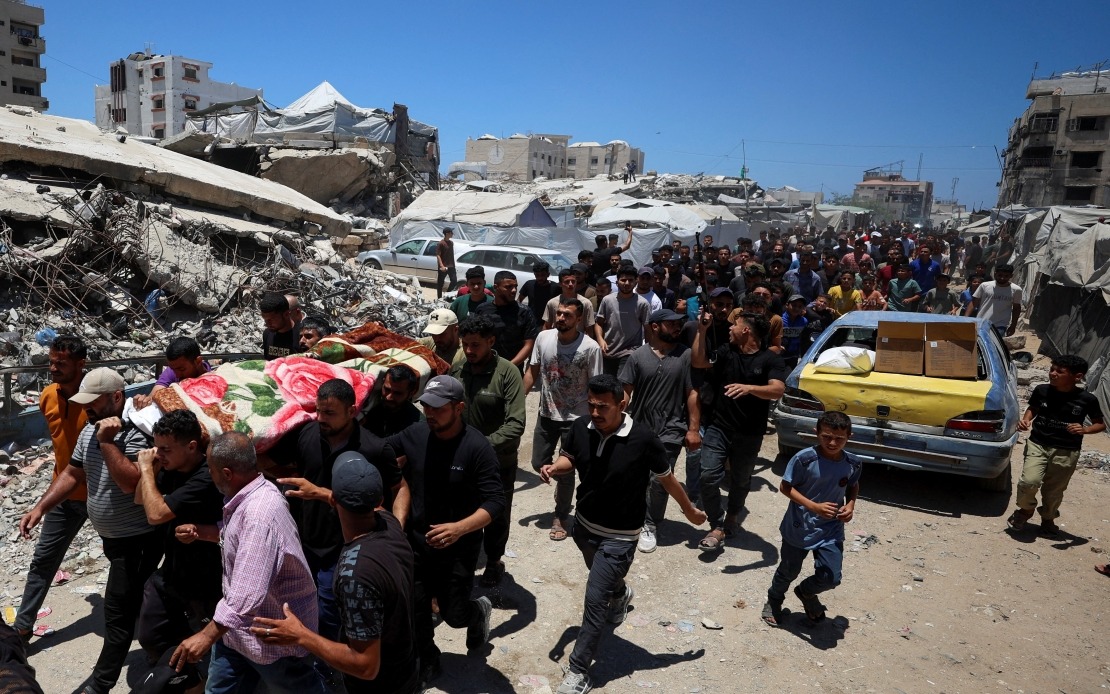
The humanitarian crisis in Gaza has worsened significantly despite the implementation of a ceasefire, with Israeli military operations claiming an additional 1,021 Palestinian lives since the agreement took effect. According to the latest situation report released by the Palestinian Prime Minister's Office this week, the cumulative death toll across the enclave has now reached 73,032 since fighting erupted in October 2023. The figures underline the scale of destruction that continues to unfold even as formal hostilities have nominally ceased, painting a stark picture of the conditions facing civilians trapped in the territory.
The deteriorating humanitarian landscape reflects both the legacy of months of intensive military operations and the ongoing challenges facing aid organisations attempting to restore basic services. The Government Communication Centre has documented severe shortages of clean water affecting the majority of Gaza's remaining population, forcing residents to depend almost entirely on humanitarian relief supplies for their survival. This dependency on external assistance has become critical as existing infrastructure struggles under the weight of displacement and damage. The situation highlights how even with a ceasefire in place, the underlying conditions that enable a humanitarian emergency persist without active reconstruction and resource allocation.
The scale of physical destruction across Gaza remains staggering, with Israeli military operations having destroyed or damaged nearly 77 per cent of all housing stock in the enclave. This wholesale destruction of residential areas has left approximately one million Palestinians living in tents and temporary shelters, a figure that underscores the displacement crisis that will likely persist for years. The housing shortage has created cascading problems for public health, education, and basic living standards, as tent settlements lack adequate sanitation, ventilation, and protection from disease. For Malaysian observers familiar with post-conflict reconstruction challenges in Southeast Asia, the scale of this displacement presents a sobering reminder of the long-term consequences of sustained military campaigns in densely populated areas.
Recent military operations have been concentrated across multiple population centres, including air and drone strikes in Nuseirat, Al-Mawasi, Khan Younis, and Gaza City. These operations have resulted in additional civilian casualties and continued deterioration of already dire living conditions. The targeting of multiple locations suggests that military activity, though reduced from peak intensity, remains geographically widespread across the territory. The persistence of these operations, even nominally under a ceasefire arrangement, raises questions about the definition and enforceability of such agreements in the current context.
Children have borne a disproportionate burden of the violence since the ceasefire announcement. Data from UNICEF indicates that 265 Palestinian children have been killed and more than 400 others injured during this period alone. These figures represent not merely statistical victims but represent disrupted childhoods, lost educational opportunities, and generational trauma that will shape Palestinian society for decades. The killing of children during an ostensible ceasefire period draws particular international scrutiny, as child protection is enshrined in international humanitarian law and represents a fundamental measure of conflict restraint.
Humanitarian organisations working in Gaza have consistently reported that Israeli restrictions continue to obstruct the delivery of life-saving assistance. Oxfam, presenting testimony to the United Nations Security Council, has highlighted how these barriers prevent adequate aid distribution despite the stated intention of a ceasefire. The obstruction of humanitarian access, even as formal military operations continue at a reduced pace, creates a secondary humanitarian crisis where populations lack not only shelter and water but also medical supplies, food, and fuel. This form of indirect harm extends the conflict's impact beyond direct military casualties.
Beyond Gaza's borders, the occupied West Bank has witnessed a significant escalation in forced displacement of Palestinians. The Office of the United Nations High Commissioner for Human Rights has documented a notable increase in this trend, driven by a combination of settler attacks, state-authorised home demolitions, movement restrictions, and forced evictions. The West Bank situation reflects how the broader Israeli-Palestinian conflict operates on multiple fronts simultaneously, with civilian populations facing pressure not just from military operations but from administrative measures and vigilante violence. This multi-faceted approach to territory control has profound implications for Palestinian land tenure and demographic composition across the region.
Agricultural devastation compounds the humanitarian challenge facing Palestinian communities. The Palestinian Ministry of Agriculture has documented the destruction of over 7,250 trees, including more than 1,270 olive trees—crops that represent both economic livelihood and cultural heritage for Palestinian families. The estimated financial losses from these agricultural attacks exceed US$5.17 million, a figure that, while seemingly modest, represents significant productive capacity lost from communities already struggling with displacement and resource scarcity. Additionally, arson attacks have targeted two mosques in the villages of Jiljilya and Mazra' al-Nubani, reflecting the sectarian dimensions of the conflict and the targeting of civilian cultural and religious infrastructure.
Displacement within the West Bank itself has accelerated, particularly in refugee camp areas. Military operations in Jenin, Tulkarem, and Nour Shams refugee camps have displaced more than 33,000 Palestinians since the beginning of 2025 alone. These camps, which housed some of the most vulnerable populations including descendants of 1948 refugees, are experiencing renewed displacement that echoes historical trauma. The camps had represented, despite challenging conditions, a degree of stability and community cohesion; military operations targeting them threaten to disperse these established social structures further.
Conditions within Israeli detention facilities have emerged as an additional humanitarian concern. Prisoners' institutions have raised alarms over deteriorating conditions, severe overcrowding, and the rapid spread of infectious diseases in detention centres. These conditions affect thousands of Palestinians arrested during the conflict and earlier periods. The concerns raised regarding detention conditions suggest that the humanitarian crisis extends into the carceral system, where medical care and basic sanitation may be inadequate even by comparison to the already difficult conditions in Gaza and the West Bank.
Despite the overwhelming challenges confronting Palestinian society, educational institutions have continued preparations for national examinations. The Palestinian government has completed arrangements for this year's General Secondary Education Examination, which will involve approximately 91,000 students. Remarkably, about 37,000 of these students sit in Gaza, where they are completing examinations electronically for the third consecutive year. This continuation of educational assessment, even under conditions of displacement and trauma, reflects Palestinian institutional resilience and determination to maintain educational continuity. However, it also raises questions about whether examinations conducted under such circumstances can meaningfully assess student learning or whether they serve primarily as symbolic assertions of Palestinian educational sovereignty.
For regional observers in Southeast Asia, the Gaza situation offers important lessons about the long-term consequences of intensive military operations in densely populated civilian areas. The scale of destruction, displacement, and humanitarian need demonstrates how conflicts that persist for months can fundamentally reshape entire societies. Malaysia, as a nation with significant Palestinian diaspora communities and a stated commitment to humanitarian principles, faces ongoing questions about how to advocate effectively for civilian protection while acknowledging the complexities of regional geopolitics and bilateral relationships. The reports from Palestinian authorities and international organisations working in Gaza provide urgent documentation of needs that extend far beyond the formal cessation of major military operations.