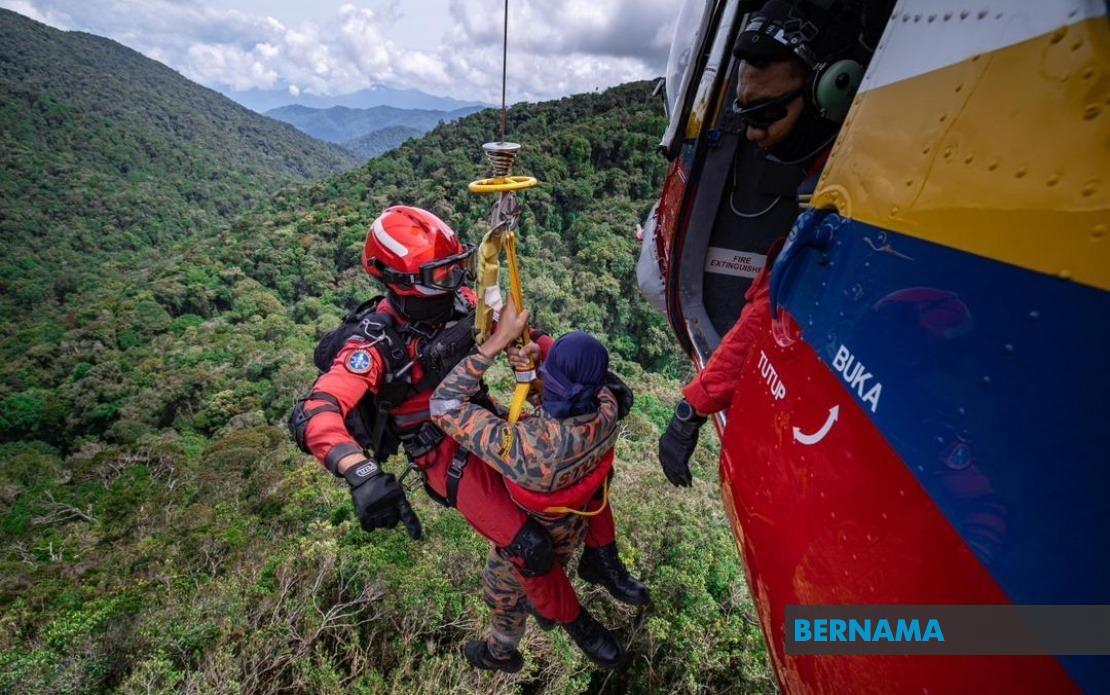
Malaysia's rapid expansion in outdoor recreation has come with a sobering human cost. Between 2021 and 2025, the nation documented 1,059 accidents during hiking activities, claiming 63 lives and leaving 87 people injured, Deputy Minister of Natural Resources and Environmental Sustainability Syed Ibrahim Syed Noh revealed to Parliament on June 23. The figures, drawn from Fire and Rescue Department statistics, underscore a growing challenge facing authorities as the popularity of mountain trails and forest activities surges across the country.
The spike in incidents has galvanised government action. Responding to parliamentary questions about establishing nationwide hiking safety standards, Syed Ibrahim outlined a multi-pronged approach designed to mitigate risks while preserving access to Malaysia's natural attractions. The strategy reflects recognition that hiking, a pastime increasingly embraced by urban Malaysians seeking respite from city life, requires robust systems to prevent tragedies in environments where help can be hours away.
At the heart of this safety agenda is the Mountain Risk Assessment and Management Guideline, known as MoGRAM. Developed by the Peninsular Malaysia Forestry Department with technical and financial backing from the United Nations Development Programme, this framework serves as a comprehensive manual for identifying hazards and managing visitor capacity on hiking trails. The guideline addresses the fundamental tension between promoting outdoor recreation and protecting users from avoidable harm, providing a standardised methodology that authorities and trail operators can reference when planning interventions or responding to emergencies.
Central to implementation is the Forestry Mountain Guides programme, which has certified 2,322 individuals, predominantly from local and indigenous communities, since inception. These guides are now mandatory in 189 high-risk hiking areas across Peninsular Malaysia. Beyond crowd control and route management, certified guides provide critical functions including emergency response capability and enforcement of safety protocols. The emphasis on recruiting from local communities creates economic incentives for conservation while embedding cultural knowledge and environmental stewardship into trail management—an approach with ripple benefits for broader sustainability goals.
Yet certification represents only one dimension of the government's push. Syed Ibrahim signalled that technology will play an increasingly central role in the next phase of hiking safety. The forestry department, in collaboration with the Malaysian Space Agency, is developing an integrated trail management system leveraging geospatial mapping, geographic information systems, and remote sensing technology. This system would enable real-time monitoring of trail conditions, maintenance scheduling based on usage patterns, and crucially, enhanced search and rescue operations underpinned by precise spatial data that could shave critical hours from emergency response times.
A particular focus is the creation of a national digital hiking registration platform. Currently, hikers register through fragmented manual or online systems managed individually by state forestry departments, a legacy of Malaysia's federal structure where land and forests fall under state jurisdiction. Syed Ibrahim acknowledged that while these decentralised approaches respect constitutional boundaries, a unified national log would deliver substantial safety gains. Systematic recording of hiker movements would enable authorities to identify missing persons more swiftly, direct rescue teams with greater accuracy, and compile data that reveals emerging risk patterns requiring intervention.
The proposed registration system illustrates how digital infrastructure can bridge governance fragmentation. By standardising data collection across states whilst preserving each state's permitting authority, a national platform could function as a common operating picture during emergencies. Hikers lost in remote terrain require rescue teams to know not just which mountain they attempted to climb, but their intended route, expected return time, and number of companions—information that a digital system could centralise and make instantly accessible to emergency coordinators. For a country with mountainous terrain ranging from Peninsular Malaysia's ranges to Sabah's 4,095-meter Mount Kinabalu, such capabilities represent genuine life-saving potential.
Beyond systems and technology, the government emphasises continuous professional development for guides and nature professionals who operate at the interface between visitors and wilderness. Regular training covers hiking safety protocols, risk assessment methodologies, wilderness first aid, survival techniques, and search and rescue procedures. This investment in human capability acknowledges that no algorithm or guideline substitutes for experienced judgement when conditions deteriorate, weather turns, or accidents occur far from mobile coverage.
The 63 fatalities recorded over five years point to risks that extend beyond simple carelessness. Mountain environments present inherent hazards—sudden weather changes, terrain hazards, altitude effects, and geographical isolation—that can overwhelm even well-prepared participants. The confluence of Malaysia's growing middle class pursuing wellness activities, increasing accessibility to previously remote trails, and the nation's tropical climate with its rapid weather shifts creates a backdrop against which even robust safety measures remain incomplete buffers. Nonetheless, the government's integrated approach—combining risk assessment, professional guides, digital tracking, and emergency response capability—aims to shift probability decisively away from tragedy.
These initiatives carry significance beyond Malaysia's borders. As Southeast Asia experiences surging interest in hiking and mountain tourism, neighbouring countries contending with similar safety challenges will likely scrutinise Malaysia's regulatory evolution. The MoGRAM framework and mountain guide certification model offer templates adaptable to regional contexts, while the digital registration concept addresses a universal problem in countries with federal or decentralised governance structures. Malaysia's experience suggests that systematic safety frameworks, grounded in proper funding, local community engagement, and technological integration, can coexist with thriving recreational sectors.
For Malaysian hikers, the accumulating safety infrastructure represents gradual maturation of an activity once regarded as largely self-regulated. Certification requirements, guideline frameworks, and tracking systems impose modest friction on access but shift risk calculus substantially. As these initiatives scale and interlock—certified guides in high-risk areas, geospatial monitoring systems operational, digital registration platforms live—the incidence of preventable accidents should decline. The death toll since 2021, tragic though it is, need not be destiny but rather a baseline from which improvement flows.