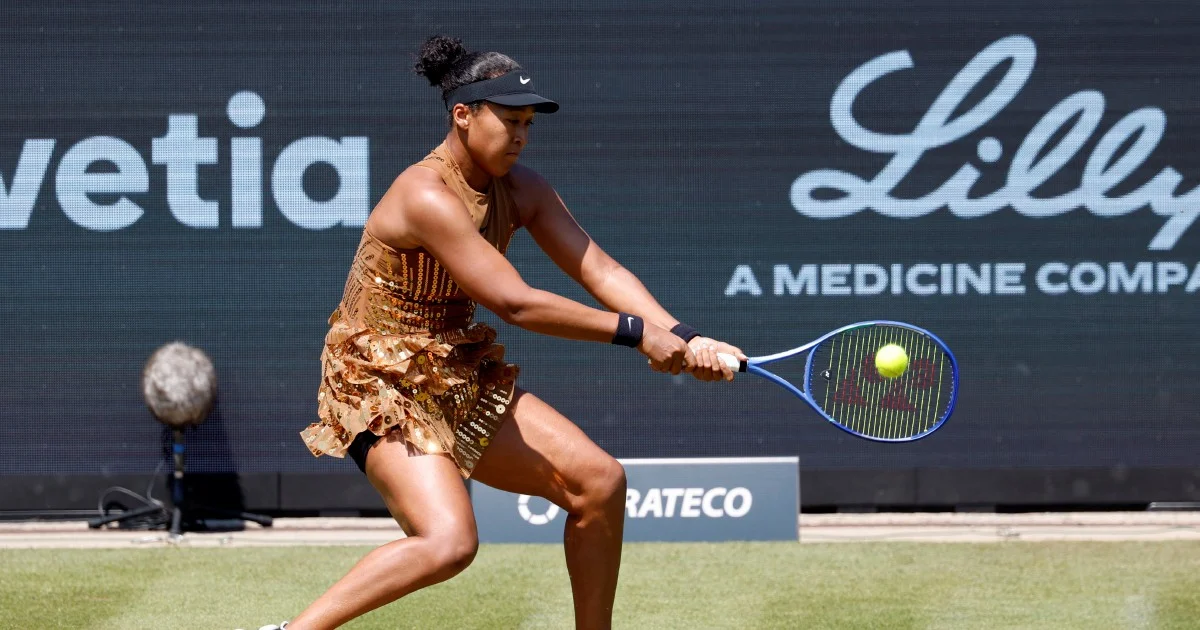
Naomi Osaka claimed a significant milestone in her storied career by reaching her first grass-court final, dominating China's Wang Xinyu in a one-sided semi-final clash at Bad Homburg in Germany. The four-time Grand Slam champion delivered a performance of clinical precision to secure her berth in the championship match, adding yet another notable achievement to an already distinguished record.
Osaka's progression to the final represents a notable expansion of her Grand Slam success into the grass-court arena, a surface where she had yet to reach a championship match despite her four major titles. Her dominance over Wang underscored the Japanese star's ability to adapt her game across different court surfaces, a hallmark of the sport's elite competitors. The victory at Bad Homburg signals Osaka's continued competitive resurgence following her return to professional tennis.
The encounter at Bad Homburg proved one-sided from the outset, with Osaka asserting her authority through superior execution and court craft. Wang, representing China on the international circuit, found herself unable to generate the rhythm or momentum required to trouble the defending Grand Slam champion. The disparity in their performances highlighted the technical refinement that separates elite players from their challengers at this level of competition.
For Malaysian tennis enthusiasts and broader Southeast Asian audiences, Osaka's success carries particular resonance. The Japanese athlete's dominance across multiple surfaces and Grand Slam competitions underscores the exceptional standards required to sustain excellence in professional tennis. Her journey also reflects broader trends in tennis where players increasingly develop versatility rather than specialising in particular court conditions, a shift driven by modern training methods and equipment innovations.
Osaka's grass-court final appearance comes at a significant juncture in her career trajectory. Following her return to competition, the Japanese star has progressively reclaimed her position among the sport's elite, with victories like her Bad Homburg triumph demonstrating renewed confidence and form. This momentum entering a grass-court final carries implications for her broader season objectives, potentially building into subsequent competitions including Wimbledon.
The Bad Homburg tournament itself occupies an important position in the women's tennis calendar, serving as crucial preparation immediately before the grass-court season's centrepiece. For players competing in Germany this week, the event provides invaluable match practice and confidence-building ahead of potential appearances at SW19. Osaka's advancement represents a valuable opportunity to gain additional grass-court experience and potentially claim a title outside the Grand Slam framework.
Wang Xinyu's defeat marked the end of what had been an impressive run by the Chinese player at the tournament. Despite the semi-final loss, Wang's participation at Bad Homburg continues China's growing presence in elite women's tennis, with Chinese competitors increasingly featuring in advanced stages of prestigious tournaments worldwide. Her semi-final appearance itself represented progress for the player and reflects the expanding talent pool emerging from the Chinese tennis system.
The contrast between Osaka's consistency at the Grand Slam level and her absence from grass-court finals prior to Bad Homburg highlights how different surfaces can compartmentalise a player's success. Clay courts and hard courts have traditionally featured prominently in both her Grand Slam triumphs and her overall match record, but this breakthrough into a grass-court final indicates she has successfully bridged a gap in her Grand Slam resume. The grass circuit, long associated with particular playing styles and technical demands, has presented a different challenge from the surfaces where Osaka previously dominated.
For the Malaysian and Southeast Asian tennis audience, Osaka's achievement offers perspective on the global standards of elite competition. The region boasts talented players competing internationally, yet the gap between regional competitors and world-class performers like Osaka remains substantial. Her ability to execute under pressure and control match conditions against accomplished opponents like Wang illustrates the consistency and mental resilience required for sustained success at tennis's highest echelon.
Looking forward, Osaka's final appearance at Bad Homburg carries significance beyond the immediate tournament context. A title victory in Germany would add another layer to her already remarkable trophy collection and provide substantial confidence heading into the grass-court season proper. Her opponent in the final remains to be determined, but Osaka's current form suggests she enters the championship match as a formidable contender capable of claiming another significant trophy.

