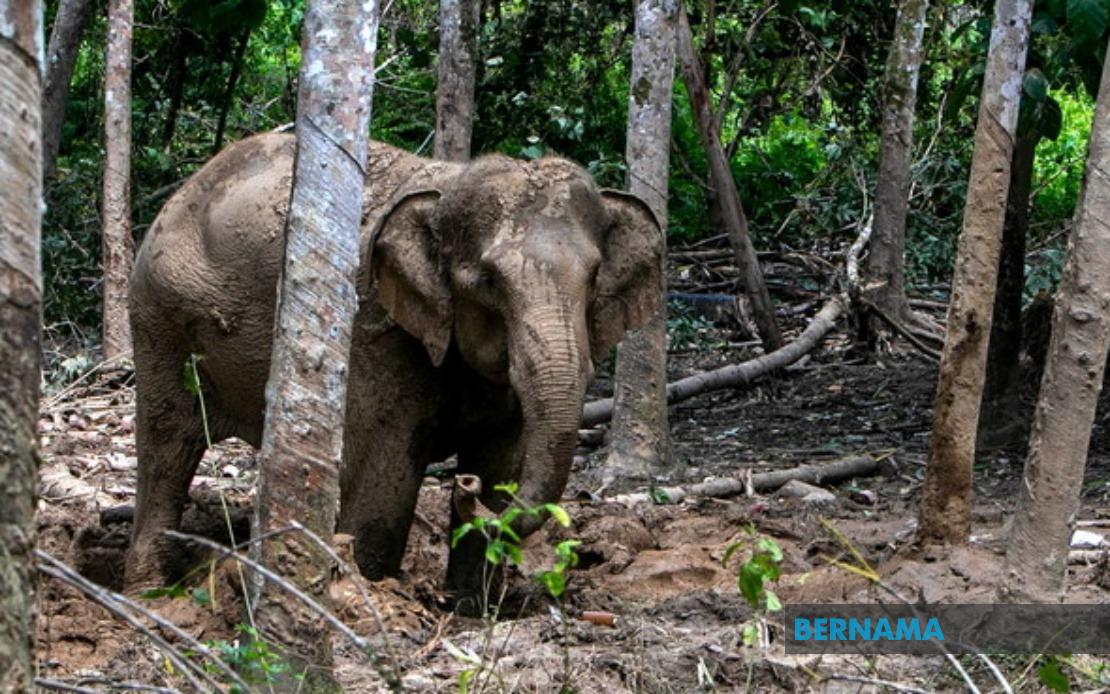
A resident of Kampung Orang Asli Perjek in the Legap Resettlement Scheme at Sungai Siput, Perak, suffered serious injuries last Friday when he was attacked by an elephant while attempting to protect village crops from a marauding herd. The incident has renewed concerns about human-wildlife conflict in rural communities and the particular vulnerabilities faced by indigenous settlements located near wildlife habitats.
Personnel from the Department of Wildlife and National Parks (PERHILITAN) Peninsular Malaysia responded to an emergency report at approximately 10 pm on the night of the incident. Initial investigations established that a group of four elephants had penetrated the area situated behind residential dwellings, where they proceeded to consume cassava and banana crops cultivated by local residents. The intrusion into agricultural land, a pattern that occurs seasonally across several Malaysian states, underscores the ongoing pressure on wildlife corridors and the desperation of animals seeking food sources.
The victim and several other villagers made the fateful decision to actively repel the elephants themselves rather than await professional assistance. During this confrontation, the man ventured too close to the animals and was suddenly attacked. The encounter left him with significant injuries and internal bleeding, and he subsequently lost consciousness at the scene. His rapid deterioration highlighted the dangers inherent in direct confrontations with large wild animals, which can inflict catastrophic trauma within seconds.
Local villagers demonstrated quick thinking by extracting the injured man from the dangerous situation and ensuring his transport to Raja Permaisuri Bainun Hospital. Medical staff have since stabilised his condition, and he currently remains in stable condition under hospital care. His recovery trajectory will likely depend on the severity of internal injuries and whether he sustains any lasting physical or psychological effects from the trauma.
Following the incident, PERHILITAN deployed drone surveillance to monitor the elephants' movements and confirm their departure from the inhabited area. This technological approach represents an evolution in wildlife management responses, allowing authorities to track animal behaviour without requiring personnel to enter potentially hazardous zones. The department also implemented unspecified management strategies intended to mitigate the likelihood of recurrent conflicts in the region, though the specific nature of these interventions remains unclear from official communications.
The victim's family will receive assistance navigating the application process for the Wildlife Attack Victim Assistance initiative, a scheme administered by the Ministry of Natural Resources and Environmental Sustainability. This support mechanism, while valuable, addresses symptoms rather than root causes, and many indigenous communities argue that preventive measures and habitat restoration would prove more effective than post-incident compensation.
PERHILITAN issued a public advisory cautioning residents against attempting independent management of wildlife encounters, particularly involving large predatory or unpredictable species such as elephants. The department emphasised that such actions exponentially increase personal safety risks and can exacerbate animal stress, potentially triggering more aggressive responses. This guidance reflects international wildlife management best practices, which uniformly recommend maintaining distance and contacting professionals.
The attack also illustrates the disproportionate vulnerability of indigenous communities in Malaysia to wildlife incidents. Orang Asli settlements frequently occupy areas adjacent to forests and natural reserves, positioning residents at the intersection of human and animal territories. These communities often lack the infrastructure and resources available to more urbanised populations, making them unable to implement elephant-resistant fencing or other protective measures that wealthier agricultural areas might employ.
The incident reflects broader challenges facing elephant populations throughout Southeast Asia, where habitat loss and fragmentary forest coverage force animals into agricultural areas in search of sustenance. Malaysian elephants, listed as endangered, face competing pressures: conservation efforts require maintaining viable populations, yet their presence near human settlements creates genuine safety risks and economic damage that cannot be dismissed. This tension remains one of the most intractable environmental management problems in the region.
Residents experiencing wildlife-related emergencies can contact PERHILITAN through its dedicated hotline at 1-800-88-5151 or lodge complaints via the Public Complaints Management System (SISPAA) accessible through the department's official website. These reporting mechanisms, while useful, function reactively rather than preventatively. Sustainable solutions will require coordinated efforts to restore elephant corridors, establish buffer zones around indigenous settlements, and develop community-based early warning systems that alert residents before animals enter populated areas.
The Sungai Siput incident represents one among numerous human-wildlife conflicts occurring across peninsular Malaysia each year, many of which go unreported. As deforestation continues and animal habitats shrink, such confrontations will likely increase unless fundamental conservation and land-use policies shift. For communities like Kampung Orang Asli Perjek, located at this dangerous intersection, proactive government intervention remains essential to ensuring both human safety and the survival of endangered elephant populations.

